
Life of the Renaissance Artist
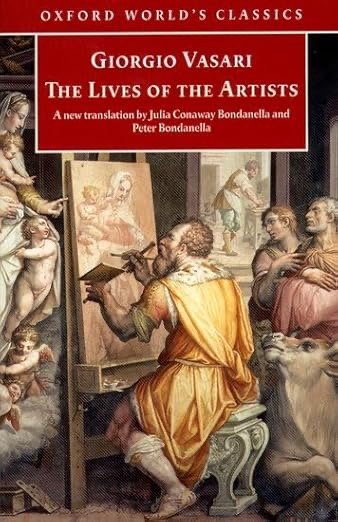
Giorgio Vasari's Lives of the Artists is a seminal collection of biographies detailing the lives, works, and artistic achievements of prominent Italian artists from the Renaissance period. First published in 1550 and expanded in 1568, Vasari's work combines historical narrative with critical analysis, offering insights into the techniques, styles, and influences that shaped Renaissance art. While some art historians challenges the veracity of some of the stories and the accuracy of the timelines written by Vasari, the work remains a foundational text for understanding the development of Western art history and the cultural context of the Renaissance. (Oxford University Press, 1991)
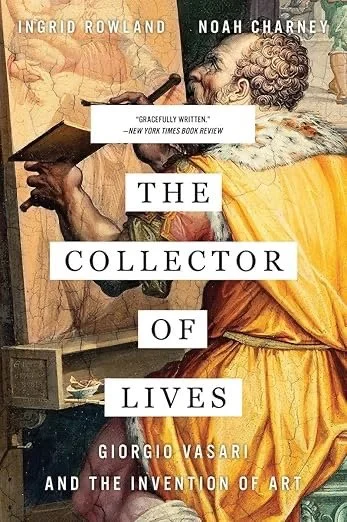
The Collector of Lives: Giorgio Vasari and the Invention of Art by Ingrid Rowland and Noah Charley is a detailed exploration of Giorgio Vasari’s pivotal role in shaping the concept of art history. The book delves into Vasari’s life as an artist, architect, and biographer, emphasizing his monumental work, The Lives of the Artists. Through Vasari’s biographies, the authors demonstrate how he constructed the narrative of Renaissance art, establishing criteria for artistic genius and influencing the way art and artists have been perceived ever since. The text combines scholarly insight with a rich narrative to highlight Vasari’s impact on cultural history and the invention of art as a discipline. (Norton, 2017)
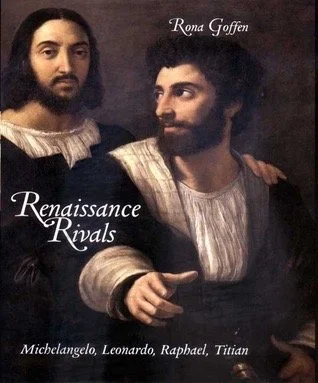
Rona Goffen’s Renaissance Rivals: Michelangelo, Leonardo, Raphael, Titian offers a concise, comparative study of four towering artists of the Italian Renaissance, examining how their distinct personalities, workshop practices, patronage networks, and aesthetic choices shaped artistic rivalry and innovation. Goffen—an emerita professor of art history with a long career focused on Renaissance and Baroque art, and the author of influential scholarship on Michelangelo and the culture of art in early modern Italy—frames the book around contrasts in style and approach: Michelangelo’s sculptural intensity and monumental anatomy; Leonardo’s investigative naturalism and sfumato; Raphael’s harmonious composition and consummate ease in adapting varied influences; and Titian’s painterly colourism and sensual handling of paint.
The narrative traces key works and careers, situating each artist within the political and cultural contexts of Florence, Rome and Venice, and highlights intersections where competition, mutual influence and diverging ambitions produce landmark developments in portraiture, religious imagery and public commissions. Goffen balances close visual analysis with archival and contextual evidence, arguing that rivalry—both direct and reputational—was a vital engine of artistic progress during the High Renaissance and beyond. The book is accessible to informed general readers and students while reflecting Goffen’s rigorous scholarship and deep familiarity with primary sources and visual materials. (Yale University Press, 2002)
Paul Robert Walker’s The Feud that Sparked the Renaissance — How Brunelleschi and Ghiberti Changed the Art World recounts the rivalry between Filippo Brunelleschi and Lorenzo Ghiberti that catalysed pivotal innovations in early 15th-century Florentine art and architecture. Walker traces the contest over the design and construction of Florence’s Baptistery doors and the subsequent commission of the dome for Santa Maria del Fiore, showing how personal ambition, guild politics and technical daring combined to accelerate advances in perspective, structural engineering and sculptural expression. The book situates the feud within broader social and economic shifts in Renaissance Florence, arguing that the clash of ideas and methods between a radical engineer (Brunelleschi) and a consummate artist-craftsman (Ghiberti) produced lasting changes in artistic practice, training and patronage. Whether one agrees or not with the subtitle of the book, the interaction between these two artists does deserve credit as the genesis of the artistic evolution of the period.
Walker, a scholar with years of research and teaching in Renaissance art history, draws on archival documents, contemporary accounts and technical analysis to reconstruct episodes, decisions and inventions with clarity. His credentials include a doctoral degree in art history, numerous peer-reviewed publications on early Renaissance sculpture and architecture, and a record of curatorial and academic appointments that inform the book’s close reading of technical and cultural detail. (Perennial, 2003)
Jonathan Jones’s The Lost Battles — Leonardo, Michelangelo and the Artistic Duel that Defined the Renaissance recounts the intense rivalry between Leonardo da Vinci and Michelangelo Buonarroti, situating their confrontations within Florence’s political, civic and artistic life. The setting for the competition was the Palazzo Vecchio, Florence’s political heart and principal stage for public art. It represented a location that hosted or influenced several contested commissions that became proxies for civic identity and factional pride.
Jones, a PhD in Renaissance Studies with twenty years teaching at leading universities, contrasts Leonardo’s empirical curiosity and sfumato painting technique with Michelangelo’s sculptural dynamism and spiritual fervour placing their rivalry within a context that has helped define Renaissance art’s breakthroughs and tensions. He also argues that the feud’s legacy continues to colour our understanding of creativity, genius and artistic legacy. (Vintage Books, 2013)
William E. Wallace’s Michelangelo & Titian: A Tale of Rivalry and Genius examines the complex relationship between two towering figures of the Italian Renaissance, tracing how their contrasting temperaments, techniques and careers shaped European art. Wallace - a respected art historian and curator with long experience studying Venetian and Florentine painting - situates Michelangelo’s monumental, sculptural approach and intense spirituality against Titian’s sensuous colorism, mastery of oil and flexible handling of subject matter. The book follows their interactions across commissions, patrons and shifting political landscapes, showing how rivalry, mutual admiration and differing responses to patronage produced innovations in portraiture, religious painting and public imagery. Wallace emphasizes the artists’ different working methods, workshop practices and reputations, and he assesses their respective legacies in shaping later conceptions of genius and artistic value. The result is a balanced, readable account that places individual genius within the broader social and institutional currents of Renaissance Italy. The book helps one better understand that Michelangelo was also influenced by Titian, a notion not reflected in the standard historical narrative covered in most books. (Princeton University Press, 2026)