
My Journey
Why a website on Renaissance art?
I love history and often joke with family and friends that, if I were to go back to school, I would most likely major in history. Within the rich tapestry of different historical periods, there is something about the Renaissance that greatly appeals to my sense of curiosity. If you are interested in exploring an era where many of the discoveries of the time still impact us today, the period spanning the 14th to the 17th century is where you want to focus. While this cultural movement began in Italy, part of its interesting evolution is how it spread across Europe.
The Renaissance is a vast intellectual space. From scientific discoveries impacting activities such as war, sea travel and trade to innovations in philosophy and political thought, the period also marked a revival of classical learning, art, and humanism, fostering advancements in literature, science, and philosophy. The protagonists of the era sought to not only learn from antiquity but to surpass its accomplishments. This era emphasized the potential of the individual and laid the foundation for the modern Western worldview and art played a central role in conveying these tectonic changes in thinking.
So, as the significant vector of change, the artistic output of the period, in painting, sculpture and architecture are fascinating and of particular interest for me.
In an age of artificial intelligence (AI) and sophisticated internet search tools what is different about this site?
This site is not meant to replace or outdo what one can find online but complement that information with a human voice and a real life journey of discovery. It is meant to offer a personally curated approach to discovering, understanding and appreciating the art of the Renaissance and its often complex historical background. Ironically, the Renaissance was built on the concept of individual human vision and, in a way, this site is my personal path to discovering this fascinating historical period…and this is what I want to share through the pages of The Renaissance Blueprint.
What is your favourite medium, painting or sculpture?
That is a difficult question to answer. A person can be moved by all types of artistic works and one should not limit themselves to just one medium - be curious. That being said, while a sculpture such as the David in Florence, the Pietà in Saint-Peter’s Basilica or The Veiled Christ in the Sansevero Chapel in Naples can be a moving and life-changing experience, I have studied paintings more closely. The back stories of painted pictures are often as fascinating as the works are spectacular. I am particularly awed and amazed by the large frescoes found in churches such as the Sistine Chapel.
Do you have any favourite works of art?
The exciting part of a journey of exploration in the world or Renaissance art is that one’s curiosity is the only limit to truly discovering what you like. Preferences can change over time as you gain more knowledge and experience in enjoying works of art in different mediums. For me, memories of seeing the David for the first time is an unforgettable experience. Its size and realism make you think, by standing next to it and looking up, that he is actually breathing and tensing his muscles for the immensity of the act he is getting ready to accomplish. Also, getting up close to the Mona Lisa at the Louvre in Paris is equally breathtaking. As one of the most recognized works of art in the world, it does have an aura that, similarly to the David, makes one believe that the figure in the picture is alive.
What are you looking to achieve with The Renaissance Blueprint?
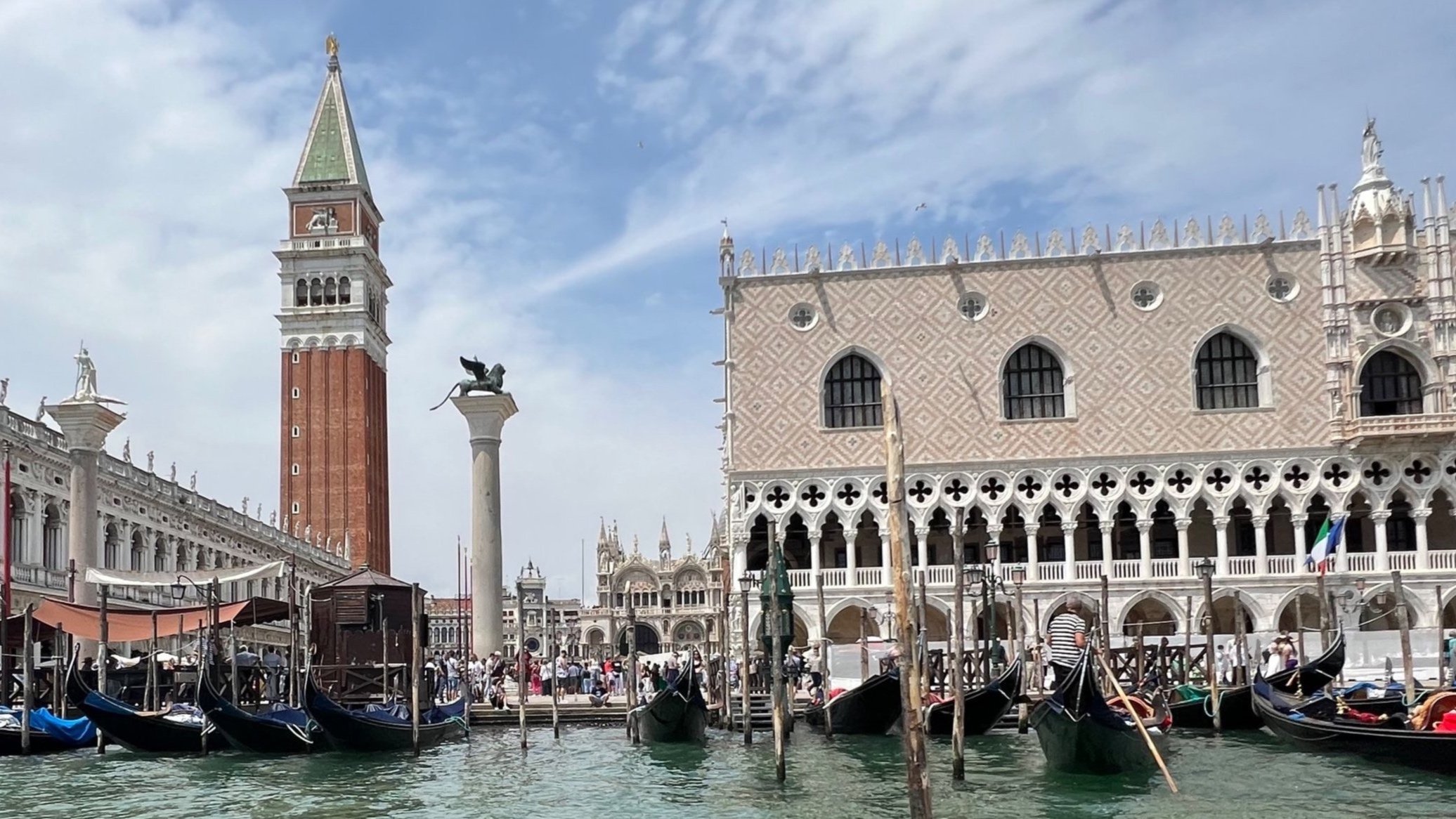
Primarily I am hoping to motivate individuals to begin their own journey of exploration into the world of Renaissance art. Whether it is to enhance a trip of a lifetime to Rome, Florence or Venice by providing suggestions about what to see or merely to begin a new hobby that, like for me, quickly became a new passion. Through the modest contribution of this website, I would like readers to leverage the great work of the many art historians who painstakingly go through primary sources to help us better understand the context and the stories behind the world’s most important works of art. Ultimately, my sincerest hope is that the information presented here will inspire anyone who is curious about the Renaissance to learn more about the period without feeling overwhelmed. The enjoyment of art is essentially a personal undertaking. Its benefits lie in the personal connections we forge with each creation, enriching our understanding of the world and, most importantly, of ourselves. Anyone who is curious about art should feel comfortable embarking on that journey. Sometimes all you need are a few tips and ideas to get started.
Do you have any tips on how to begin a journey into the world of art?
The worlds of history and art can, at first glance, appear quite overwhelming. The best advice is to start slowly. Find a work of art that strikes you and for which you feel a personal or emotional connection. Read about the artist and the historical context surrounding its creation. Who was the patron? Was it a private piece or did it serve a public purpose? One little trick I use with the books I read is the following. I spend a lot of time looking at the author’s bibliography. In many cases, this is a great source for further exploration. Start now! Find a compelling work of art that moves you and begin to draw your blueprint of exploration. You will be surprised how quickly you will become absorbed. It’s exciting. Have fun!
Do you plan to share your own reflections and experiences on Renaissance art?
Absolutely. While The Renaissance Blueprint began as a way to organize and share my interest in Renaissance art, I also want it to become a place for ongoing conversation and reflection. Alongside the core content of the site, I will regularly publish blog posts drawn from my own experiences visiting museums and exhibitions, reading biographies and histories, and spending time with individual works of art.
Some posts will focus on major exhibitions and museum collections. Others will explore books that have deepened my understanding of the Renaissance world and the artists who shaped it. I also hope to write more personal reflections on why Renaissance art continues to matter today — not only for its beauty and technical brilliance, but for the way it encourages careful observation, curiosity, humanity, and a deeper appreciation of the world around us.
One of the great pleasures of studying Renaissance art is that it rewards repeated looking. The more time one spends with these works, the more they reveal. Through the blog, I hope to share some of those discoveries and encourage others to slow down, look closely, and experience the lasting richness of Renaissance art for themselves.