
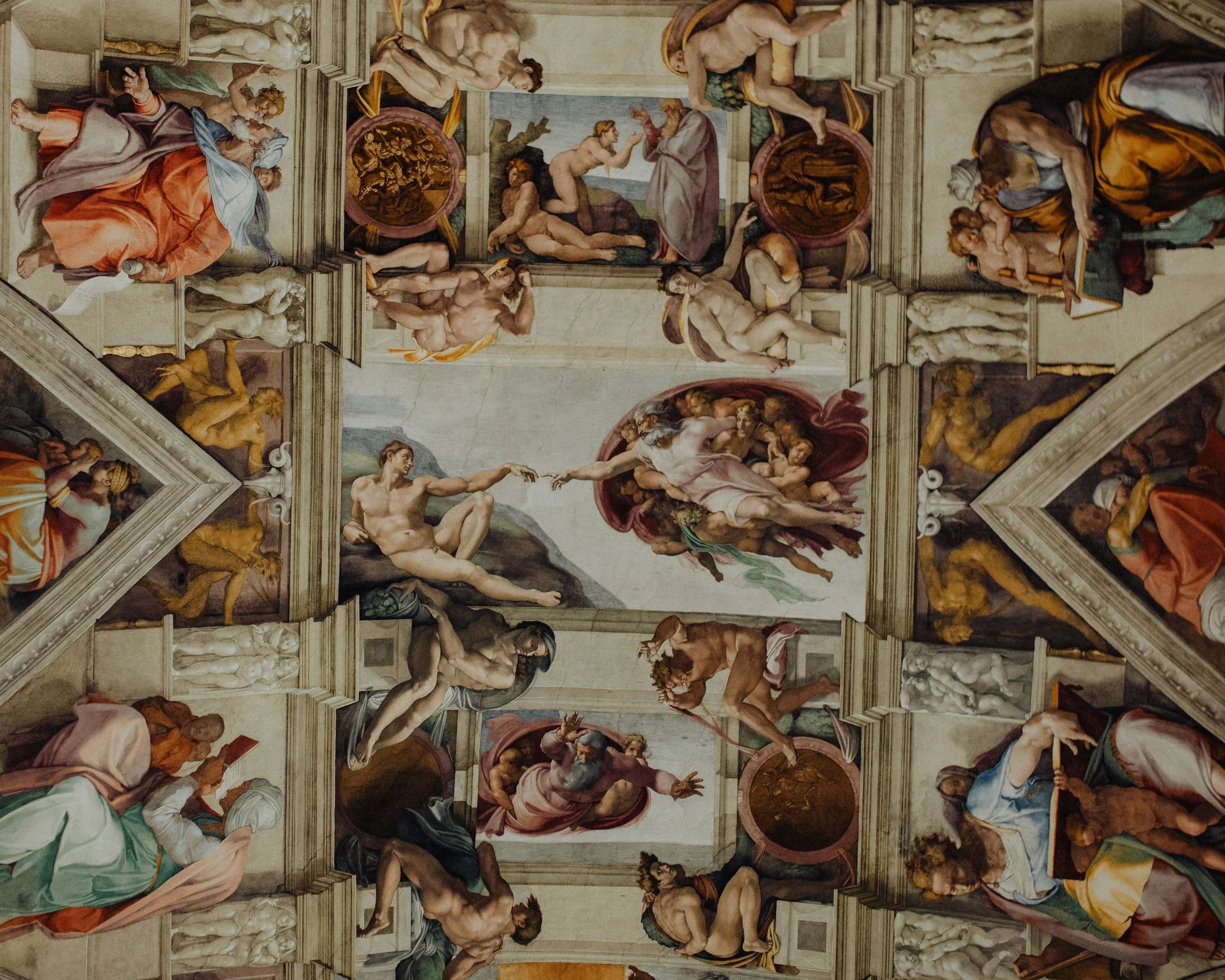
Michelangelo and his works
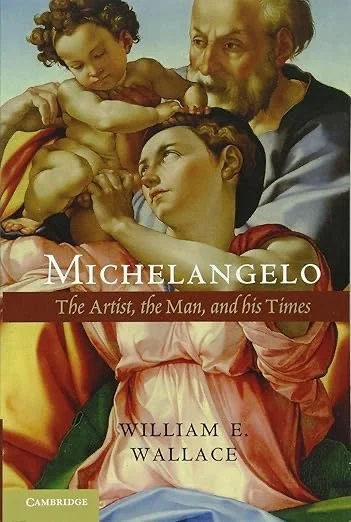
William E. Wallace's Michelangelo: The Artist, The Man, and His Time offers a comprehensive exploration of the life and work of Michelangelo Buonarroti, situating the artist within the rich cultural and historical context of the Italian Renaissance. The book delves into Michelangelo's artistic genius across various mediums—sculpture, painting, and architecture—while also providing insight into his complex personality and the societal dynamics that influenced his creations. Wallace combines meticulous scholarship with an engaging narrative to paint a vivid portrait of Michelangelo not only as a revolutionary artist but also as an individual shaped by the turbulent times in which he lived. The book offers fascinating stories about the context surrounding some of Michelangelo’s most famous works. (Cambridge University Press, 2010)
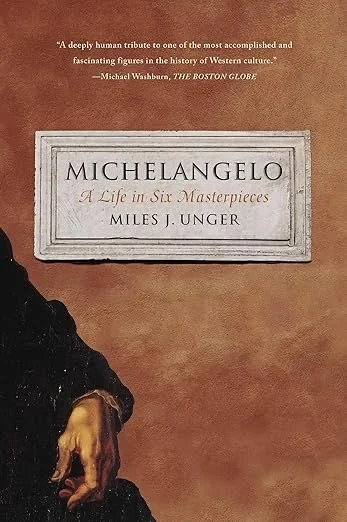
Miles J. Unger's Michelangelo: A Life in Six Masterpieces offers a compelling biography of the iconic Renaissance artist through the lens of six of his most significant works. Unger explores how each masterpiece—ranging from the Pietà to the Last Judgment—reflects different stages of Michelangelo's life and evolving artistic vision. The book intertwines art history with personal narrative, shedding light on Michelangelo's creative genius, struggles, and the cultural context of 16th-century Italy. Unger's detailed analysis provides readers with an intimate portrait of Michelangelo, revealing how his art and life were profoundly interconnected. (Simon & Schuster, 2014)
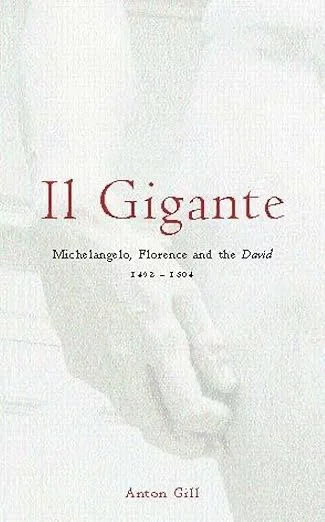
Anton Gill’s Il Gigante: Michelangelo, Florence and the David provides a detailed exploration of the creation and significance of Michelangelo’s David, one of the Renaissance’s most iconic sculptures. The book delves into the artistic mastery and political symbolism embedded within the statue, set against the turbulent backdrop of 16th-century Florence. Gill combines rigorous historical research with vivid storytelling to illuminate the challenges Michelangelo faced and the cultural impact of his masterpiece on the city and beyond. This is a must read when planning to see the sculpture in person while at the Accademia Gallery in Florence. (Thomas Dunne Books, 2002)
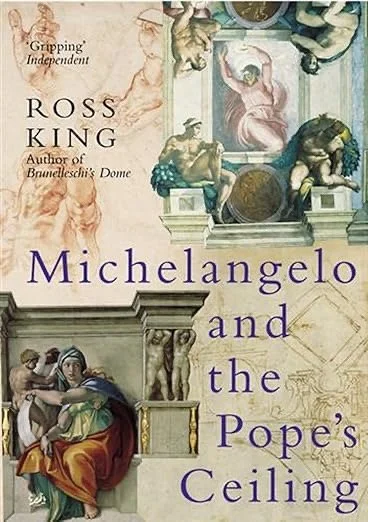
Ross King's Michelangelo and the Pope's Ceiling chronicles the monumental task undertaken by Michelangelo to paint the Sistine Chapel ceiling under the patronage of Pope Julius II. The book explores the intense artistic, political, and personal challenges Michelangelo faced during the four-year project, highlighting his innovative techniques and the clash between artistic vision and papal authority. King provides a detailed account of Renaissance Rome's cultural and religious climate, offering insight into the creation of one of the most iconic masterpieces in art history. King is one of my favourite history authors (you will find more books from him here). His work here is particularly interesting from the standpoint that the relationship between Michelangelo and Pope Julius II was the starting point of a new type of relationship between patron and artist. (Pimlico, 2006)
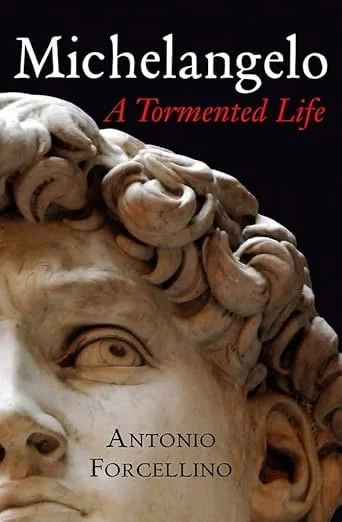
Antonio Forcellino’s Michelangelo: A Tormented Life offers an in-depth exploration of the life and work of one of the Renaissance’s most enigmatic figures. The book delves into Michelangelo’s artistic genius, his profound personal struggles, and the complex social and political environment that shaped his creativity. The book offers a nuanced portrait that balances Michelangelo’s monumental achievements with his inner turmoil and relentless pursuit of perfection. This is an essential resource written by an expert in the field. Forcellino is an accomplished art historian and curator with extensive expertise in Renaissance art. His scholarly background and deep engagement with Italian cultural history enrich his biographical accounts, allowing him to illuminate both the technical mastery and human dimensions of the artists he studies. A must read for Michelangelo enthusiasts. (Polity, 2023)
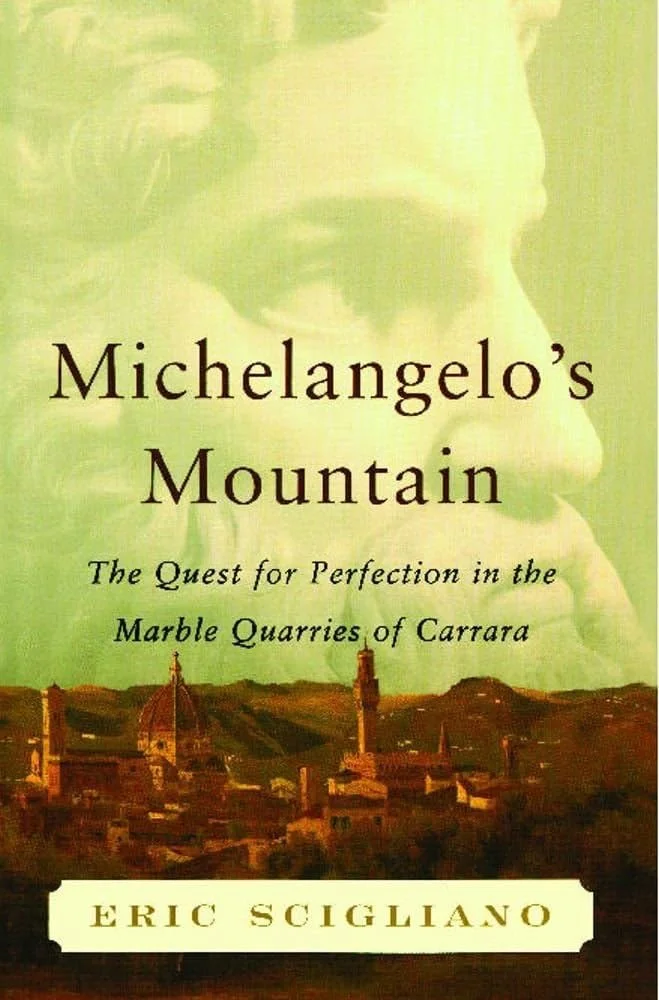
Eric Scigliano’s Michelangelo’s Mountain: The Quest for Perfection in the Marble Quarries of Carrara delves into the profound relationship between the Michelangelo and the marble quarries of Carrara, Italy. The book intricately explores how these quarries provided not only the raw material for some of Michelangelo's most iconic sculptures but also represented the artist’s relentless pursuit of perfection. Scigliano combines historical narrative, geological insights, and personal stories from modern quarry workers to illustrate the enduring significance of Carrara marble. Through vivid descriptions and meticulous research, the book sheds light on the challenges of extracting flawless marble and the artist’s exacting standards, revealing the deep connection between nature, artistry, and human endeavour in creating some of the world’s most celebrated works of art. The book offers a very interesting look at one of the aspects of Michelangelo’s creative process highlighting aspects of his complex personality and difficult collaborative style highlighted in some of the other profiles of the master artist. It is a definite item to place on a reading list for anyone who wants to gain a deeper understanding of the overlooked part of the creation of a masterpiece. (Atria Books, 2012)
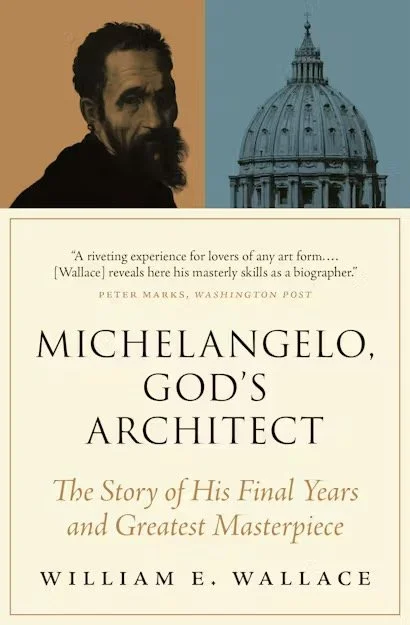
Willian E. Wallace’s Michelangelo, God’s Architect - The Story of His Final Years and Greatest Masterpiece explores the final two decades of Michelangelo’s life, beginning with the installation of the monumental Moses in San Pietro in Vincoli in 1545 and concluding with his work on St. Peter’s Basilica, the project that would define his final years and enduring legacy.
Rather than portraying Michelangelo as a solitary genius in decline, Wallace reveals an artist who remained intellectually curious, spiritually engaged, and remarkably productive well into old age. The book follows Michelangelo as he navigated the political and religious upheavals of sixteenth-century Rome, cultivated deep friendships, grappled with questions of faith and mortality, and ultimately assumed responsibility for the design of St. Peter’s, which he regarded as a sacred duty rather than a professional commission.
The central message of the book is that Michelangelo’s later years were not an epilogue to a great career but a period of continued growth, purpose, and achievement. Wallace shows that creativity, learning, and meaningful work need not diminish with age. Michelangelo’s example reminds us that later life can be a time of renewed focus and contribution, and that advancing years need not prevent us from pursuing ambitious goals or leaving a lasting legacy.
Wallace is one of the world’s leading Michelangelo scholars and a professor of art history at Washington University in St. Louis, whose research has significantly reshaped modern understanding of the artist’s life and work. (Princeton University Press, 2019)