
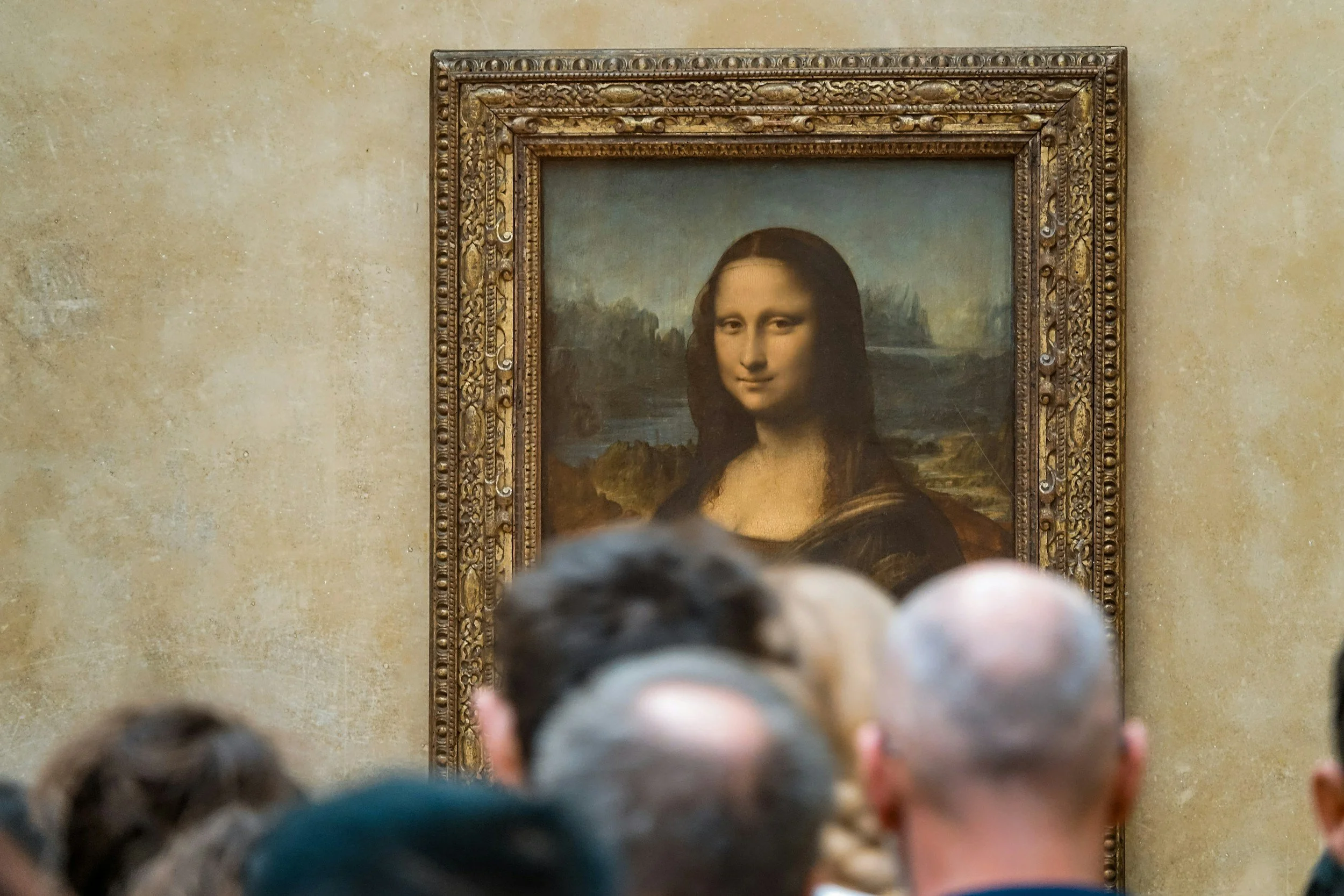
Leonardo and his works
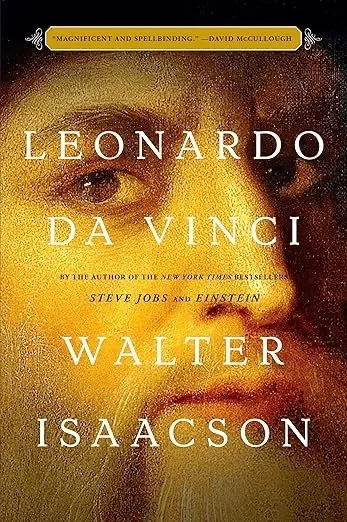
Walter Isaacson’s Leonardo da Vinci is a comprehensive biography that blends the artist’s life with a deep examination of his notebooks, scientific observations, and inventive curiosity. Isaacson portrays Leonardo as a polymath driven by insatiable curiosity and relentless empirical observation. The book traces his early life in Florence and apprenticeship with Verrocchio, through major commissions in Milan, Florence and Rome, to his final years in France. With a focus on Leonardo’s notebooks, Isaacson reveals a method of thinking grounded in careful observation, relentless testing, and imagination. The narrative interweaves close readings of masterpieces such as the Last Supper and the Mona Lisa with discussions of Leonardo’s anatomical dissections, studies of optics and hydraulics, and inventive but often impractical mechanical designs. Isaacson argues that Leonardo’s genius lay less in isolated flashes of inspiration than in a disciplined habit of combining art and science: seeing patterns across disciplines, sketching to think, and refusing to accept received wisdom without verification. The biography is richly detailed, humanising Leonardo by showing his strengths and flaws—his procrastination, unfinished projects, and complicated personal relationships—while making a case for his enduring influence as a model of creative thinking. (Simon & Schuster, 2017)
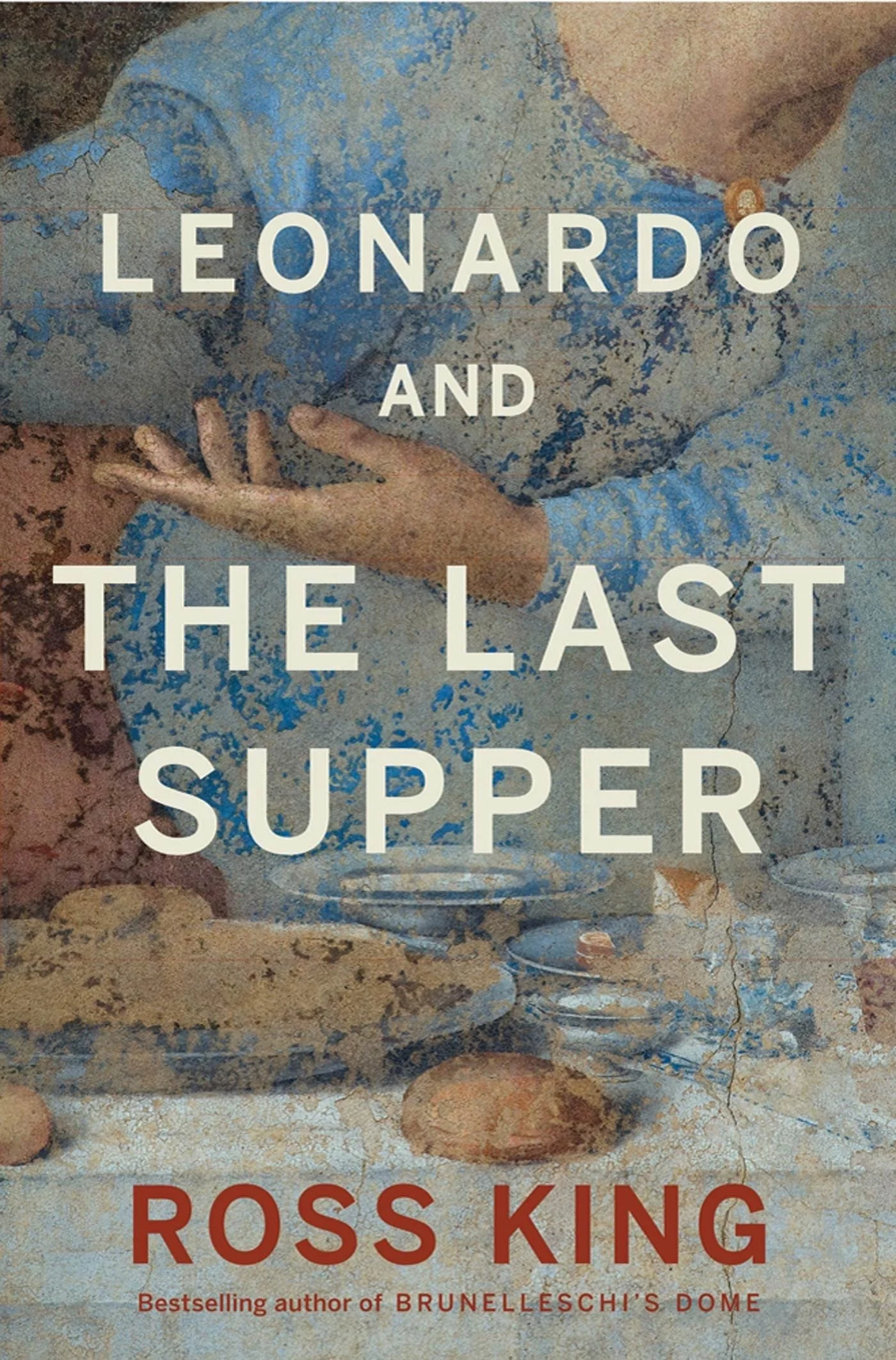
In Leonardo and the Last Supper, Ross King explores the creation and significance of Leonardo da Vinci’s iconic mural, The Last Supper. The book delves into the artistic, historical, and personal challenges Leonardo faced while working on the masterpiece, shedding light on his innovative techniques and the cultural context of Renaissance Milan. King combines detailed art history with vivid storytelling to reveal the complex process behind one of the world’s most celebrated works of art. Any trip to Milan and to the Basilica di Santa Maria della Grazie where the painting is located would be incomplete without the fascinating context provided by this book. (Anchor Canada, 2013)
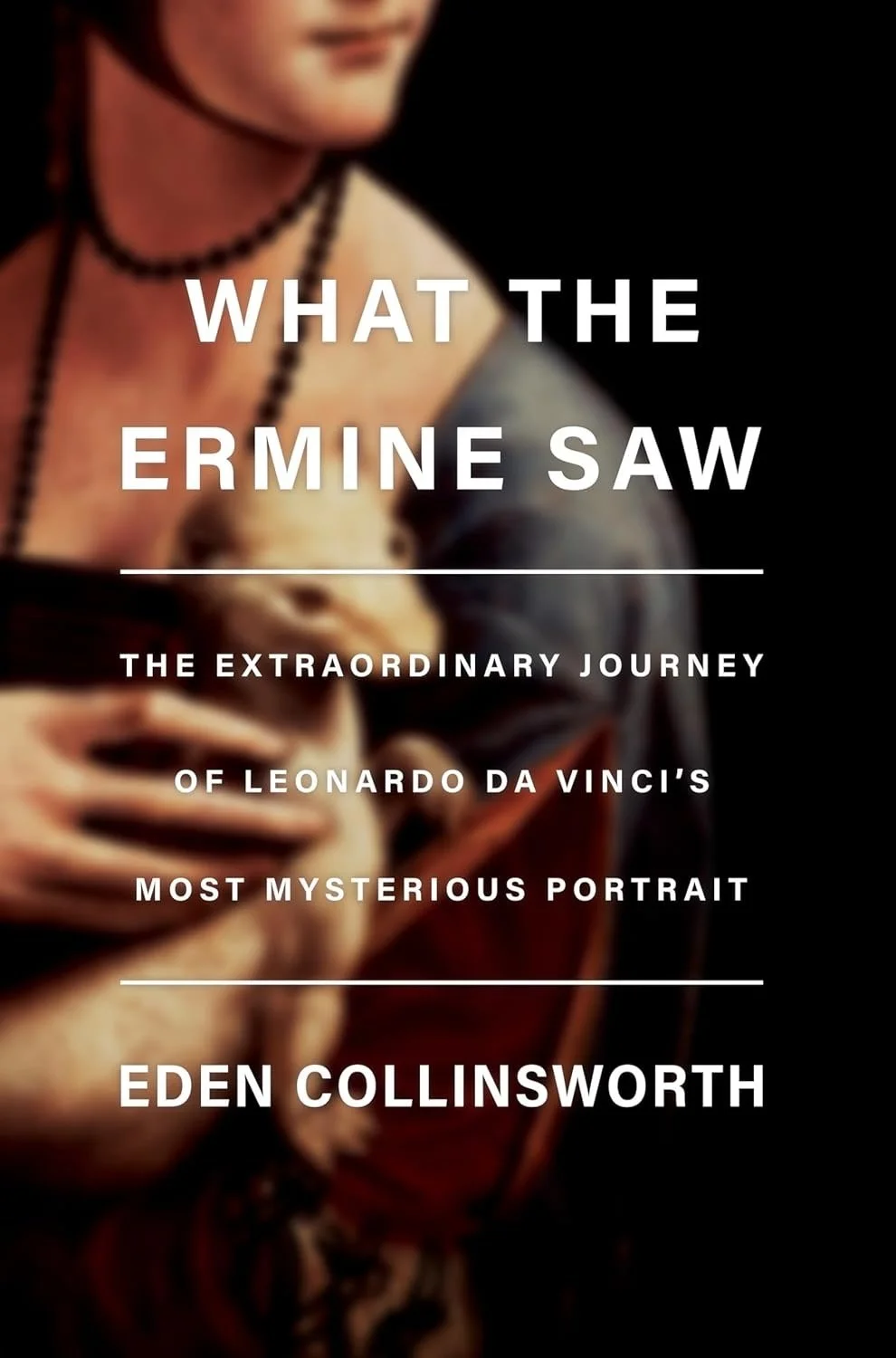
Eden Collinsworth’s What the Ermine Saw — The Extraordinary Journey of Leonardo da Vinci’s Most Mysterious Portrait traces the hidden history of a portrait long linked to Leonardo’s circle. The author investigates the portrait painting known as the Lady with an Ermine, combining archival research, provenance detective work and cultural context to reconstruct its travels and shifting meanings across centuries. The book follows the painting’s origins in Renaissance Italy, its movement through collections and owners, and the debates among scholars and connoisseurs over attribution, authenticity and value. Collinsworth situates the portrait within Renaissance artistic practice and the later taste for Leonardo, showing how changing historical circumstances — wars, collectors’ fashions, market pressures and scholarly biases — shaped the portrait’s reception. This is a compelling book with a narrative that blends biography, art-historical analysis and investigative storytelling to illuminate both the portrait itself and broader questions about how masterpieces are identified, authenticated and mythologized. (Doubleday, 2022)
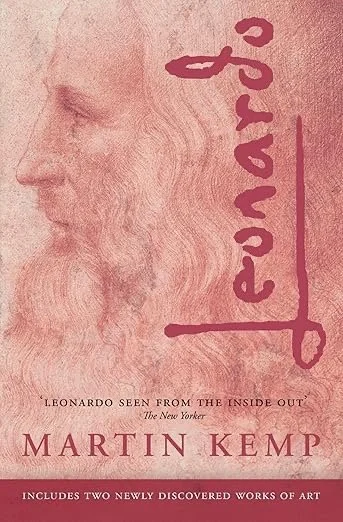
Martin Kemp’s Leonardo is a concise, scholarly synthesis that presents Leonardo da Vinci as a deeply integrated thinker whose art, science and technology are inseparable. Kemp argues that Leonardo’s achievements cannot be understood solely as isolated masterpieces or as precocious scientific notes; rather, Leonardo developed a distinctive method of visual thinking—an experimental, observational and diagrammatic practice—through which empirical investigation and artistic invention mutually reinforced one another. The book traces how Leonardo’s anatomical studies, mechanics, optics and engineering informed composition, perspective and the rendering of movement and expression, situating his work in Renaissance intellectual contexts while dispelling myths about him as merely a solitary genius. Kemp emphasises Leonardo’s continuous interplay between embodied drawing and conceptual thought, arguing that his legacy lies in the unity of making and knowing. Martin Kemp is a leading British art historian and professor emeritus at the University of Oxford, renowned for his scholarship on Leonardo da Vinci and the intersections of art and science. (Oxford University Press, 2011)