
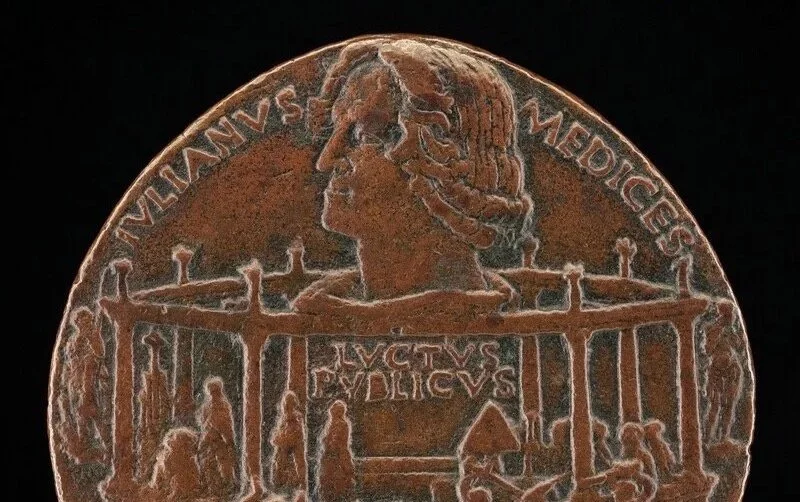
The Pazzi Conspiracy
The Pazzi Conspiracy (1478) was a plot by the Pazzi family and allies to overthrow the Medici, culminating in the assassination of Giuliano de' Medici and the attempted murder of Lorenzo de' Medici during Easter mass in Florence’s Duomo. The failed coup strengthened Lorenzo’s political power and led to severe reprisals against the conspirators, reshaping Florentine politics and influencing the history of Italy and Europe more broadly.
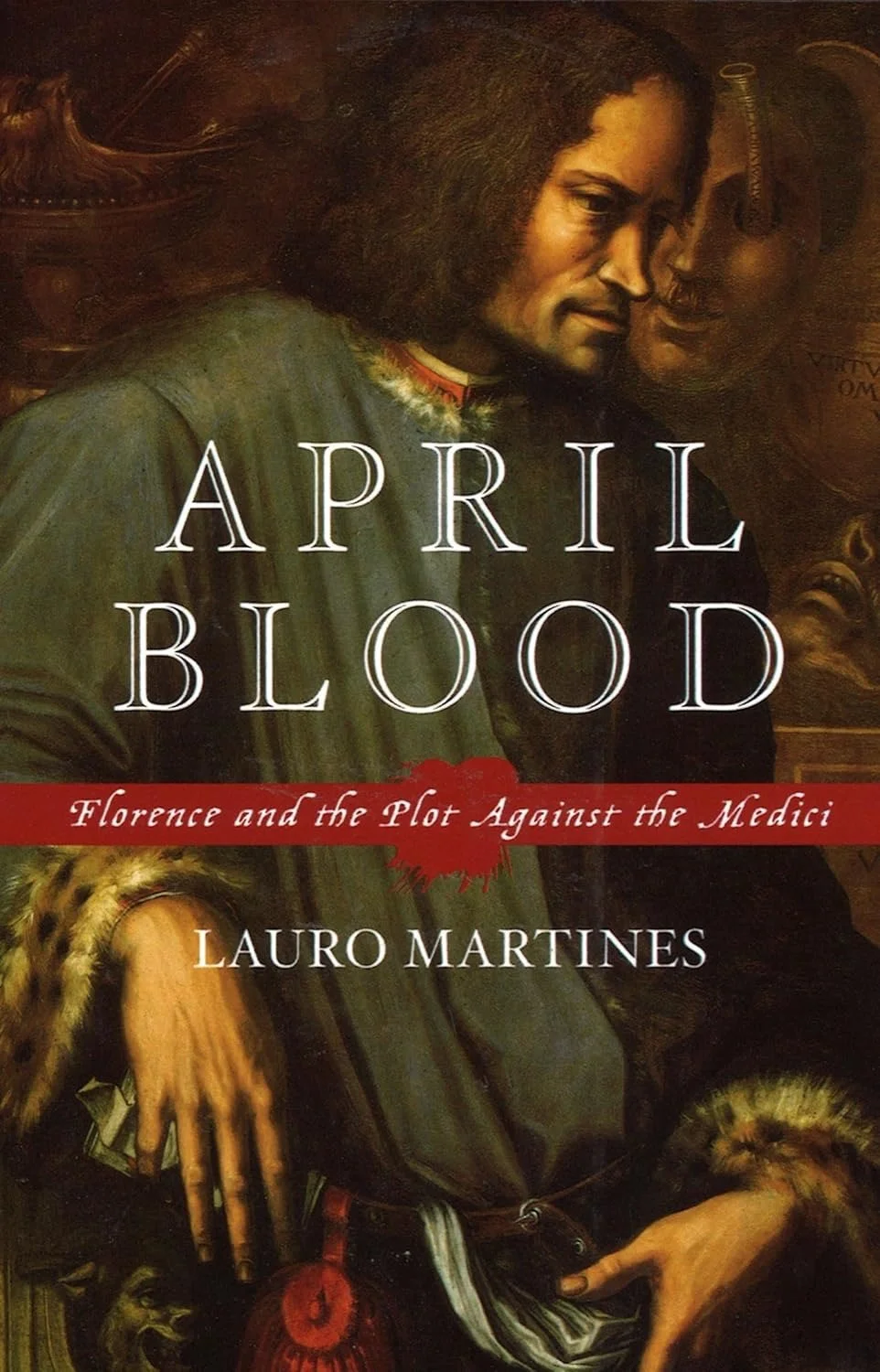
In April Blood: Florence and the Plot Against the Medici, Lauro Martines provides a detailed account of the 1478 conspiracy to assassinate Lorenzo de’ Medici and his brother Giuliano in Renaissance Florence. The book meticulously reconstructs the political, social, and cultural tensions that culminated in the infamous Pazzi Conspiracy. Martines explores the motivations of the various factions involved, the fragile balance of power within the Florentine Republic, and the broader implications for Italian politics and society. Through vivid narrative and rigorous scholarship, the work offers profound insights into the complexities of Medici rule and the volatile environment of 15th-century Florence. This is the type of book that makes one think - how would history have unfolded if the plot had been fully successful? (Oxford University Press, 2003)
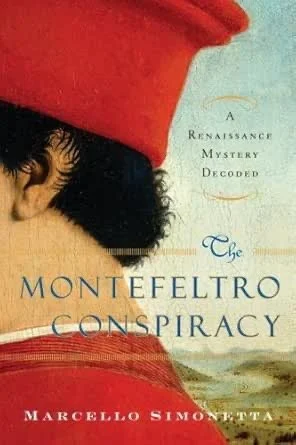
Marcello Simonetta’s The Montefeltro Conspiracy is a tightly argued historical investigation into one of the most dramatic episodes of the Italian Renaissance: the Pazzi Conspiracy of 1478, an attempted coup against the Medici that culminated in a bloody attack inside Florence’s cathedral. Rather than retelling the familiar narrative at face value, Simonetta reopens the case using newly deciphered archival material to expose a deeper, more coordinated political plot involving multiple Italian powers.
At the heart of the book is Simonetta’s discovery and decoding of encrypted diplomatic correspondence from the ducal court of Urbino. These letters reveal that the conspiracy was not merely a Florentine family feud backed by the Pazzi and tacitly supported by Pope Sixtus IV, but part of a broader geopolitical strategy. The documents suggest that Federico da Montefeltro, Duke of Urbino—celebrated as a cultured patron of the arts and a model Renaissance prince—played a far more ambiguous and possibly complicit role than traditionally acknowledged.
Federico emerges in Simonetta’s account as a calculating political actor. While publicly maintaining the image of a loyal ally and condottiere, the decoded letters imply that he had prior knowledge of the plot against Lorenzo and Giuliano de’ Medici and may have positioned himself to benefit from a successful regime change in Florence. Urbino stood to gain influence and favor with Rome and Naples if the Medici were overthrown. Although Federico did not participate directly in the attack in Florence, Simonetta argues that his indirect involvement—through counsel, coordination, or strategic silence—places him within the conspiracy’s wider network. This reinterpretation complicates the traditional image of Federico as an exemplar of Renaissance virtue, revealing the realpolitik beneath the humanist veneer.
Simonetta’s narrative also reconstructs the intricate web of alliances behind the conspiracy: the Pazzi family, disgruntled Florentine elites, the papacy, and the Kingdom of Naples all had stakes in curbing Medici power. The failed assassination—Giuliano killed, Lorenzo wounded but surviving—triggered brutal reprisals in Florence and reshaped Italian politics, ultimately strengthening Medici control.
A distinctive strength of the book lies in Simonetta’s credentials and personal connection to the material. A historian and expert in Renaissance cryptography, he is uniquely qualified to interpret coded documents that had long resisted analysis. More intriguingly, he is a descendant of Cicco Simonetta, a key political figure of the period and chancellor to the Sforza dukes of Milan, who himself was deeply embedded in the diplomatic networks surrounding these events. This familial link adds a layer of immediacy and intellectual continuity to Simonetta’s work, as he revisits the political world his ancestor helped to shape.
In sum, The Montefeltro Conspiracy reframes the Pazzi Conspiracy as a sophisticated, multi-state operation and challenges the reader to reconsider the moral and political complexity of Renaissance leaders—especially Federico da Montefeltro, whose legacy emerges as far more enigmatic than the serene portraits suggest. (Doubleday, 2008)