
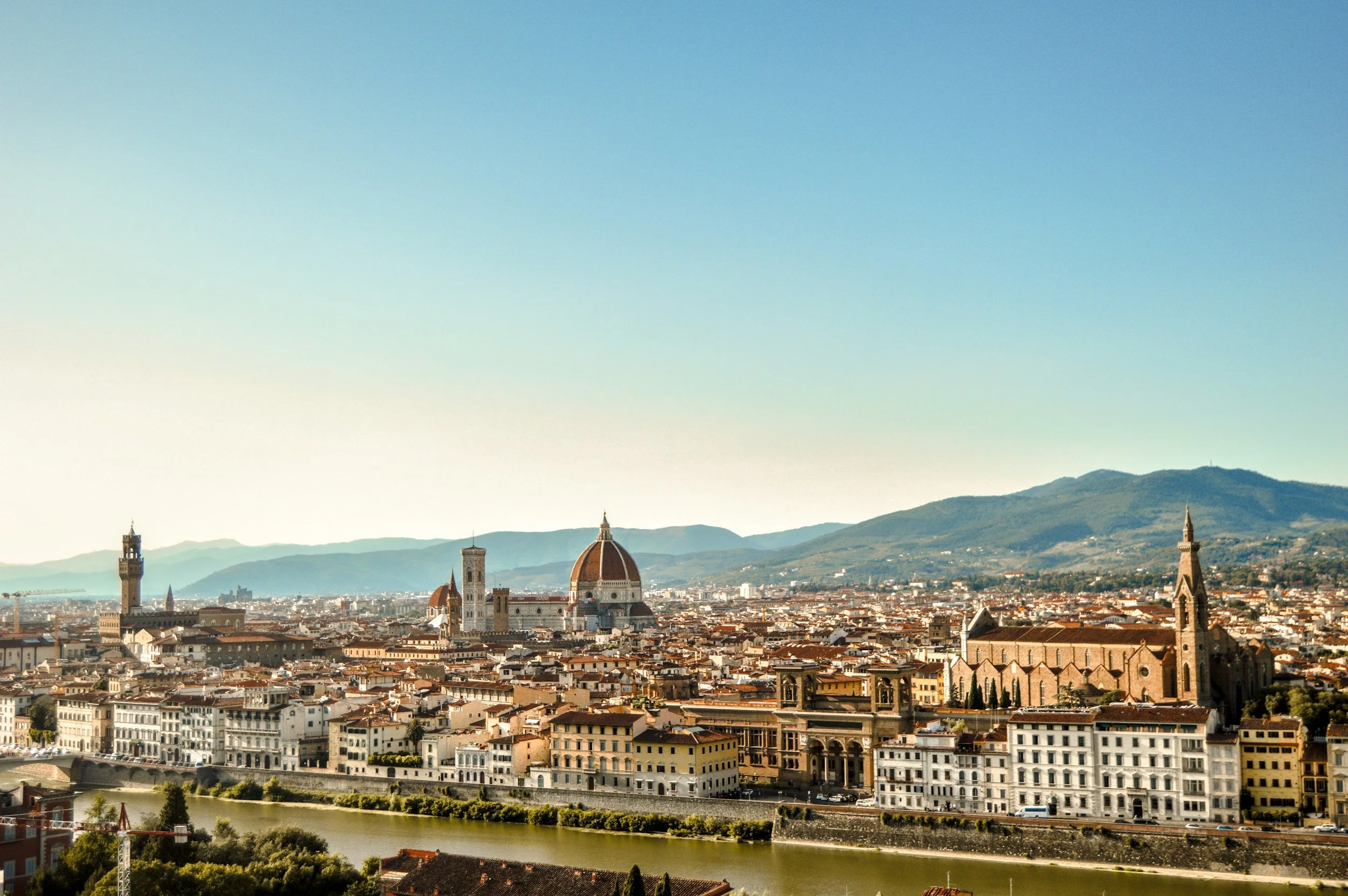
Florence
Judith Testa's An Art Lover's Guide to Florence offers an insightful and comprehensive exploration of Florence’s rich artistic heritage. The book serves as both a practical travel guide and an educational resource, detailing the city’s most significant artworks, museums, and historical sites. Testa provides detailed descriptions of key masterpieces, contextual background on artists and art movements, and useful tips for navigating Florence’s cultural landmarks. This guide is an essential companion for art enthusiasts seeking an informed and enriching visit to one of the world’s foremost art capitals and an absolute “must read” before and during a trip to the city. (Northern Illinois University Press, 2012)
Lawrence Rothfield's The Measure of Man: Liberty, Virtue and Beauty in the Florentine Renaissance explores how the Renaissance city of Florence became a crucible for revolutionary ideas about human agency, artistic expression, and political freedom. Rothfield examines the interplay between classical humanism and contemporary social dynamics, arguing that Florentine thinkers and artists redefined the concept of the individual as a measure of moral and aesthetic value. The book situates art and politics as interconnected forces shaping a new civic identity rooted in liberty and virtue, ultimately shaping the Western conception of human dignity and creativity during this transformative period. This is a very useful resource to begin drafting a blueprint of Renaissance discovery as it introduces the reader to the key events and actors that have significantly influenced the history of the city. The bibliography of the book offers the reader an interesting treasure throve for future reading. (Rowan & Littlefield, 2021)
Mary McCarthy’s The Stones of Florence is a concise, observant study of Florence’s art, architecture and history, written as a series of essays that blend travel writing, cultural criticism and personal reflection. McCarthy moves through the city’s medieval streets, churches and museums—treating major sites such as the Duomo, the Baptistery, Santa Maria Novella and the Uffizi—while tracing the personalities, political conflicts and artistic ambitions that shaped Florence from its communal and Renaissance heights through later decline.
Her prose alternates between close, sensitive description of sculpture, painting and architectural detail and sharp, often ironic commentary on patrons, artists and the city’s social structures. McCarthy considers masterpieces by Giotto, Brunelleschi, Donatello, Michelangelo and others, interpreting works in light of Florentine civic life, religious ritual and family rivalries (notably the Medici). She also reflects on how history, tourism and contemporary attitudes affect the city’s living memory.
The book’s tone is learned but lively: occasionally polemical, consistently engaged. Rather than a guidebook, The Stones of Florence is an intelligent meditation on how stones—buildings and artworks—embody political power, cultural values and human aspiration. (Harvest Book, 1963)