
Scholarly Works
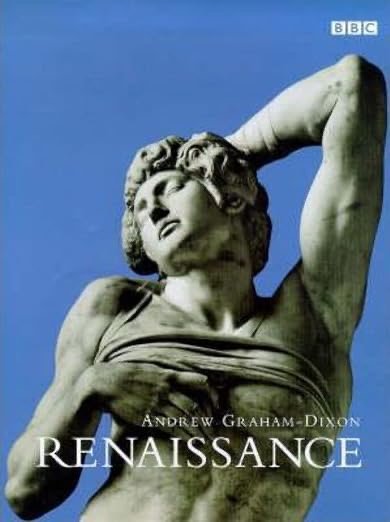
Andrew Graham-Dixon is one of Britain's best-known art historians and broadcasters. A former Chief Art Critic of The Independent, he has written extensively on European art and has presented numerous acclaimed television documentaries. Renaissance was published as the companion book to the BBC television series of the same name, which was first broadcast in 1999. The book offers an engaging and accessible journey through the Renaissance, tracing the artistic revolution from its beginnings in Florence to its spread across Italy and northern Europe. Graham-Dixon introduces the major figures of the period - including Giotto, Brunelleschi, Donatello, Masaccio, Leonardo da Vinci, Michelangelo, Raphael, Titian and Dürer - while explaining the historical, political and religious forces that shaped their achievements. The book is richly illustrated and places many of the Renaissance's greatest masterpieces within their historical context, making it easy to understand not only what makes these works exceptional, but why they transformed the history of art.
I consider the book to be a great introduction to the period. It provides an excellent overview of the principal artistic figures who defined the Renaissance and highlights many of the era's most significant works of art. For readers beginning their exploration of Renaissance art, it offers a clear, engaging and visually rewarding foundation before moving on to more specialised studies - what you can find in the titles listed below. (University of California Press, 2000)
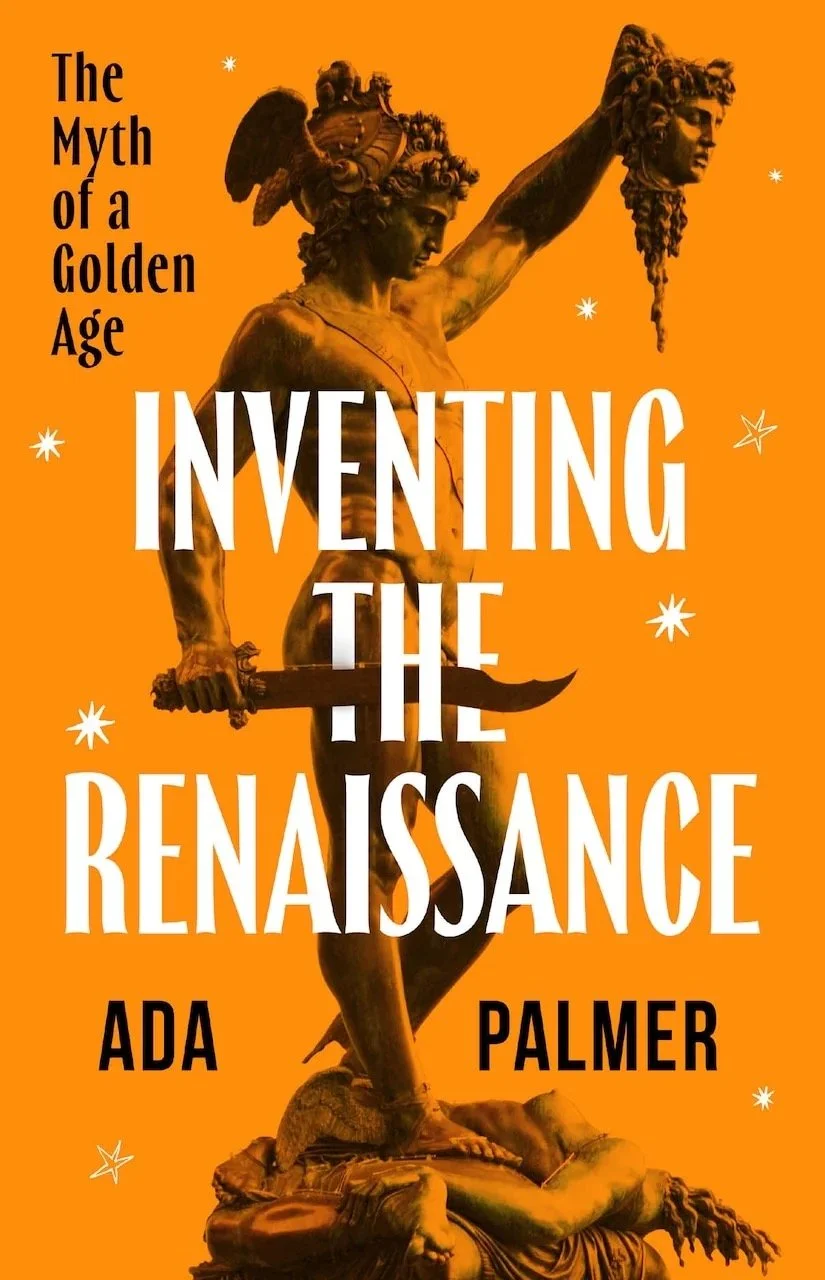
Inventing the Renaissance - The Myth of a Golden Age by Dr. Ada Palmer, a historian at the University of Chicago specializing in the intellectual and cultural history of the Renaissance, is less a book about the Renaissance than a book about how historians understand, interpret and continually reinterpret the past.
Rather than recounting the familiar stories of Leonardo, Michelangelo or the Medici, Palmer examines how the very concept of the “Renaissance” was created, reshaped and debated over six centuries. She demonstrates that each generation - from Petrarch and Vasari to nineteenth-century historian Jacob Burckhardt and modern scholars - has viewed the period through its own intellectual lens, revealing that history is rarely as straightforward as it first appears.
At more than 650 pages, the book is an ambitious and scholarly read. It is best suited to readers who already have a solid grounding in the period and want to deepen their understanding not only of the Renaissance itself, but also of the complexities of historical interpretation. While it is not an introductory survey, it offers a rewarding perspective on why our understanding of the Renaissance continues to evolve. Palmer offers a valuable insight - appreciating the Renaissance is not simply about learning dates, artists and masterpieces - it is also about understanding how history is written, why historical narratives change over time, and how each generation asks new questions of the past. (University of Chicago Press, 2025)
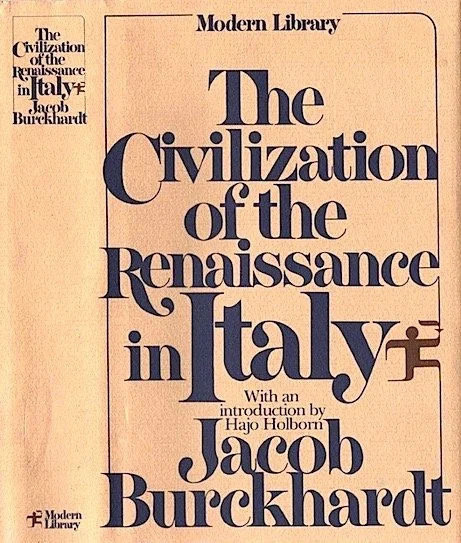
Jacob Burckhardt’s The Civilization of the Renaissance in Italy offers a comprehensive analysis of the cultural, political, and social transformation during the Italian Renaissance. Burckhardt portrays the Renaissance as the birth of modern individuality and secularism, highlighting the shift from medieval communal identities to the emergence of the individual as a unique and autonomous entity. He examines the development of art, humanism, and the revival of classical antiquity, emphasizing the role of Italian city-states like Florence and Venice as the epicentres of this vibrant cultural rebirth. While some scholars have challenged Burckhardt’s view of origins of the Renaissance, his work remains influential for its insightful portrayal of the period and its enduring impact on Western civilization. (Random House, 1954)
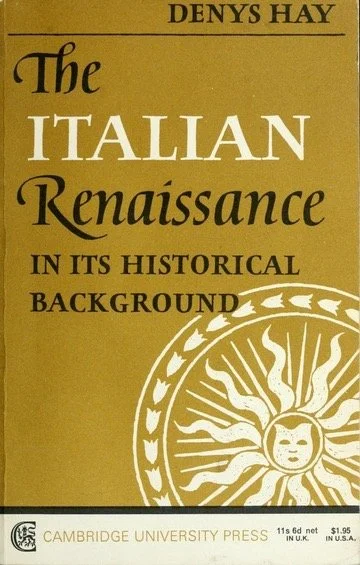
The Italian Renaissance in Its Historical Background offers a broad, scholarly survey of Italy’s cultural, political, and intellectual transformations from the late Middle Ages through the sixteenth century. Emphasizing the interplay between economic change, political institutions, and intellectual revival, the work situates artistic and literary achievements within their wider historical contexts: the rise of city-states, mercantile wealth, diplomatic and military competition, religious developments, and the transmission of classical learning. The book traces how civic structures, patronage systems, and social hierarchies shaped artistic production and humanist thought, and it pays careful attention to regional variation across Florence, Venice, Milan, Rome, and smaller states. The text explains the Renaissance as a complex, multi-causal phenomenon rather than a simple cultural rebirth, and it highlights both continuities with medieval institutions and genuinely innovative changes in politics, society, and culture.
The author, Denys Hay, was a distinguished British historian of early modern Europe, known for rigorous scholarship in European and Italian history. He served as Regius Professor of Modern History at the University of Edinburgh and produced influential works on the Renaissance, diplomacy, and international relations, bringing wide-ranging contextual depth to studies of the period. (Cambridge University Press, 1968)
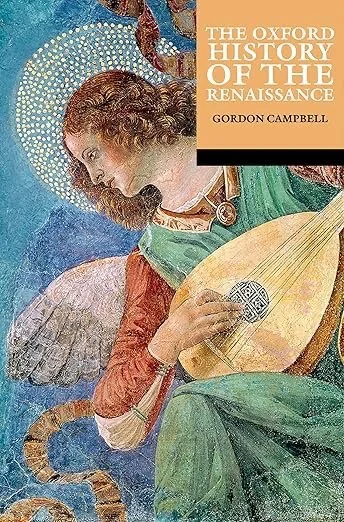
The Oxford History of the Renaissance by Gordon Campbell is a scholarly exploration of the Renaissance period, tracing the cultural, intellectual, and artistic developments that shaped Europe from the 14th to the 17th century. The book addresses the complexities of the era, examining key figures, movements, and regional variations while challenging simplistic narratives of the Renaissance as a purely positive or uniform revival. The book is comprehensive as it integrates political, social, and religious contexts, providing a nuanced understanding of how the Renaissance influenced the modern world’s formation. Most importantly, while very detailed in its scope, the remains accessible and essential resource for those seeking a deeper grasp of one of history's most transformative epochs.
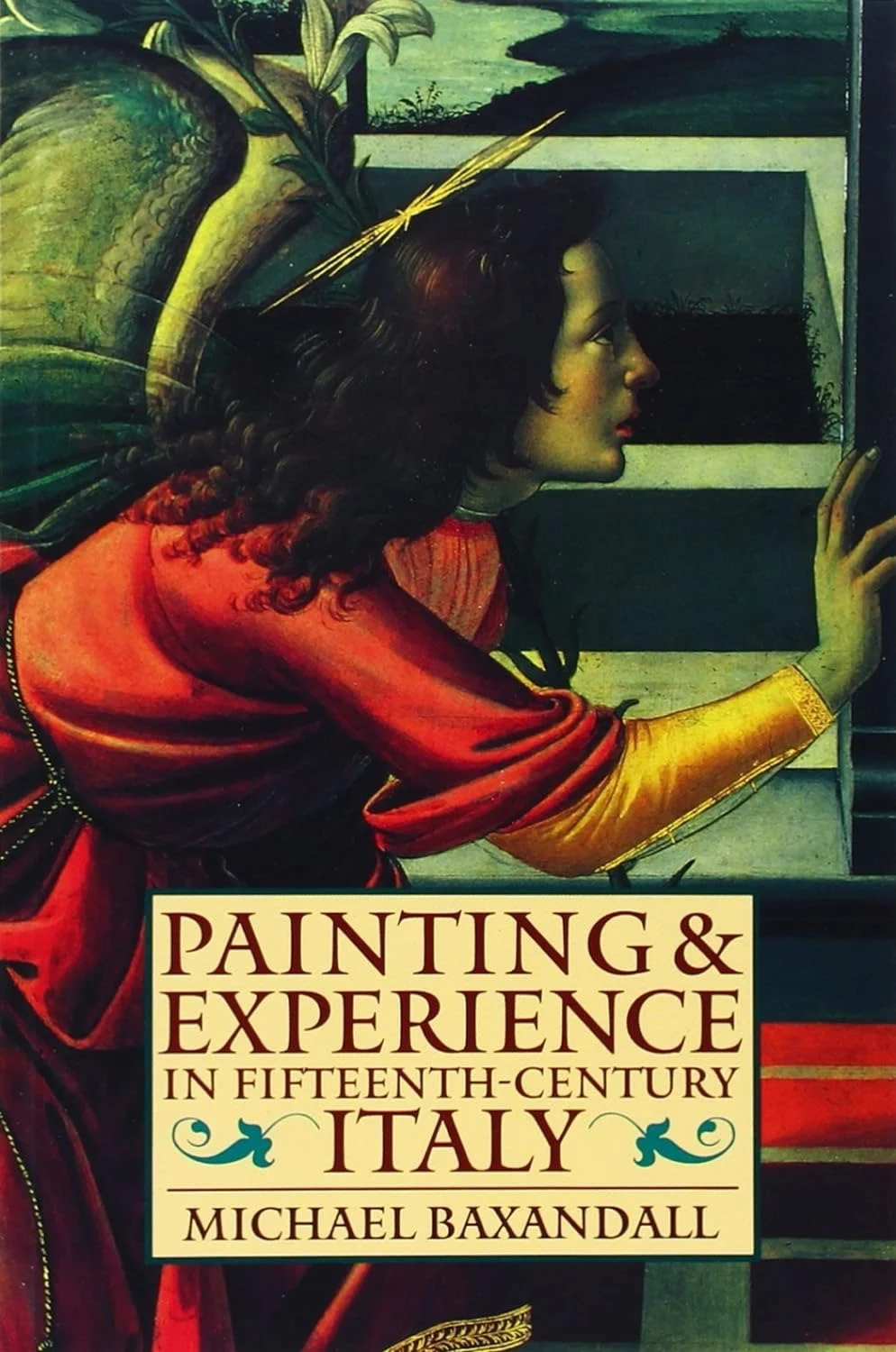
Michael Baxandall's Painting & Experience in Fifteenth-Century Italy offers a profound investigation into the cultural and social contexts that shaped the production and reception of Italian Renaissance art. Through meticulous analysis, Baxandall examines how the period's distinct "period eye"—a concept exploring the visual literacy and perceptual habits of contemporary viewers—influenced the style, composition, and iconography of paintings. The book highlights the interplay between art, patronage, and the broader cognitive environment, arguing that understanding these factors is essential to fully appreciating fifteenth-century Italian painting. This work remains foundational for its interdisciplinary approach, combining art history, anthropology, and social history to interpret the experiences framed by Renaissance artworks.
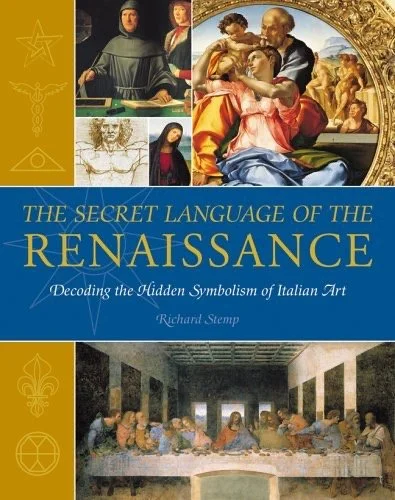
in the book The Secret Language of the Renaissance - Decoding the Hidden Symbolism of Italian Art Richard Stemp explores the intricate codes and symbols embedded in Renaissance art, literature, and philosophy. The book reveals how figures from this transformative period used allegory, ciphers, and esoteric imagery to communicate complex ideas about politics, spirituality, and knowledge. Stemp combines historical analysis with linguistic insight to uncover the hidden meanings that defined Renaissance culture, offering readers a deeper understanding of the era's intellectual and artistic achievements.
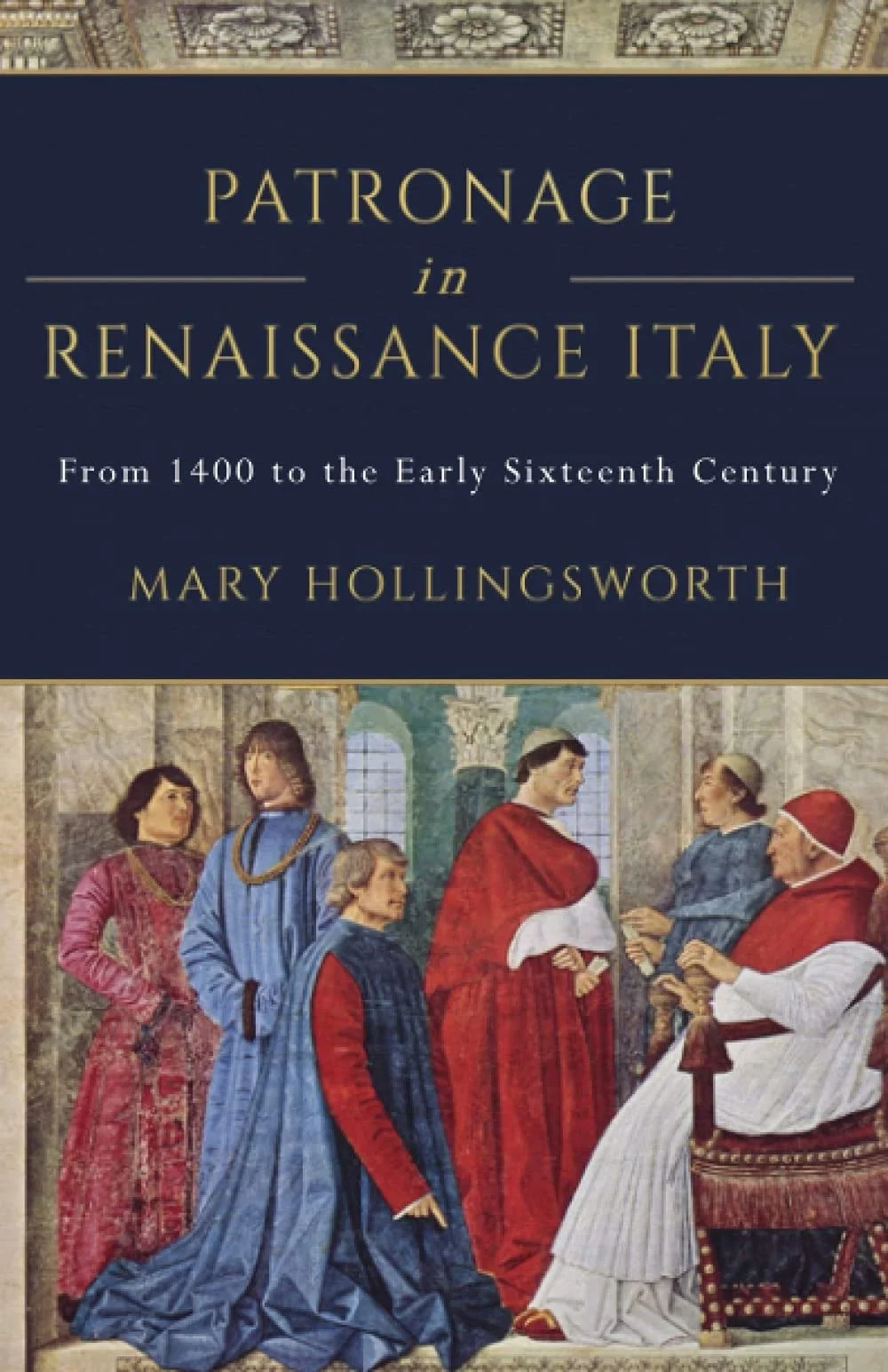
Mary Hollingsworth’s Patronage in Renaissance Italy: From 1400 to the Early Sixteenth Century explores the intricate relationships between artists, patrons, and political powers during the Italian Renaissance. The book examines how patronage shaped artistic production, social status, and cultural developments in key Italian city-states. Through detailed case studies, Hollingsworth, a British historian specializing in medieval and Renaissance Italy from the University of Oxford highlights the motivations and strategies behind patronage, revealing its role as a vital mechanism for asserting power, identity, and influence in Renaissance society. The work provides a nuanced understanding of the symbiotic connections between art, politics, and society in this transformative period. (Lume Books, 2021)
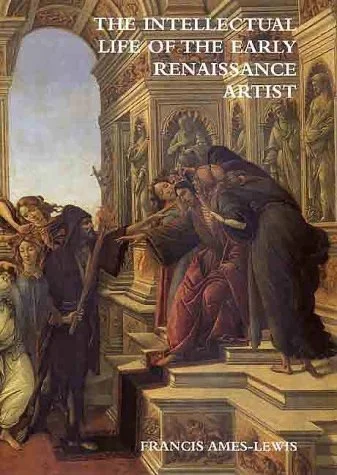
The Intellectual Life of the Early Renaissance Artist by Francis Ames-Lewis is a scholarly account of how artists in the early Italian Renaissance cultivated intellectual identities alongside their practical craft. Ames-Lewis argues that many artists of the 14th and 15th centuries were not merely skilled craftsmen but active participants in the broader currents of humanist thought, theology, scientific inquiry, and civic debate. The book traces how workshops, patronage networks, and urban institutions fostered environments in which painters, sculptors, and architects engaged with classical learning, natural philosophy, and literary culture—adopting learned personas that elevated their social status and shaped their artistic choices.
Through close readings of artists’ treatises, correspondence, and visual works, Ames-Lewis illuminates the channels by which knowledge circulated: workshop training, humanist circles, court and civic commissions, and the growing print culture. He emphasizes the dialogic nature of artistic production—how theoretical discourse informed practice and how practical problems stimulated theoretical reflection. Case studies demonstrate variations across regions and professions, showing that the intellectualization of the artist was neither uniform nor inevitable but depended on local institutions, patronage patterns, and individual ambition. His conclusions reframe the early Renaissance artist as a cultivated agent whose intellectual engagement was integral to the period’s artistic innovations and social transformations. Ames-Lewis is an established scholar of Renaissance art history with a distinguished academic career focused on Italian painting and the cultural contexts of Renaissance visual culture. His expertise in manuscript studies, archival sources, and the intellectual networks of Renaissance Italy lends authority to the book’s claims. (Yale University Press, 2000)