

Beyond the Renaissance
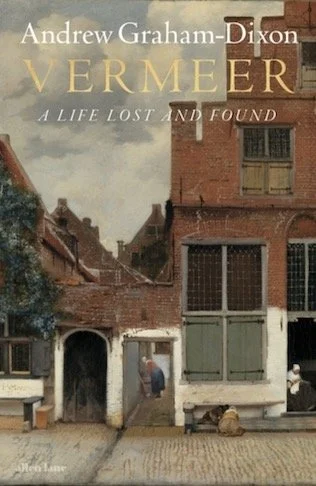
InVermeer: A Life Lost and Found, Andrew Graham-Dixon takes a fresh look at one of the most enigmatic painters in Western art. Rather than accepting the familiar image of Vermeer as the quiet chronicler of domestic life, Graham-Dixon’s thesis turns much of the established scholarship on its head, revealing a painter whose work may have been far more deeply shaped by religious belief, patronage and personal circumstances than is commonly assumed.
Among the book’s most compelling arguments is that Vermeer’s paintings were essentially created for a single patron and remained together in the same location - an extraordinary proposition that changes how we might understand both the purpose of the paintings and the world in which they were created. Graham-Dixon also explores the profound religious meaning embedded in seemingly simple domestic scenes, suggesting that the tranquility and intimacy of Vermeer’s interiors can conceal a much richer spiritual dimension.
As with much of Graham-Dixon’s work, the appeal is not simply in the conclusions but in the journey towards them. He brings together art, biography, religion and historical detective work to offer a compelling new interpretation of a painter whose life remains remarkably elusive. For anyone who thinks they already know Vermeer, this book offers a very good reason to look again. (W. W. Norton & Company, 2025)