Raphael: Sublime Poetry - The MET
A Modern Portal into the Renaissance: What Raphael-Sublime Poetry Teaches Us About How to Look at Art
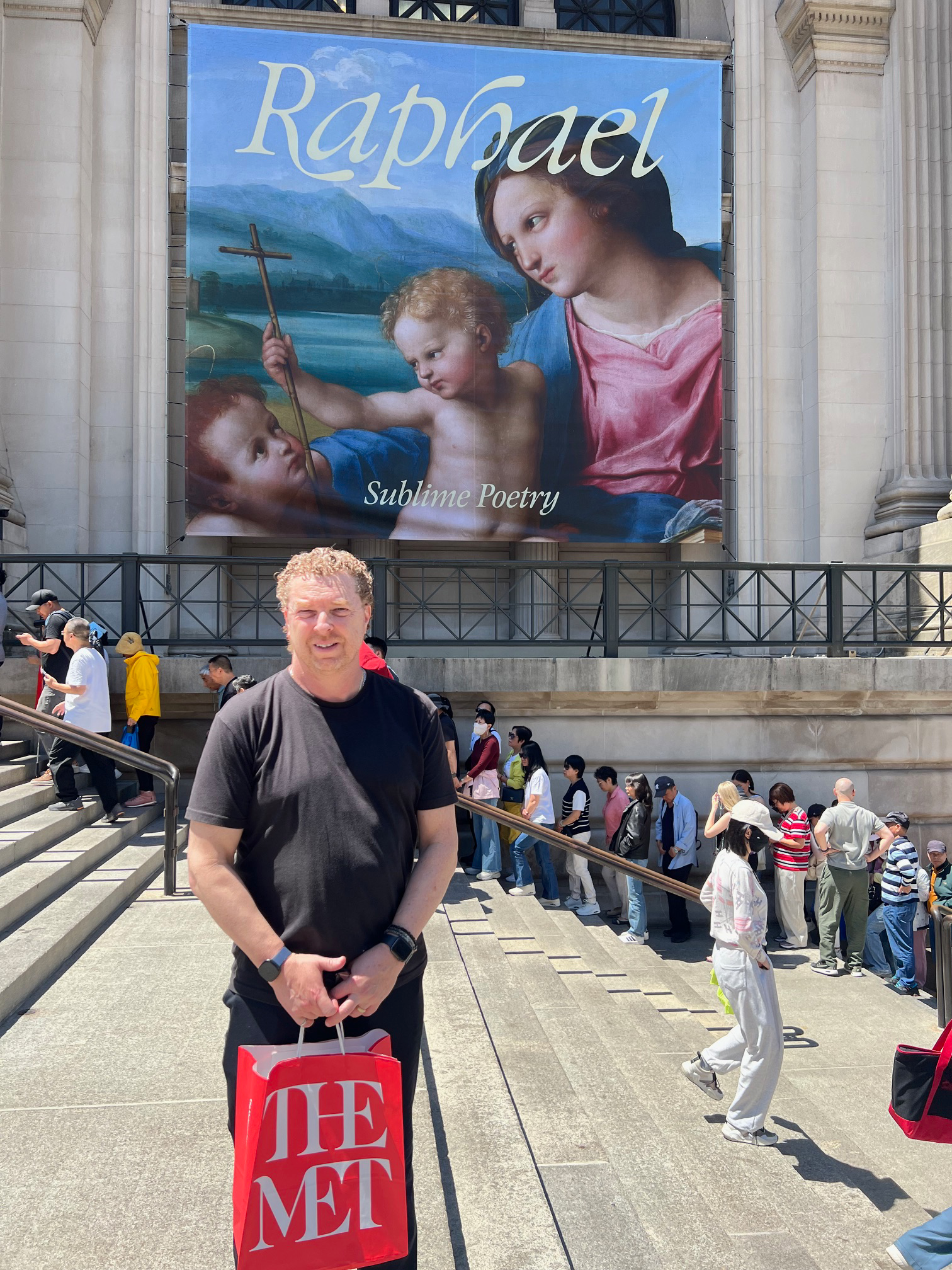
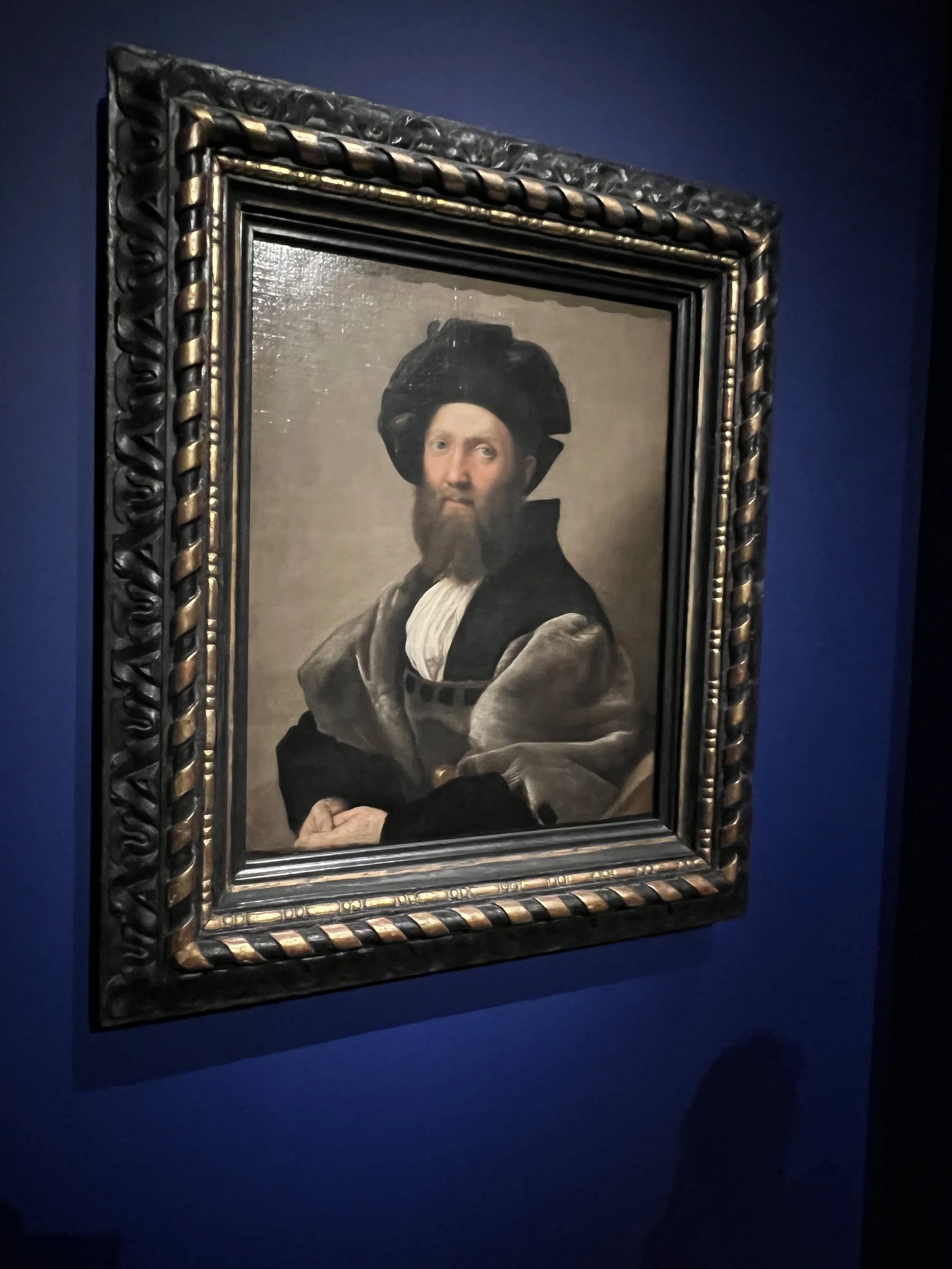
It is a bright spring day in New York City. The paths of Central Park are filled with movement: runners, tourists, families, and art lovers all drifting toward Fifth Avenue. Emerging at East 72nd Street, the flow becomes unmistakable. Hundreds of people are making their way toward The Metropolitan Museum of Art and the exhibition Raphael: Sublime Poetry.
The initial feeling when walking into the exhibition is a mix of heavy anticipation and apprehension. Overheard are comments such as “this is overwhelming”, “where do I start” and “I do not want to miss anything”. But that feeling of nervous excitement quickly dissipates. The paintings feel calm, balanced, almost self-evident. Nothing feels strained. The paintings and drawings invite attention rather than overwhelm it. Compared to the muscular intensity of Michelangelo or the mysterious ambiguity of Leonardo, Raphael can initially feel comforting and familiar. His paintings seem effortless. Yet beneath that clarity lies remarkable sophistication.
Raphael is not simple. He is clear. And clarity, in the Renaissance, is one of the highest achievements an artist could reach. In that regard, Raphael offers one of the most complete entry points into the process of how to see art. His work does not just represent the Renaissance - it quietly teaches you how the Renaissance thinks.
Why Everything Feels “Right”
One of the first questions a viewer might ask, even unconsciously, is this: why does everything in Raphael feel so right?
The answer lies in structure.
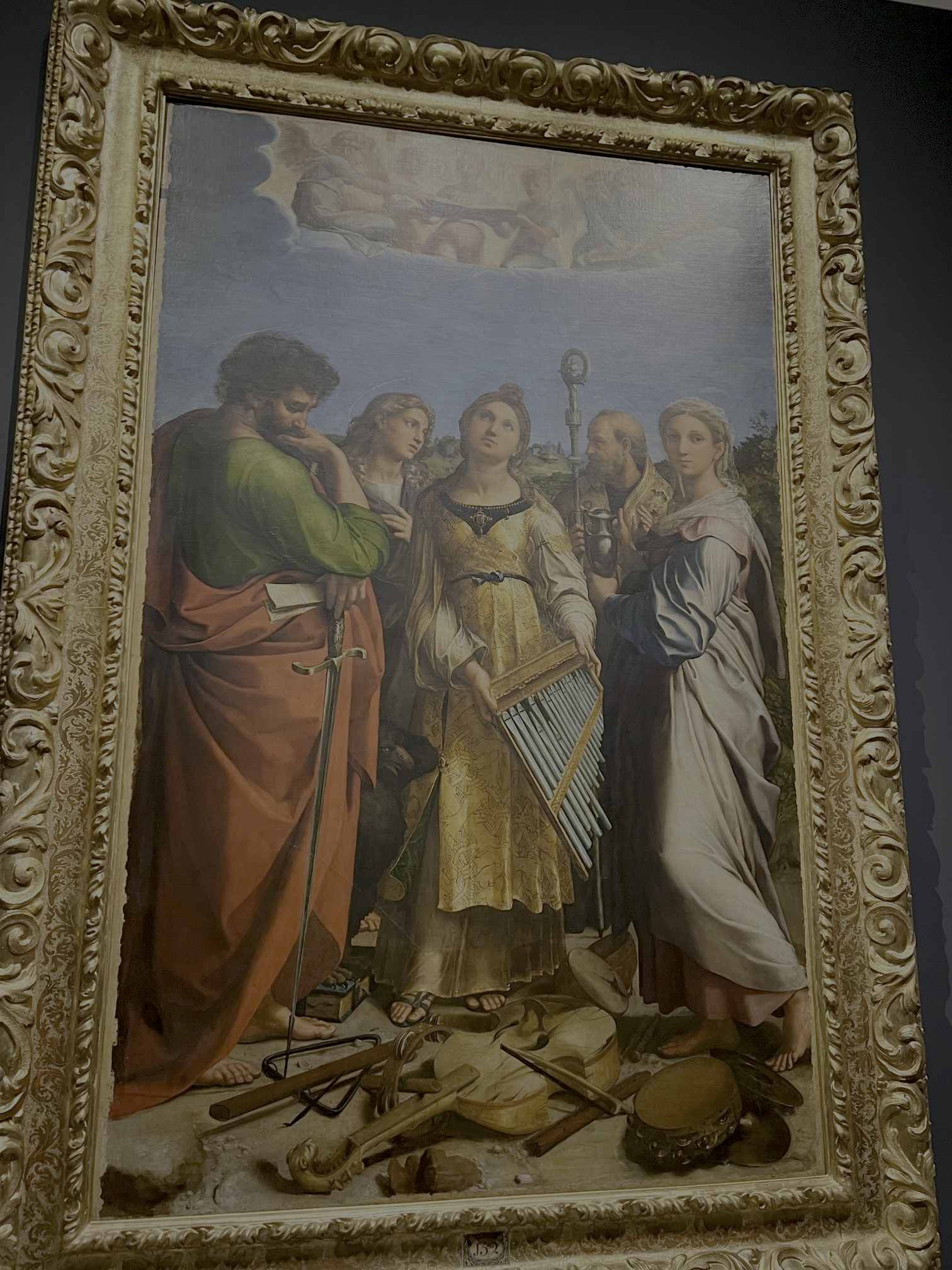
Raphael builds his compositions with an almost invisible precision. Triangles stabilize groups of figures. Gestures guide the eye in deliberate paths. Space opens up in a way that feels natural, even though it is carefully constructed. Nothing is accidental.
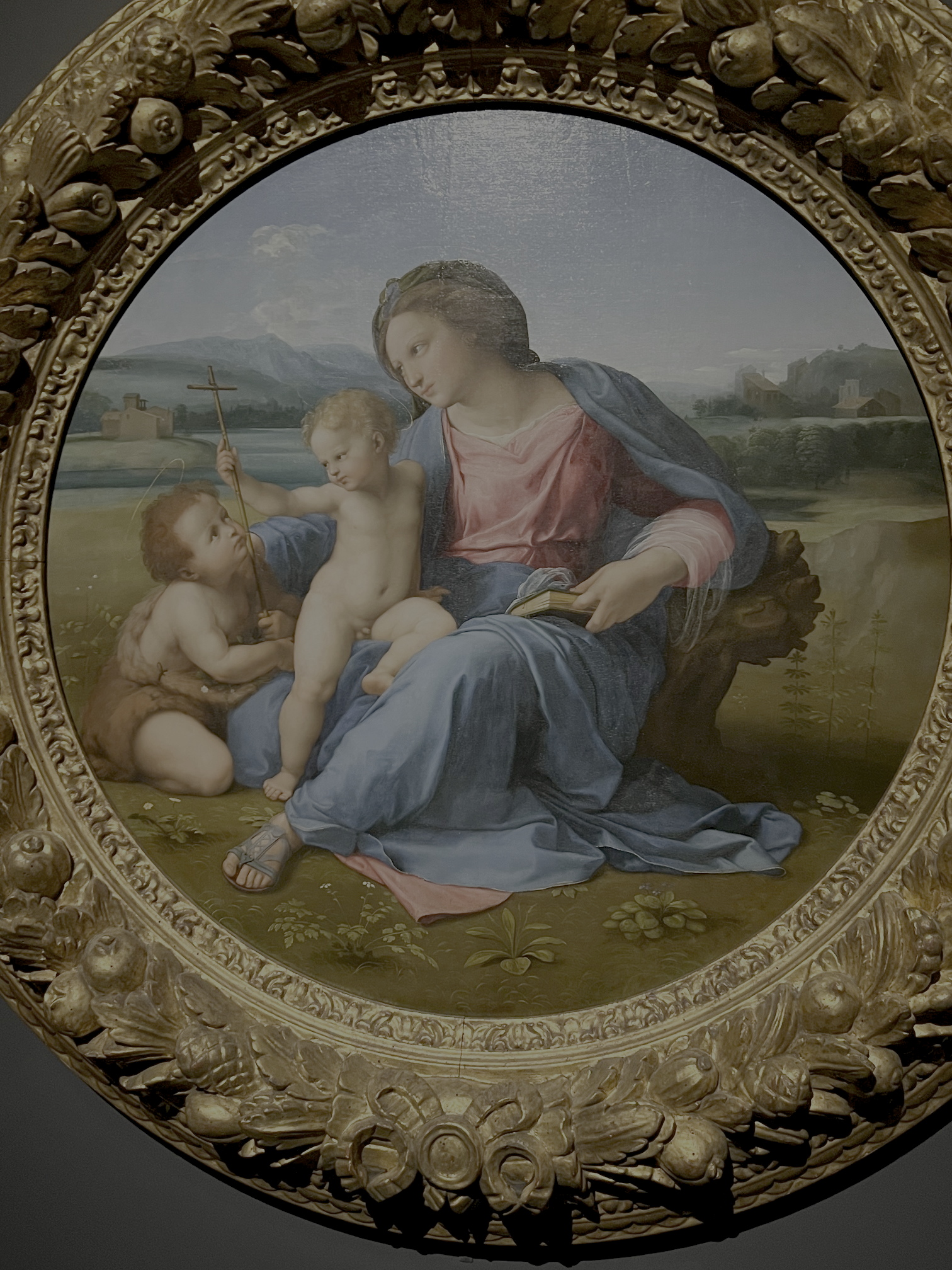
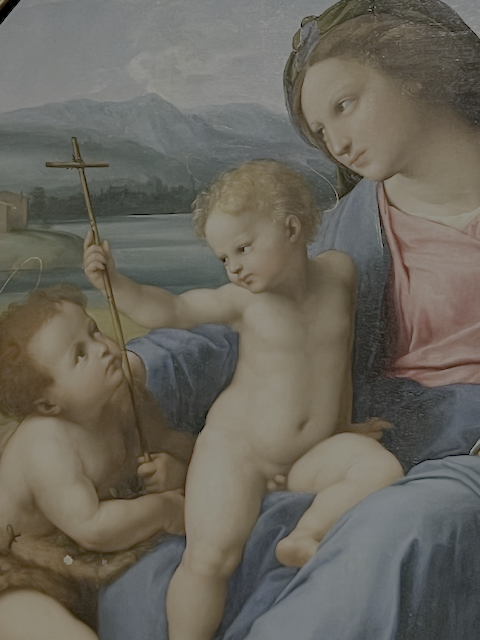
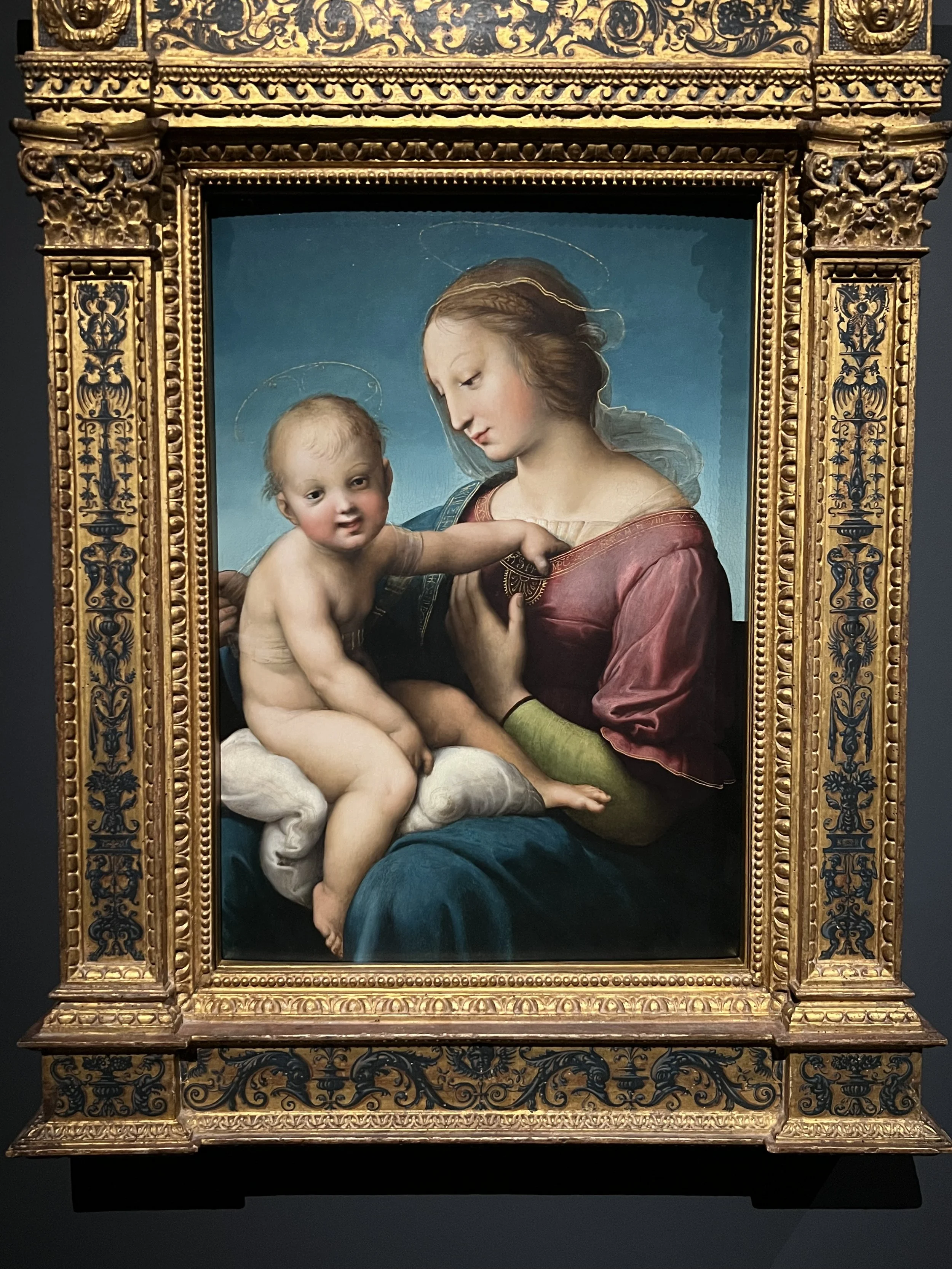
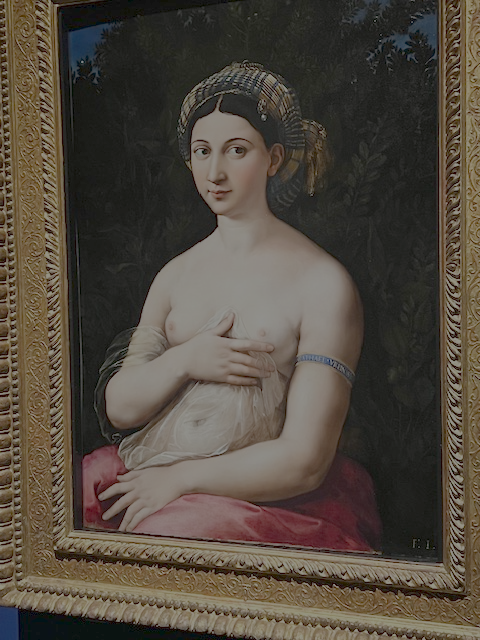
Take one of his Madonnas. At first glance, it is simply a mother and child. But look again. The tilt of the head, the placement of the hands, the direction of the gaze - all of it works together to create a quiet equilibrium. You are not just looking at a scene; you are experiencing a system of balance.
This is one of Raphael’s great lessons: beauty in the Renaissance is not decoration. It is the result of order.
What Does “Sublime Poetry” Mean?
The title of the exhibition invites a deeper question. What does it mean for a painting to be poetic?
Raphael’s art does not rely on dramatic storytelling. It rarely overwhelms with emotion. Instead, it suggests rather than declares. It creates a mood that lingers rather than a moment that shocks.
In this sense, Raphael paints the way a poet writes. He is less interested in dramatic action than in emotional atmosphere.
A poet chooses each word with care, not to explain everything, but to evoke something just beyond the literal. Raphael does the same with form. A gesture hints at tenderness. A glance suggests connection. A composition resolves into harmony without ever calling attention to its mechanics.
The result is a kind of quiet intensity. Nothing insists, yet everything resonates.
For a viewer discovering Renaissance art, this is a crucial shift: meaning is not always in what is shown, but in how it is arranged.
Making the Divine Human
For me, one of the most accessible and compelling aspects of Raphael’s work is also one of its most profound. His religious figures feel human.
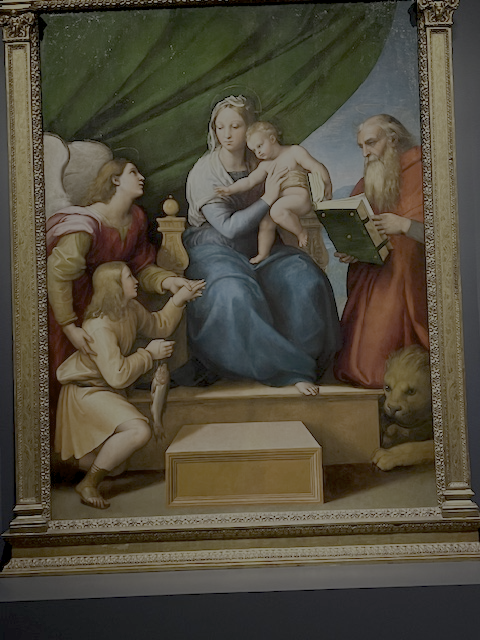
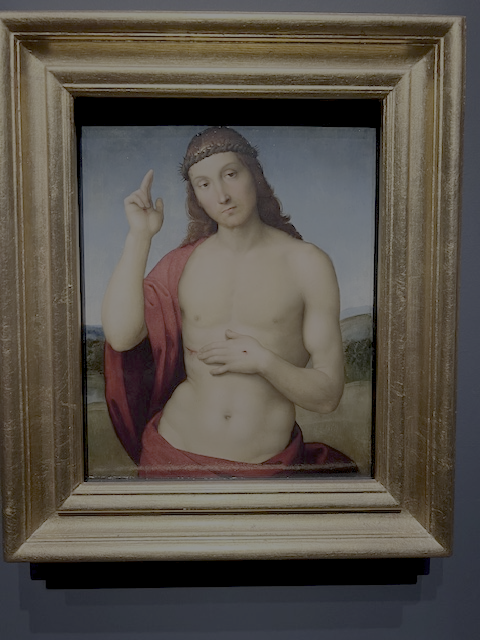
Madonnas are no longer distant, symbolic icons. They are mothers. The Christ child is no longer an abstract theological figure. He is a child, interacting, reaching, responding. Even the adult Christ offering a benediction can feel surprisingly familiar, a friend offering support and empathetic guidance.
This reflects a broader transformation at the heart of the Renaissance: the rise of humanism. The belief that human beings occupy a central, meaningful place in the world. Raphael gives this idea visual form. He brings the divine into human experience without diminishing its significance.
For a modern viewer, this familiarity is what makes the works immediately engaging. But it is also what makes them revolutionary in their own time.
The Myth of the Lone Genius
Another important insight, often overlooked in exhibitions, is that Raphael was not working alone.
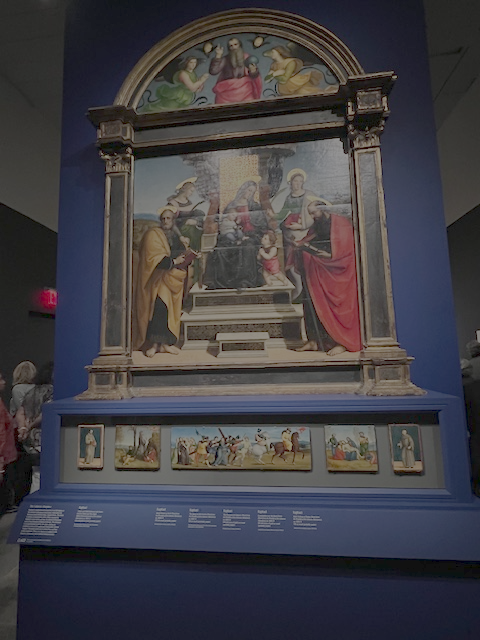
Behind the apparent unity of his paintings lies a workshop - a structured, collaborative environment where assistants contributed to the execution of works under his direction. Figures like Giulio Romano played significant roles in bringing Raphael’s designs to life.
This challenges a deeply ingrained modern idea: that great art is the product of solitary genius.
In the Renaissance, art was often the result of a system. The master conceived the composition, established the intellectual and visual framework, and guided its realization. The workshop extended his reach.
Understanding this does not diminish Raphael. It clarifies him. He was not just a painter, but a designer of ideas.
Thinking on Paper
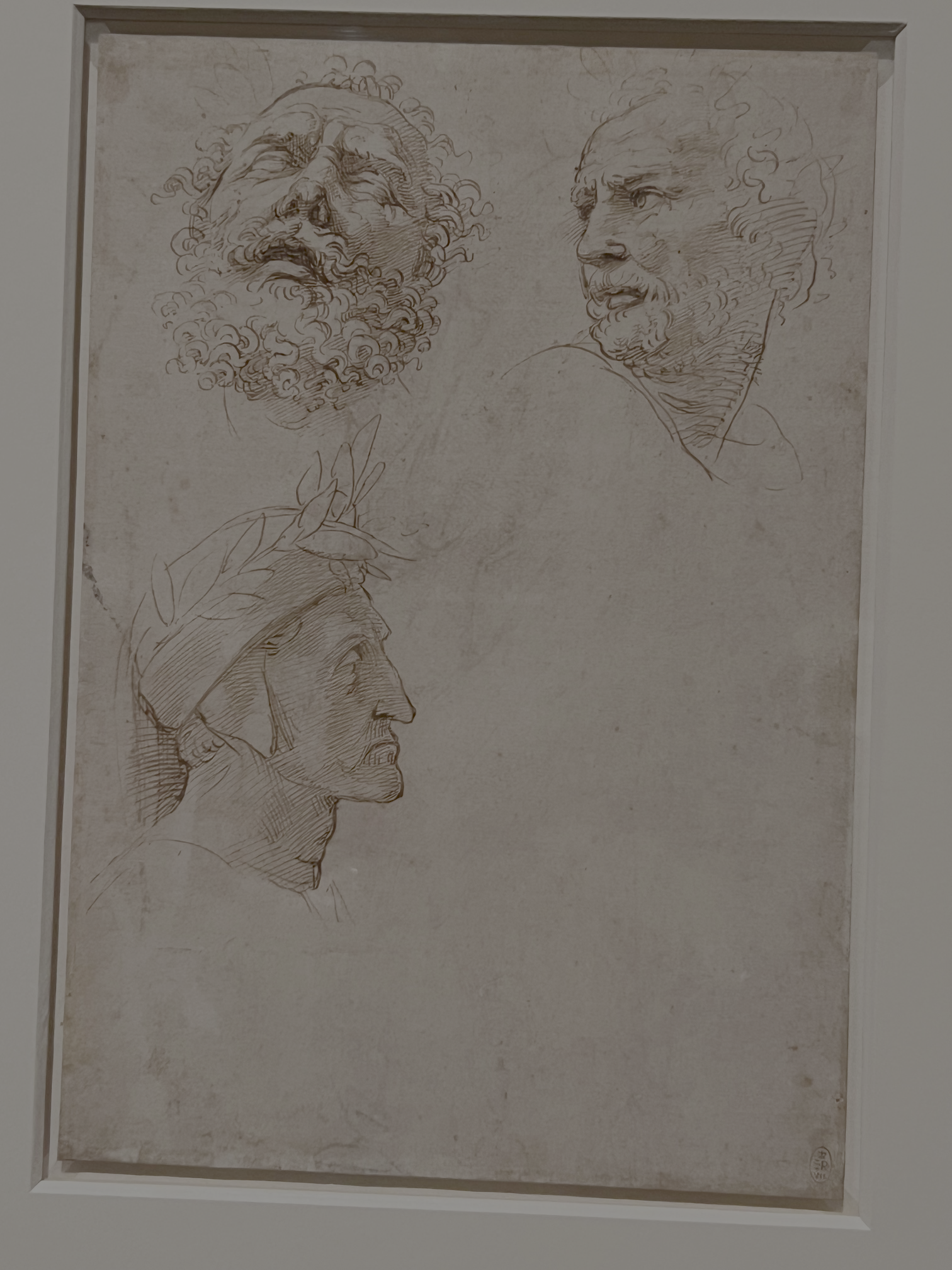
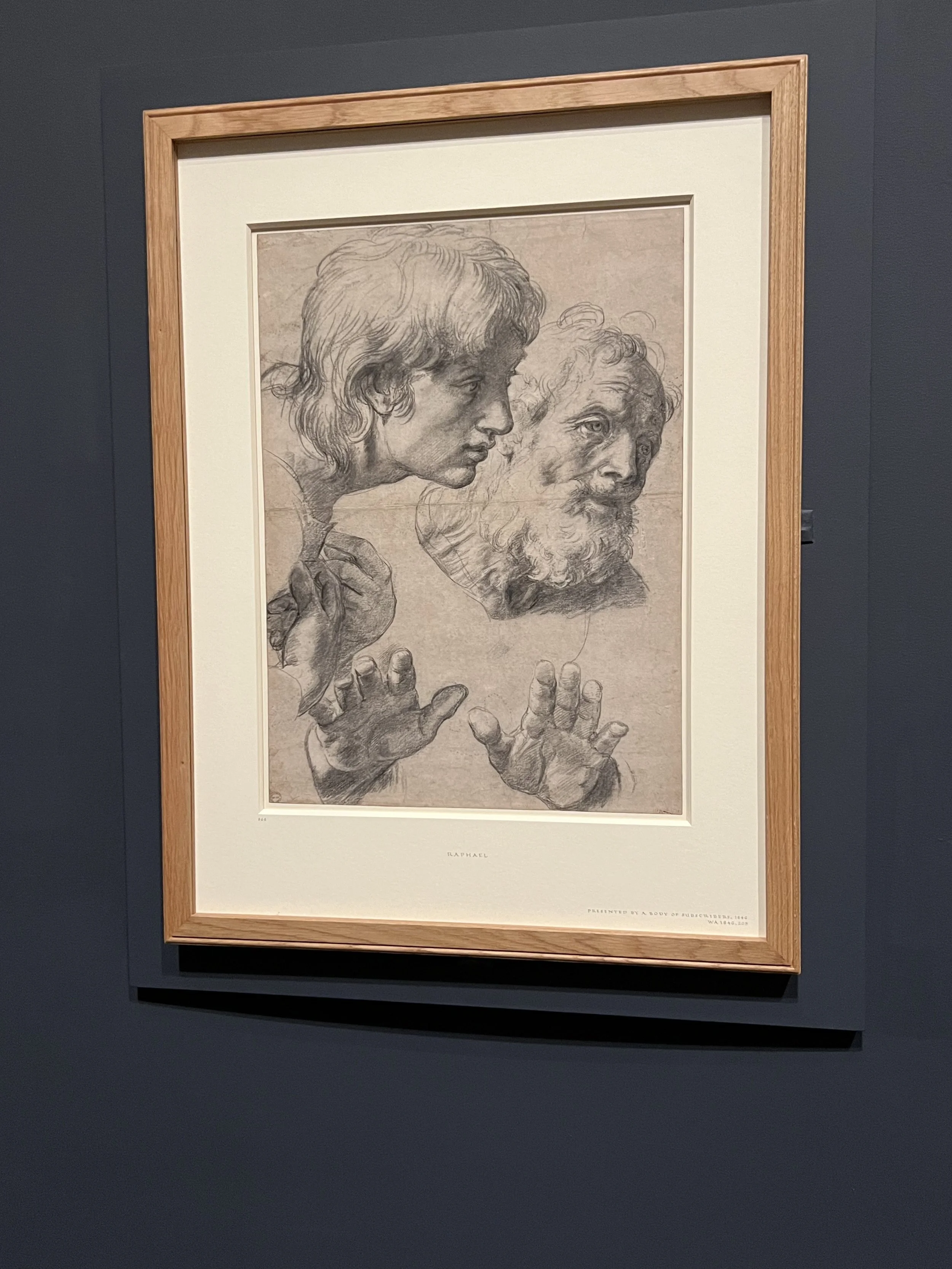
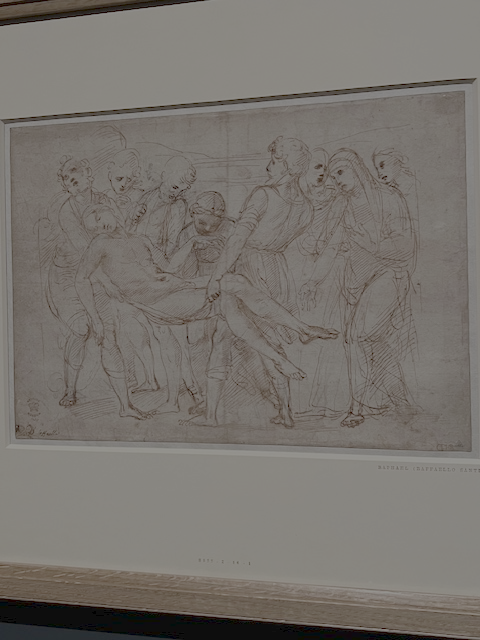
One of the main strengths of the exhibition is the vast collection of drawings on display. This presents the key narrative of Raphael’s artistic process. In these sketches, you can see hesitation, adjustment, exploration. A hand is repositioned. A figure is turned. A composition is tested and refined. A facial expression is altered and adapted. The drawings reveal an extraordinary attention to detail long before any brush touches the surface.
While the finished painting might feel inevitable and effortless; the drawings remind you that it was anything but. For someone learning to look at Renaissance art, this is a powerful realization. Masterpieces are not simply created; they are built.
Raphael Among Giants
Placing Raphael alongside his peers sharpens our understanding of his distinctiveness. During his years in Florence, Raphael closely studied the works of the great contemporary masters. In particular, the exhibition outlines the specific influences of Michelangelo and Leonardo da Vinci.
Raphael’s ultimate artistic style emerges and distances itself from other artists. Leonardo invites you into uncertainty. His figures emerge from shadow, their expressions unresolved, their meanings open. Michelangelo confronts you with tension. His bodies strain, his compositions compress, his energy feels almost sculpted from resistance.
Raphael, by contrast, resolves.
He takes complexity and makes it intelligible. He takes movement and brings it into balance. He takes emotion and refines it into clarity.
If Leonardo asks questions and Michelangelo creates tension, Raphael offers answers.
A Way of Looking
In an exhibition as large and visually rich as this one, it becomes easy to move too quickly from painting to painting. I have found that slowing down and asking a few simple questions can completely change the experience.
Standing in front of a painting, begin with a few simple questions:
What is the underlying structure?
Where does my eye go first?
How do the figures relate to one another?
What feels idealized, and what feels real?
What emotion remains after I look away?
These are not academic questions. They are practical tools. They transform viewing from passive observation into active engagement.
The Quiet Achievement
Raphael’s greatest achievement may be that he hides his effort so completely.
His paintings do not announce their complexity. They do not demand admiration. They simply work. And in doing so, they reveal something essential about the Renaissance itself.
The goal was not to impress through excess, but to achieve a harmony in which every part contributes to a coherent whole.
This is what Raphael offers to anyone beginning their journey into Renaissance art: not just objects to admire, but a way to see order, beauty, and meaning at the same time. Raphael: Sublime Poetry succeeds because it allows viewers to experience artistic genius without feeling intimidated by it. The exhibition reveals how careful artistic decisions - composition, gesture, expression, balance - can produce emotions that feel immediate and deeply human centuries later. Perhaps that is Raphael’s greatest gift to modern viewers: he makes beauty feel understandable.
And once you begin to see that, to feel those types of emotion through art, the Renaissance no longer feels distant.
It becomes legible.