Lorenzo Ghiberti
Biography
Lorenzo Ghiberti (1378–1455) was an Italian sculptor, metalworker and early Renaissance master whose innovations in form, technique and artistic theory helped shape the visual language of the Quattrocento. Born in Pelago near Florence and trained initially as a goldsmith, Ghiberti rose to prominence through his exceptional skill with bronze casting and relief sculpture. He is best known for the two sets of bronze doors he created for Florence’s Baptistery: the Early Renaissance “North Doors” (1403–1424) and the celebrated fully Renaissance “Gates of Paradise” (1425–1452). These doors established him as one of the leading figures in early Renaissance art.
Ghiberti’s style combined a deep command of classical motifs with a growing interest in naturalism, spatial illusion and narrative clarity. His relief panels employ a refined low-relief technique (rilievo schiacciato) to suggest atmospheric depth and to organise complex biblical scenes with harmonious composition. His figures exhibit graceful modelling and drapery influenced by antiquity, yet they also embody a new emphasis on human presence and individuality. Beyond the doors, Ghiberti produced altarpieces, free-standing sculptures, medals and treatises; his workshop trained many artists who would carry Renaissance ideals forward, and his writings contributed to contemporary debates about art theory and practice.
Ghiberti’s relationship with Filippo Brunelleschi was both collaborative and competitive, and it proved crucial to the development of Renaissance art and architecture. Early in their careers they competed directly: in 1401 both entered the famous contest to design the Baptistery’s bronze doors. Ghiberti won the commission, a victory that set the tone for his career. Despite the rivalry, the two influenced each other profoundly. Brunelleschi’s rigorous study of linear perspective and classical proportion informed a new spatial sensibility that Ghiberti absorbed and applied in his relief compositions; conversely, Ghiberti’s mastery of form, gilded surfaces and narrative clarity left an imprint on Brunelleschi’s architectural ornament and the broader aesthetic of the early Renaissance. Their interplay—competition spurring innovation—helped accelerate the movement away from medieval modes toward a revived classical naturalism.
Ghiberti’s legacy rests on both his tangible works and his role as a teacher and theorist. The Gates of Paradise, praised by contemporaries for their luminous beauty and compositional sophistication, influenced generations of sculptors and painters. His workshop practices, encouragement of apprentices, and documented reflections on art secured his place as a central conduit between Gothic conventions and Renaissance ideals. By combining technical mastery with intellectual engagement, Lorenzo Ghiberti helped define the artistic priorities of early Renaissance Florence and ensured his enduring influence on Western art.
Most significant works
Lorenzo Ghiberti’s most celebrated achievement is the bronze Gates of Paradise for Florence Baptistery—ten richly detailed relief panels that fused classical narration, refined perspective, and gilded ornament to redefine civic sculpture. His earlier North and East doors demonstrated virtuoso bronze casting and narrative clarity, establishing his workshop as a center of technical innovation and artistic apprenticeship. Beyond doors, Ghiberti’s treatises and collaborative projects advanced the application of linear perspective and relief modeling, influencing generations of Renaissance sculptors and painters.
The Gates of Paradise (1425-1452)
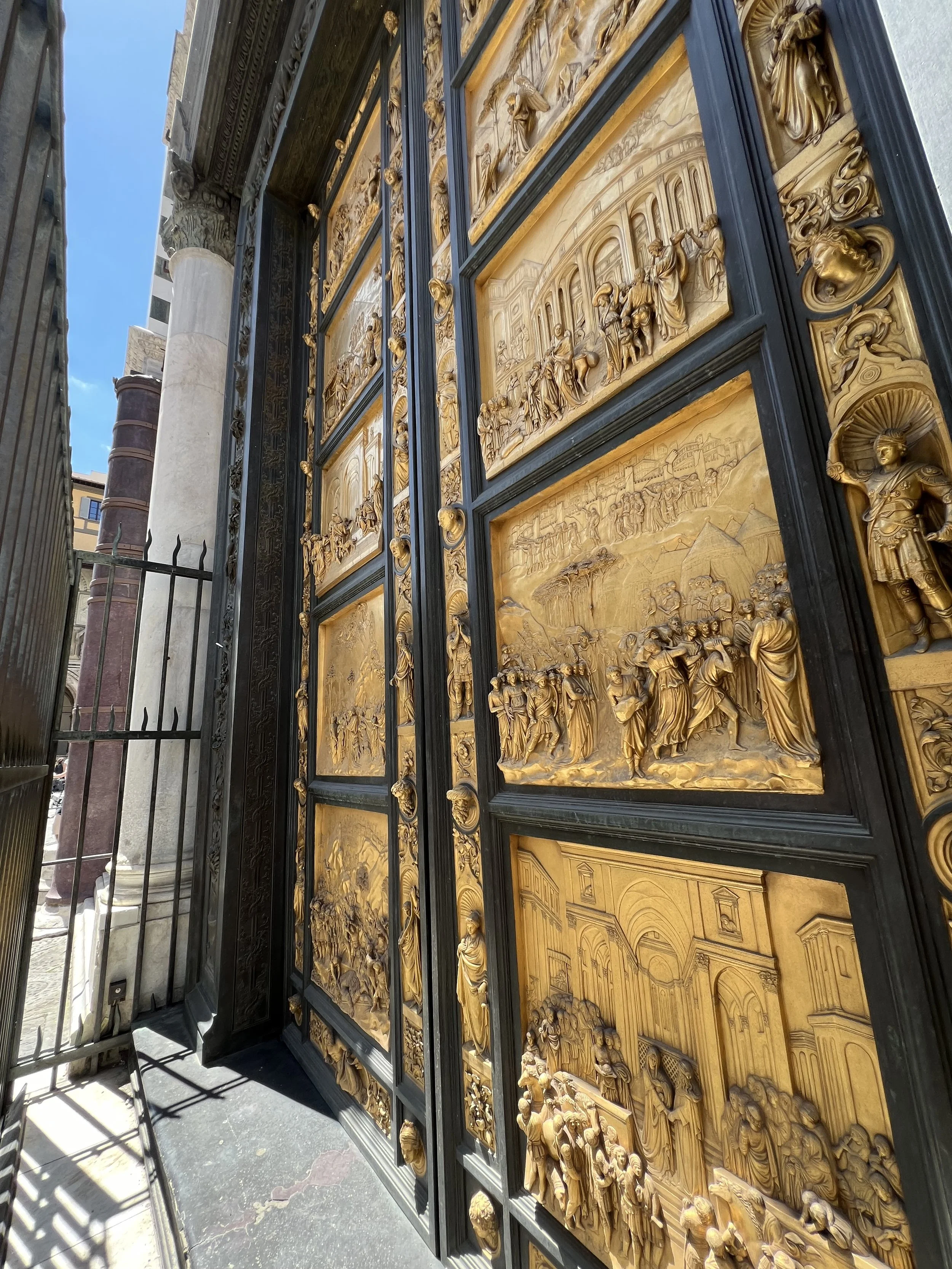
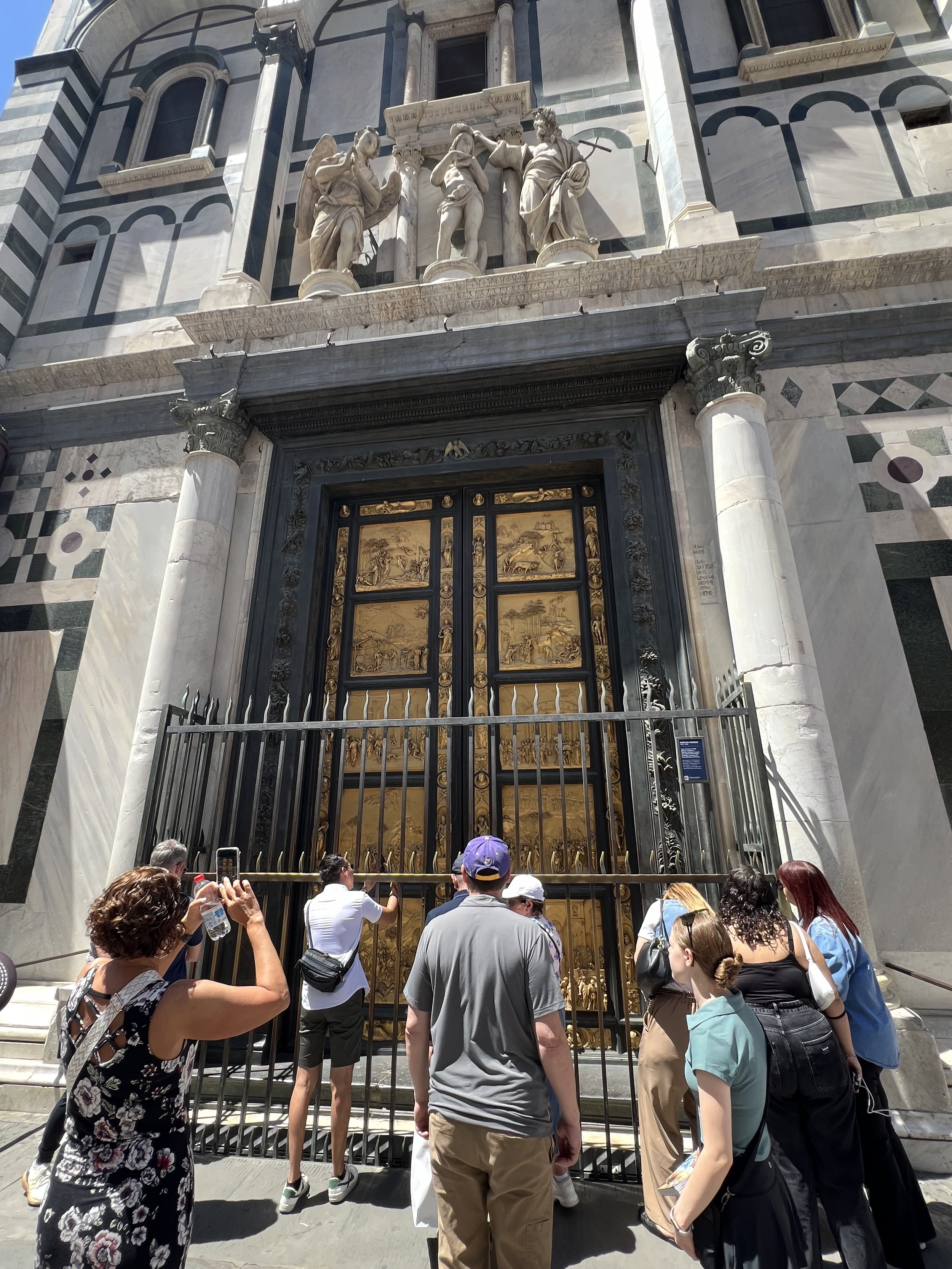
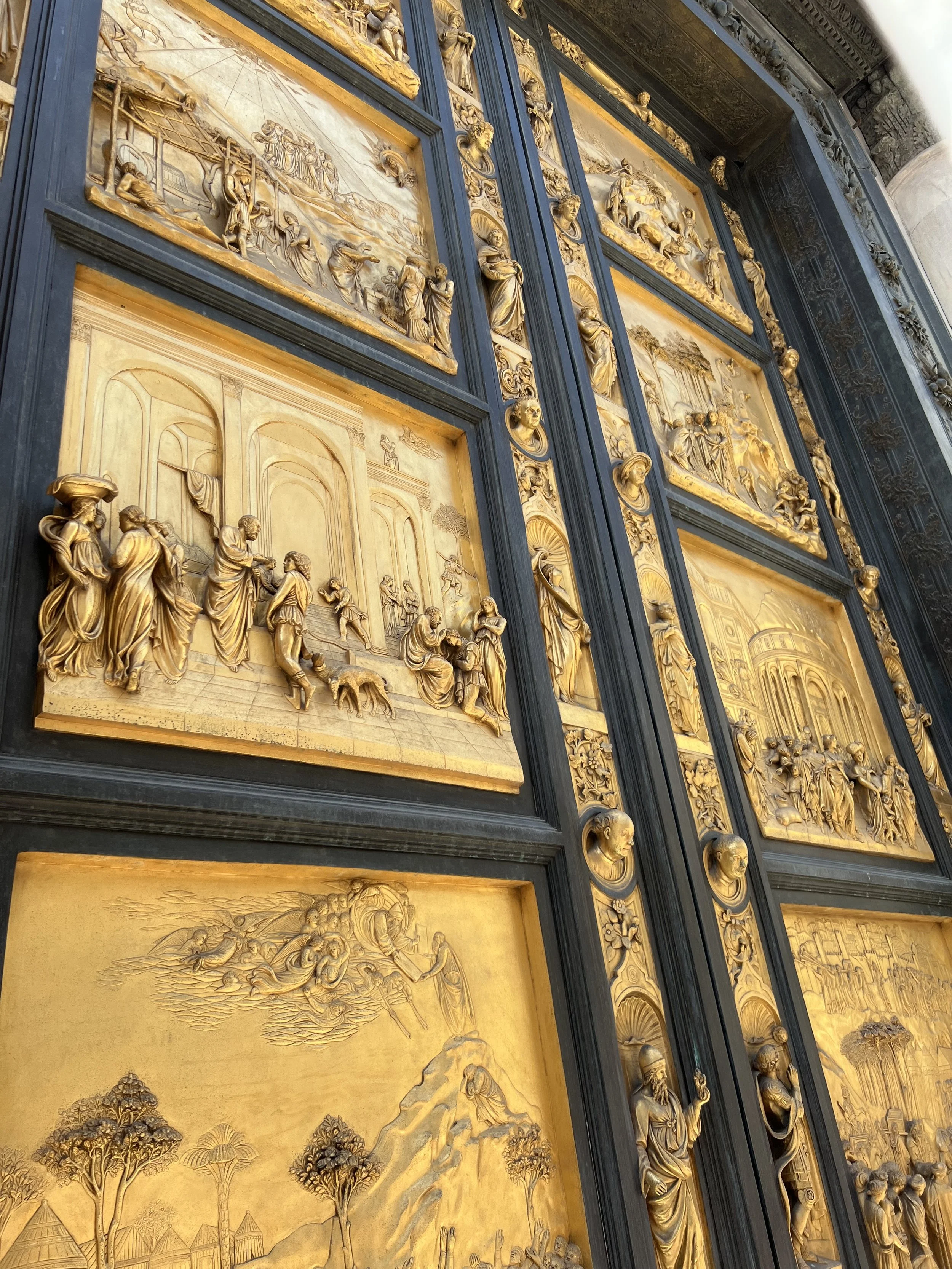
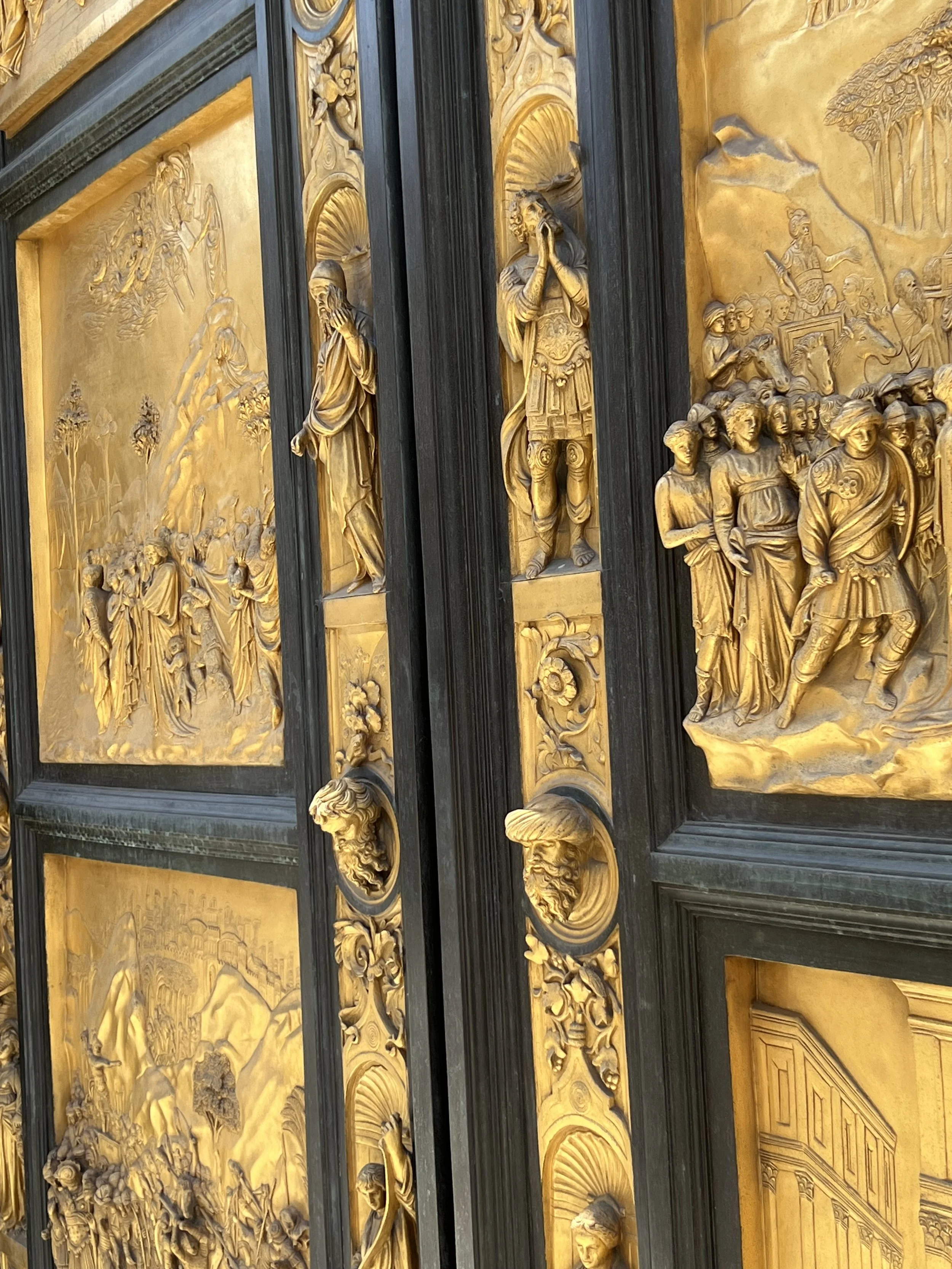
Lorenzo Ghiberti’s Gates of Paradise are the pair of gilded bronze doors he created for the east entrance of the Baptistery of San Giovanni in Florence, completed in 1452 after more than two decades of work. Each door features ten large rectangular panels depicting scenes from the Old Testament, executed in high-relief with a sophisticated use of linear perspective, varied depths and finely modelled figures that create a sense of luminous spatial recession. Ghiberti’s mastery of composition, narrative clarity and delicate detail—combined with the doors’ shimmering gold leaf finish—made them celebrated examples of early Renaissance bronze casting and relief technique.
When Lorenzo Ghiberti unveiled his bronze panels for the baptistery doors in Florence, the young Michelangelo was profoundly struck. Standing before the intricate reliefs, he is said to have declared them così belli—so beautiful—that they were fit to be the gates of Paradise. The phrase, later rendered as “the Gates of Paradise,” captured both his admiration for Ghiberti’s mastery of composition, perspective and expressive detail and the broader Renaissance reverence for art that combined technical skill with spiritual aspiration. The anecdote endures as a testament to the mutual respect and high standards among artists of the period.
The original "Gates of Paradise" by Lorenzo Ghiberti are located in the Museo dell'Opera del Duomo in Florence, Italy. The doors currently installed at the Baptistery are a reproduction.