Giorgio Vasari
Biography
Giorgio Vasari (1511–1574) was an Italian painter, architect and writer whose dual career as a practising artist and as the first modern art historian shaped how the Renaissance has been understood ever since. Born in Arezzo and trained in Florence under masters such as Andrea del Sarto and later influenced by Michelangelo and Raphael, Vasari worked across painting and architecture for courts and religious patrons in Tuscany and beyond.
As an artist, Vasari produced altarpieces, frescoes and decorative cycles that reflect High Renaissance and early Mannerist styles. His frescoes in the Palazzo Vecchio in Florence and the Giorgio Vasari–attributed works at the Vasari Corridor and other Florentine sites display a confident use of colour, complex figural arrangements and a penchant for elegant, elongated proportions typical of Mannerism. In architecture he contributed notably to the rebuilding of portions of the Uffizi—originally conceived to house the administrative offices of Cosimo I de’ Medici—and to private and ecclesiastical projects in Florence, where his designs balanced classical restraint with contemporary taste.
Vasari’s most enduring contribution, however, is literary. In 1550 he published the first edition of Le vite de’ più eccellenti pittori, scultori, e architettori (Lives of the Most Excellent Painters, Sculptors, and Architects), expanded in a substantially revised second edition in 1568. The Lives combined biographical sketches, critical commentary and anecdote into a single, accessible narrative that codified artistic achievement from Giotto through Vasari’s contemporaries. Vasari established a chronology, attributed works, and formulated an artistic canon that privileged Florentine developments and celebrated the revival of classical principles. His judgments and choice of subjects shaped subsequent scholarship, taste and the formation of public and private collections.
While modern historians criticise Vasari for Florentine bias, occasional factual errors and reliance on hearsay, his book remains invaluable as a primary source for otherwise lost information, workshop traditions and artists’ reputations. His vivid anecdotes—whether accurate or coloured by rhetoric—give insight into Renaissance artistic culture, workshop practices and patronage networks.
Vasari’s combined roles as practitioner, court architect for the Medici and pioneering biographer made him a central figure in constructing the Renaissance narrative. He helped elevate the status of artists from craftsmen to creators with individual genius and provided a model for art historical writing that persisted into later centuries. Giorgio Vasari died in Florence in 1574, leaving both built works and a literary legacy that continues to inform how we read and value Renaissance art.
Most significant works
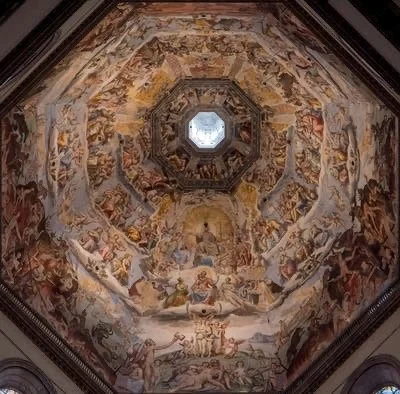
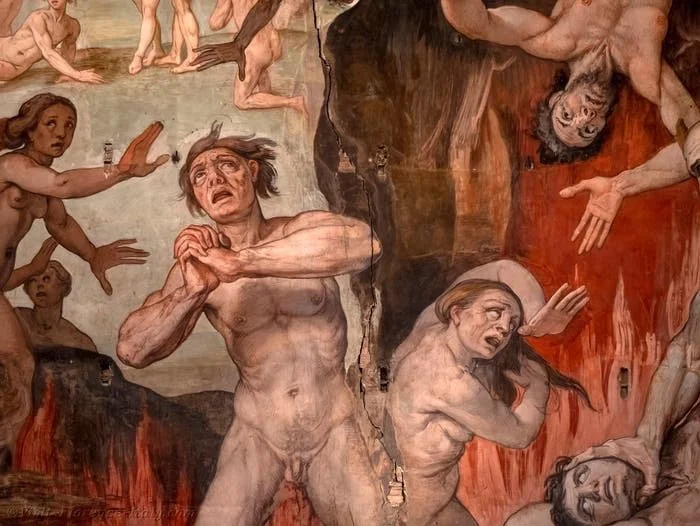
Giorgio Vasari’s most significant artistic works include frescoes inside Florence's Duomo, notably the vast Last Judgment painted on the interior of Brunelleschi's dome. The work combines dramatic Mannerist composition with vivid colouration and complex figural arrangements to convey theological grandeur and artistic innovation. Also, the fresco cycles in the Vasari Corridor and the Sala dei Cento Giorni, showcasing his skill in narrative composition and portraiture of Tuscan luminaries. His portraits in the Palazzo Vecchio and the Uffizi reveal a blend of Mannerist elegance and didactic clarity, aimed at celebrating Florence’s artistic lineage.
The Last Judgement (1572-1579)
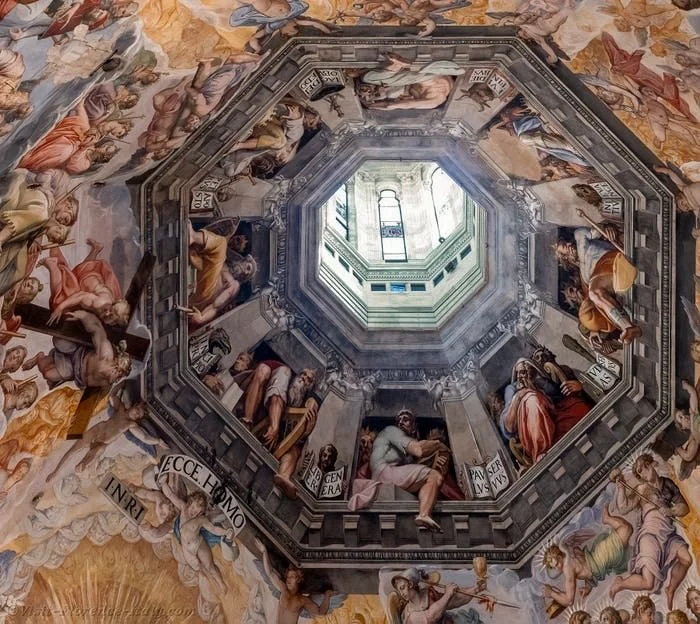
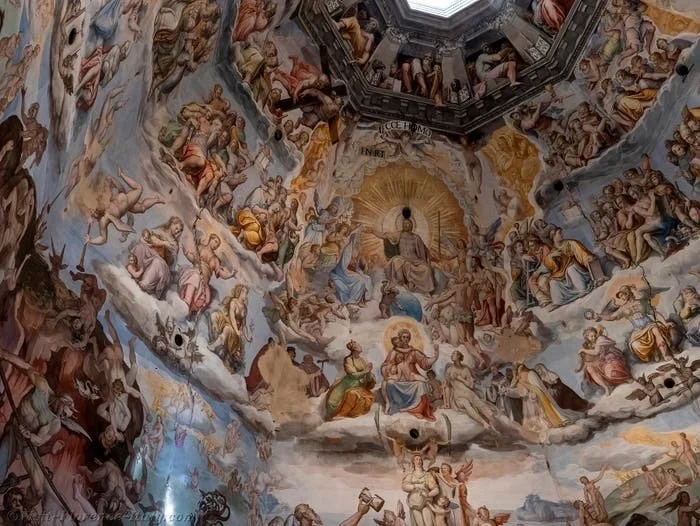
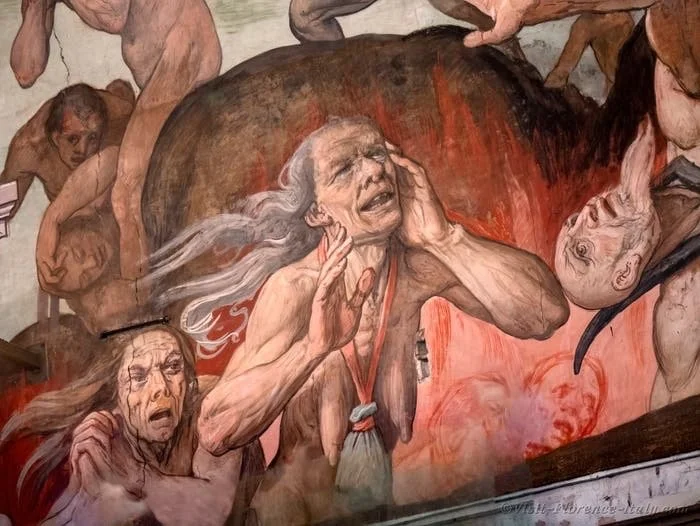
Giorgio Vasari’s Last Judgement, painted on the interior of Florence Cathedral’s dome between 1572 and 1579 with assistance from Federico Zuccari, is a monumental late-Renaissance fresco programme that transforms the dome into a vast, spiralling vision of the end times. Occupying the conch and pendentives beneath Brunelleschi’s lantern, the composition organises figures in concentric bands: Christ the Judge and the Virgin at the apex, surrounded by angels, apostles and saints; below them, a tumult of resurrected souls, angels sorting the saved from the damned, and personifications of virtues and vices.
Vasari’s palette and brushwork favour dramatic chiaroscuro and elongated, expressive figures typical of Mannerism, producing a theatrical, upward-pulling movement that leads the viewer’s eye toward the celestial centre. The fresco integrates architectural illusionism to emphasize scale and depth, while its doctrinal programme reflects Counter-Reformation concerns about moral order, salvation and ecclesiastical authority.
Despite critical debate over its stylistic excesses, Vasari’s Last Judgement remains a defining example of late-16th-century monumental painting in Florence and a central decorative layer within the cathedral’s complex visual history.