Drawn Upward: A Personal Encounter with Titian at the Frari
It is with eager, almost childlike anticipation that I crossed the last little footbridge before reaching the Frari Basilica (Basilica di Santa Maria Gloriosa dei Frari), an imposing, soaring brick church in the Franciscan Gothic style.
Inside was a painting I had read a great deal about and seen countless photographs of: a work universally celebrated as one of the towering masterpieces of the High Renaissance - the Assumption of the Virgin. This was my ultimate destination in a journey of exploration and discovery of Venetian Renaissance art.
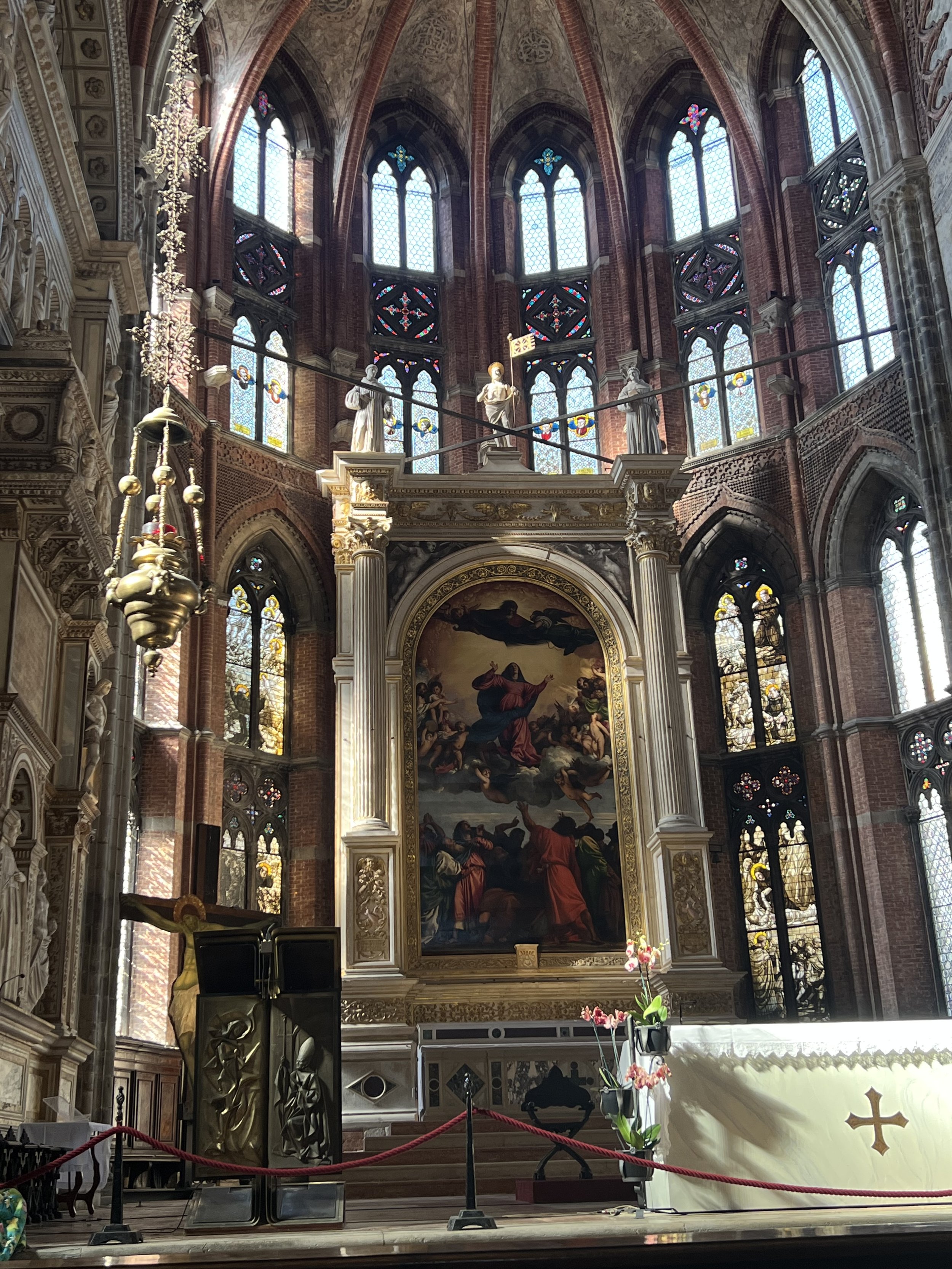
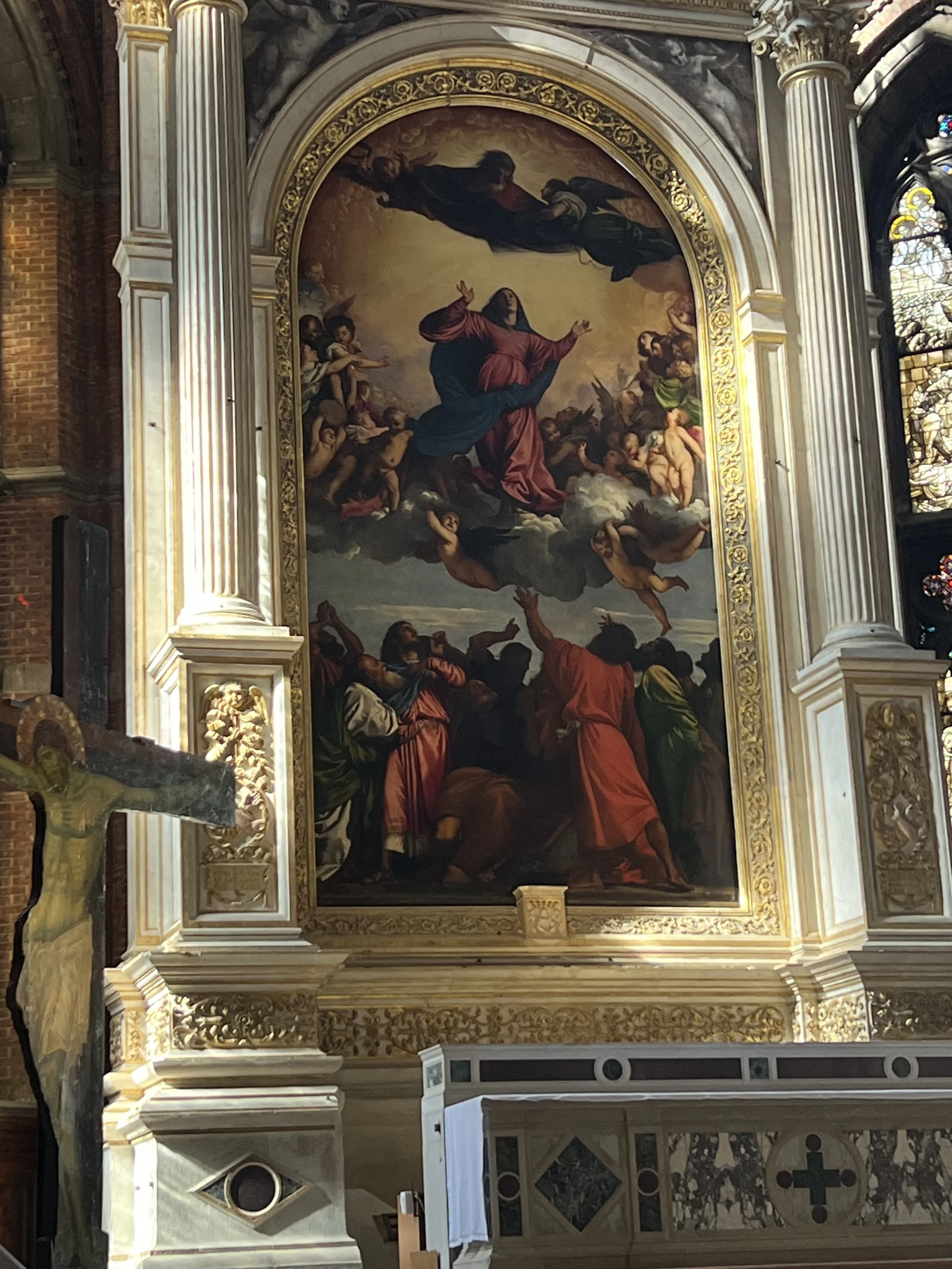
Painted by Tiziano Vecellio, known as Titian, between 1516 and 1518, the Assumption remains above the high altar, in the place for which it was created. That fact suddenly seemed much more important to me than it had when I was reading about the painting in a book.
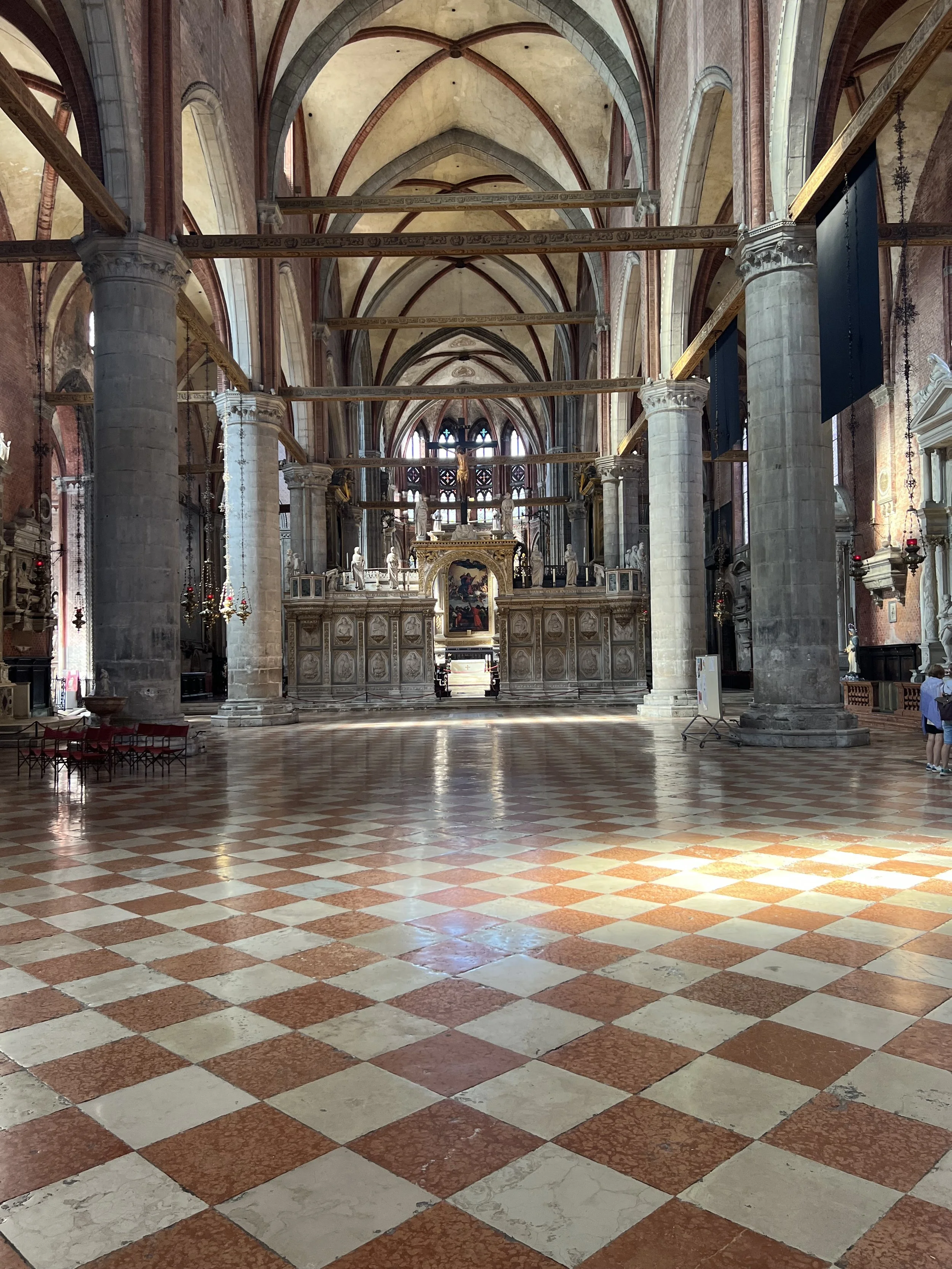
As I entered the basilica, what struck me first was not the painting at all. It was the sheer grandeur and height of the space. Sound seemed to echo almost indefinitely. Light streamed through the stained-glass windows. Paintings and sculptures rose around me. I felt a sense of awe and, unexpectedly, a sense of vulnerability. There was something about being surrounded by this enormous physical and spiritual environment that made me feel small, quiet and receptive.
I took a seat in one of the pews, a little to the left of the altar, and finally allowed myself to contemplate the masterpiece I had come to see.
It was a humbling experience. Elevated above the high altar, the painting places me, the viewer, physically below the dense and animated crowd of Apostles reaching upward in astonishment toward the Virgin. Instinctively, I found myself looking up with them. But I began to wonder whether I was really looking at a painting at all, or experiencing something much larger, much deeper.
The question stayed with me.
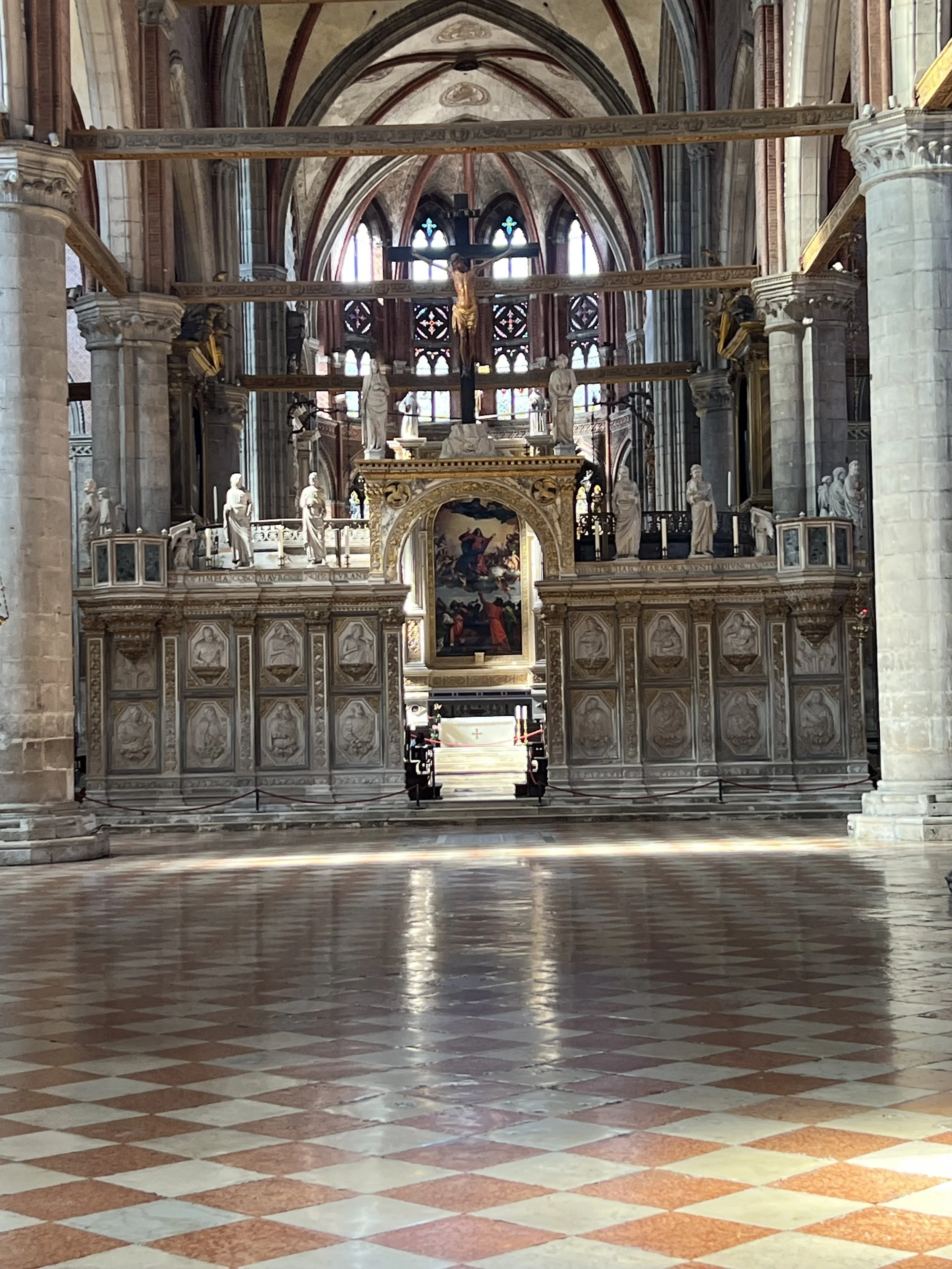
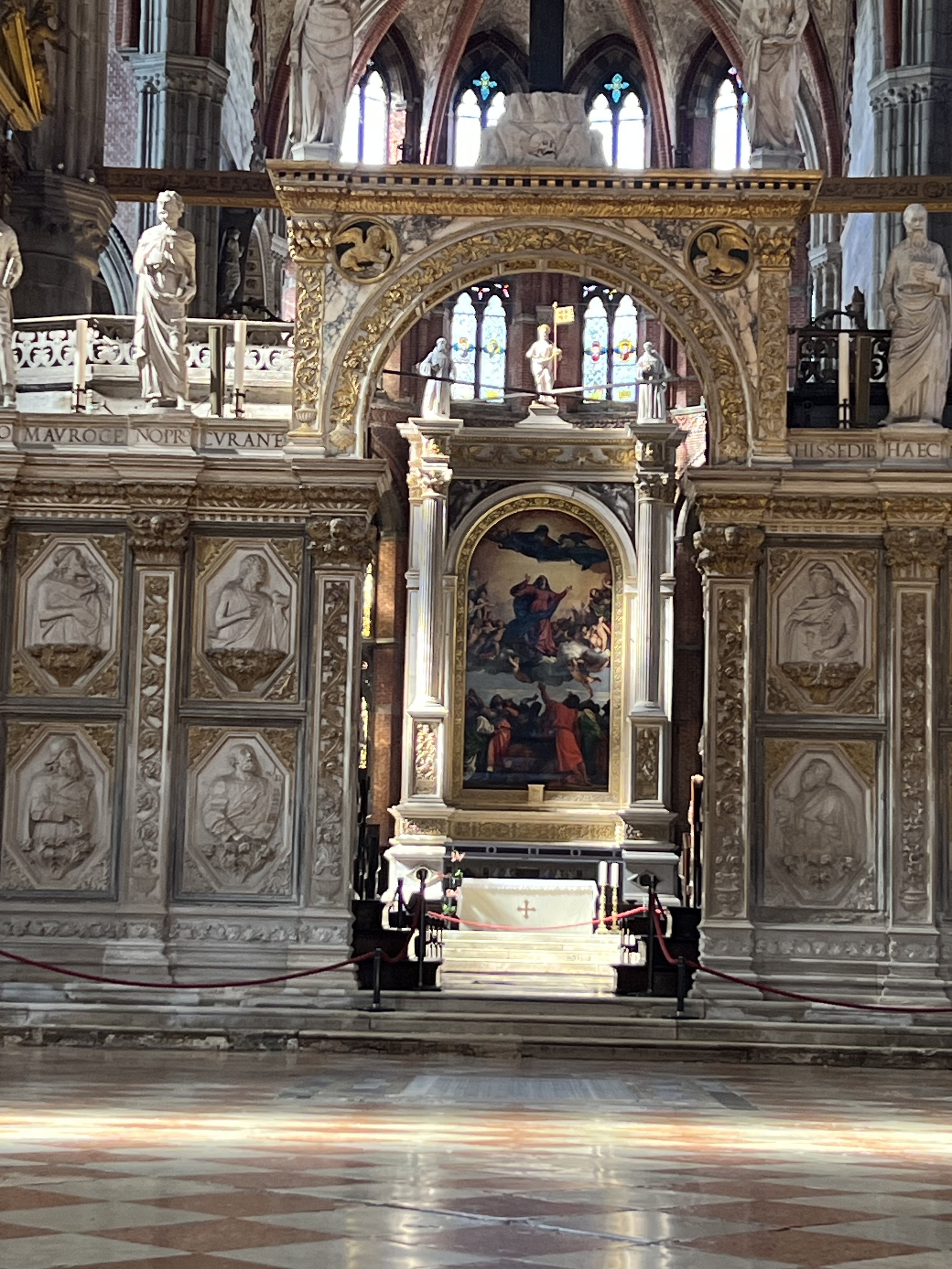
Having made that initial contact with the masterpiece, I headed toward the opposite end of the church and stood at the far end of the central nave. From that distance, the red garment of the Virgin and the Apostle on the bottom right side of the painting still act as a beacon. From this vantage point, the painting can be seen through the rood screen in front of the monks' choir, above which stands a large 14th-century crucifix.
As I approached the altar, something remarkable happened. The crucifix seemed to rise into the line of sight of the Assumption, creating an almost seamless upward movement that echoed the ascent of the Virgin in Titian's painting. The effect was subtle, but it made me increasingly conscious of the way the architecture was directing my gaze.
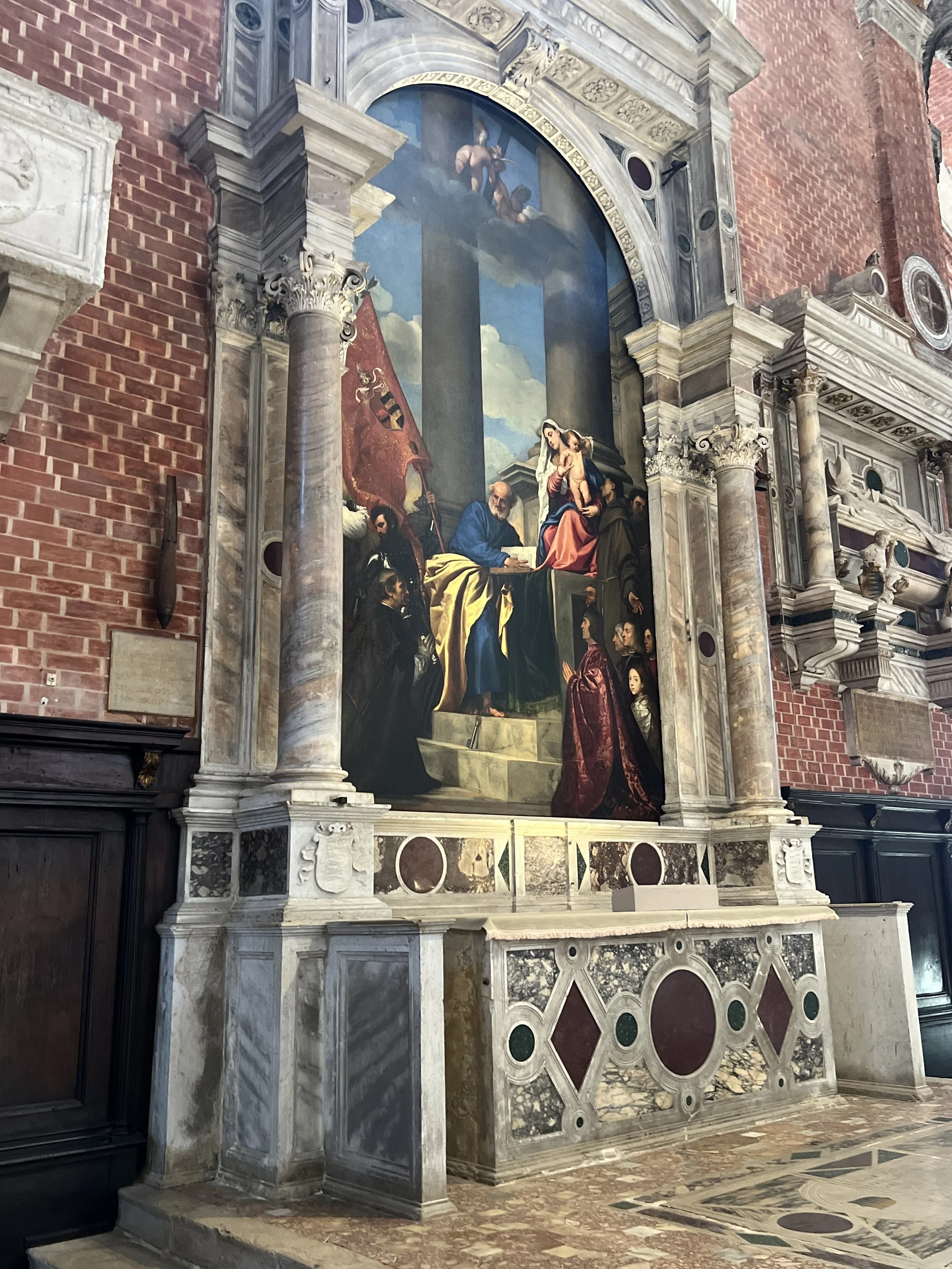
Then there was another visual relationship that I had not anticipated. On the left wall is Titian's Pesaro Altarpiece. The Virgin, wearing the same intense red that immediately catches our attention in the Assumption, sits holding the infant Jesus. In front of her, Saint Peter is turned in such a way that he appears almost to acknowledge the viewer approaching the altar.
Whether this interaction was deliberately conceived as a visual dialogue is something I cannot say with certainty. But standing there, it was difficult not to feel that the two paintings were speaking to one another and to me, the approaching viewer.
Everything seemed to be pushing my attention upward.
The experience of moving through the church had become part of the experience of the painting. Architecture, light, colour, distance and perspective were no longer separate elements. They were working together to convey a message and create an emotional response.
And it struck me that this visual transition - from the earthly world of the viewer toward the divine world represented in the painting could never be fully reproduced in a museum setting.
The connection between architecture, light, sound and colour was becoming clear. These were not simply the surroundings of the painting. They were integral to the way the painting was experienced.
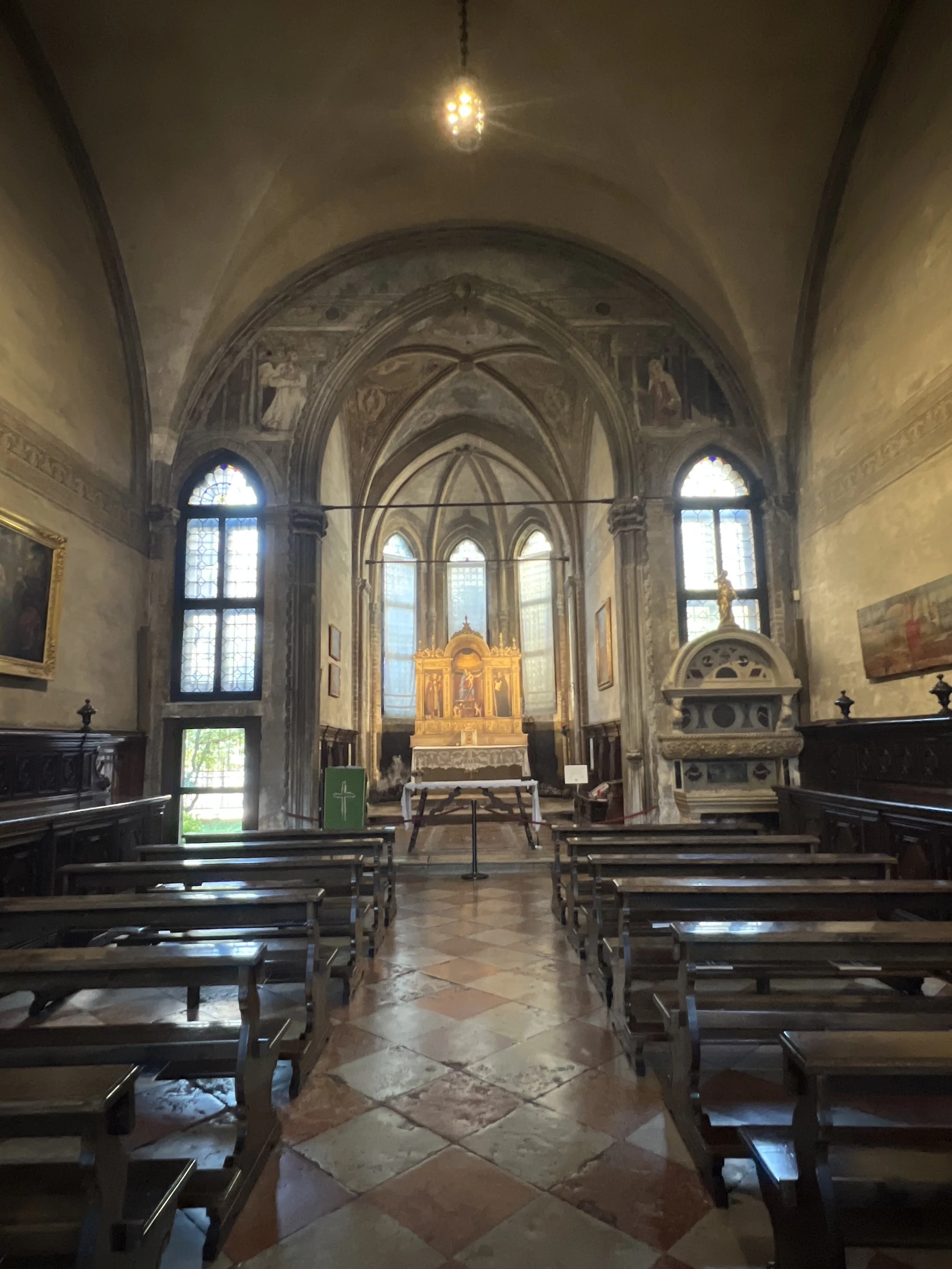
That realization became even more poignant for me later that same day, when I returned to the Frari to attend evening Mass in the Pesaro Chapel of the Sacristy. Listening to the ceremony being conducted in front of Giovanni Bellini's Madonna and Child with Saints, another piece of the experience suddenly fell into place.
I became conscious of the sound - the voices, the rhythm of the ceremony, the movement of people, the echoes within the space. Until that moment, I had been thinking primarily about what I was seeing. Suddenly I realized that the experience of Renaissance religious art for its original audience was not simply visual.
It was something you heard, smelled, felt and moved through. It was a guide and a catalyst, shaping how the viewer encountered the images and the space around them.
My conclusion was that Titian's Assumption was never intended to be a painting hanging in isolation. It was created for this specific place, above this altar, to be encountered within the architecture, the light and the rituals of the church. The painting was one element of a much larger experience.
Having now experienced this intense encounter with a significant piece of Renaissance artistic heritage, I was even more eager to deepen my understanding of the Venetian painters and the evolution of their art.
The natural next stop in this journey was clear: the Gallerie dell'Accademia.
“I began to wonder whether I was really looking at a painting at all, or experiencing something much larger, much deeper.”