From Icons to Encounters: Discovering Venetian Painting at the Accademia
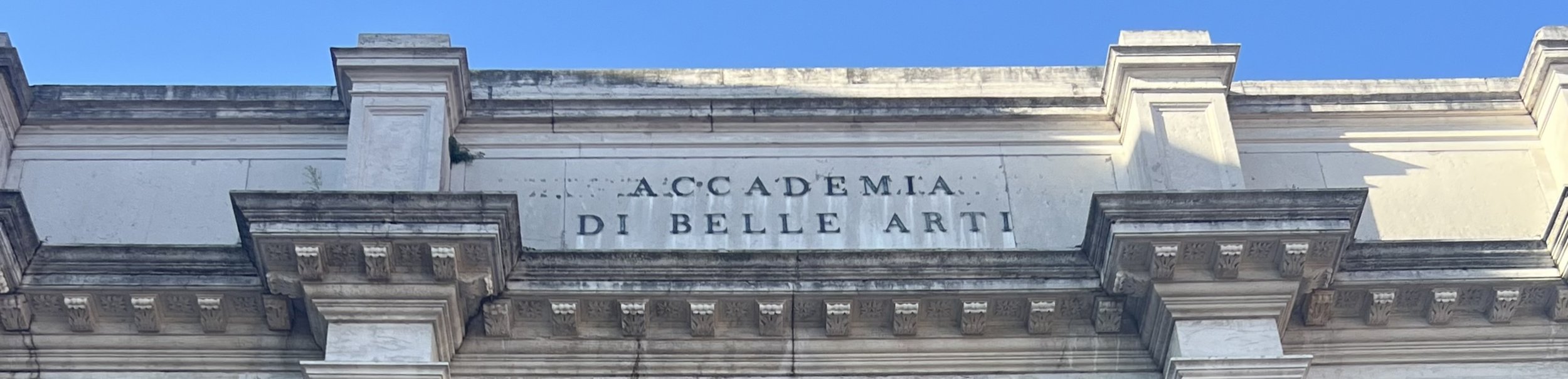
Walking into the Gallerie dell’Accademia, I was coming from a very intense experience at the Frari. I entered with a different expectation.
Seeing Titian’s Assumption of the Virgin in its originally intended location had confronted me with its scale, movement and drama and, perhaps more importantly, with the realization that a Renaissance painting could not be separated from the architecture, light, sound and rituals of the place for which it was created.
At the Accademia, I would be seeing many of these works removed from their original settings and brought together in a museum. I wondered what that would change. I was almost apprehensive that the experience would not be as memorable.
I was wrong.
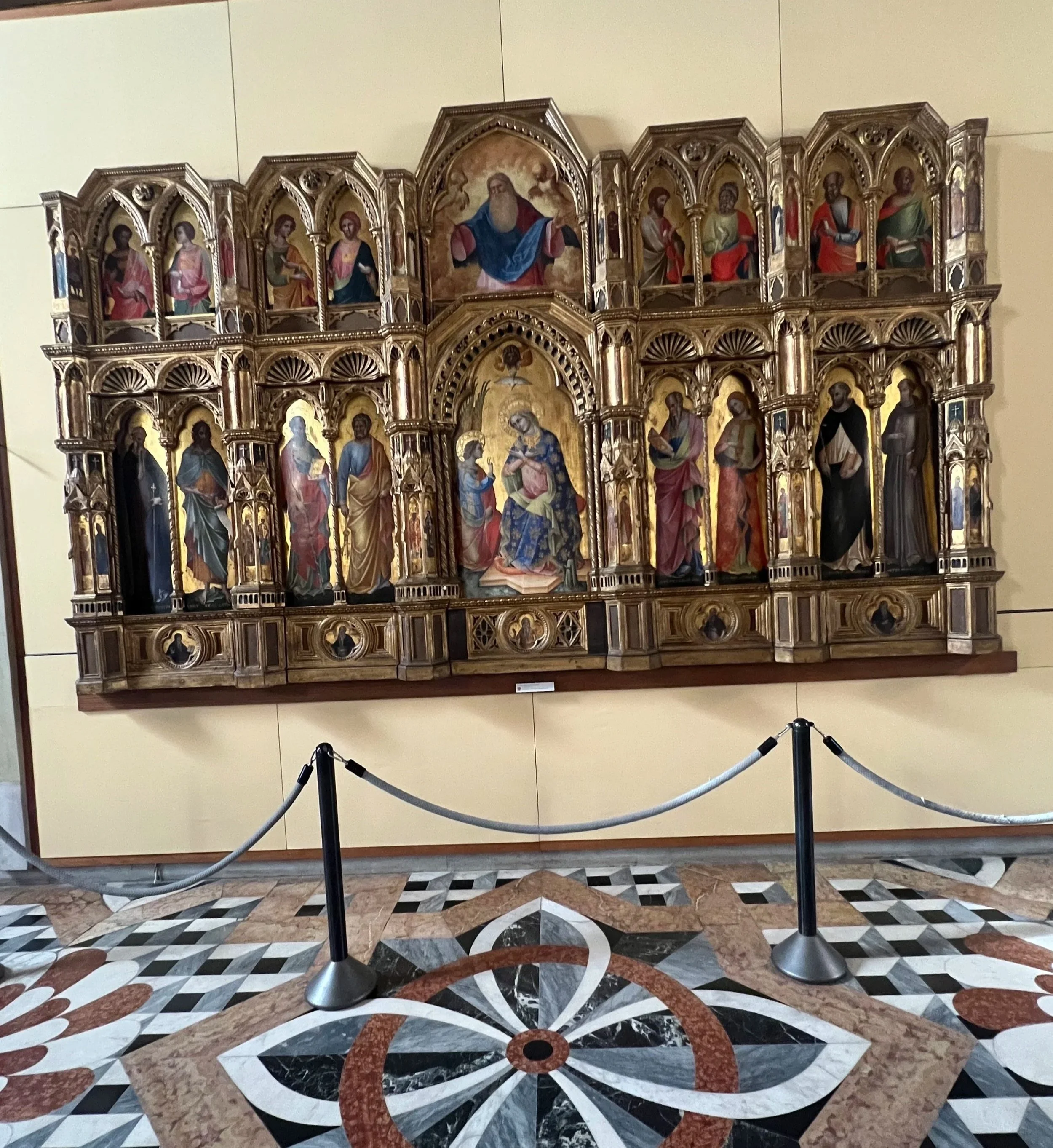
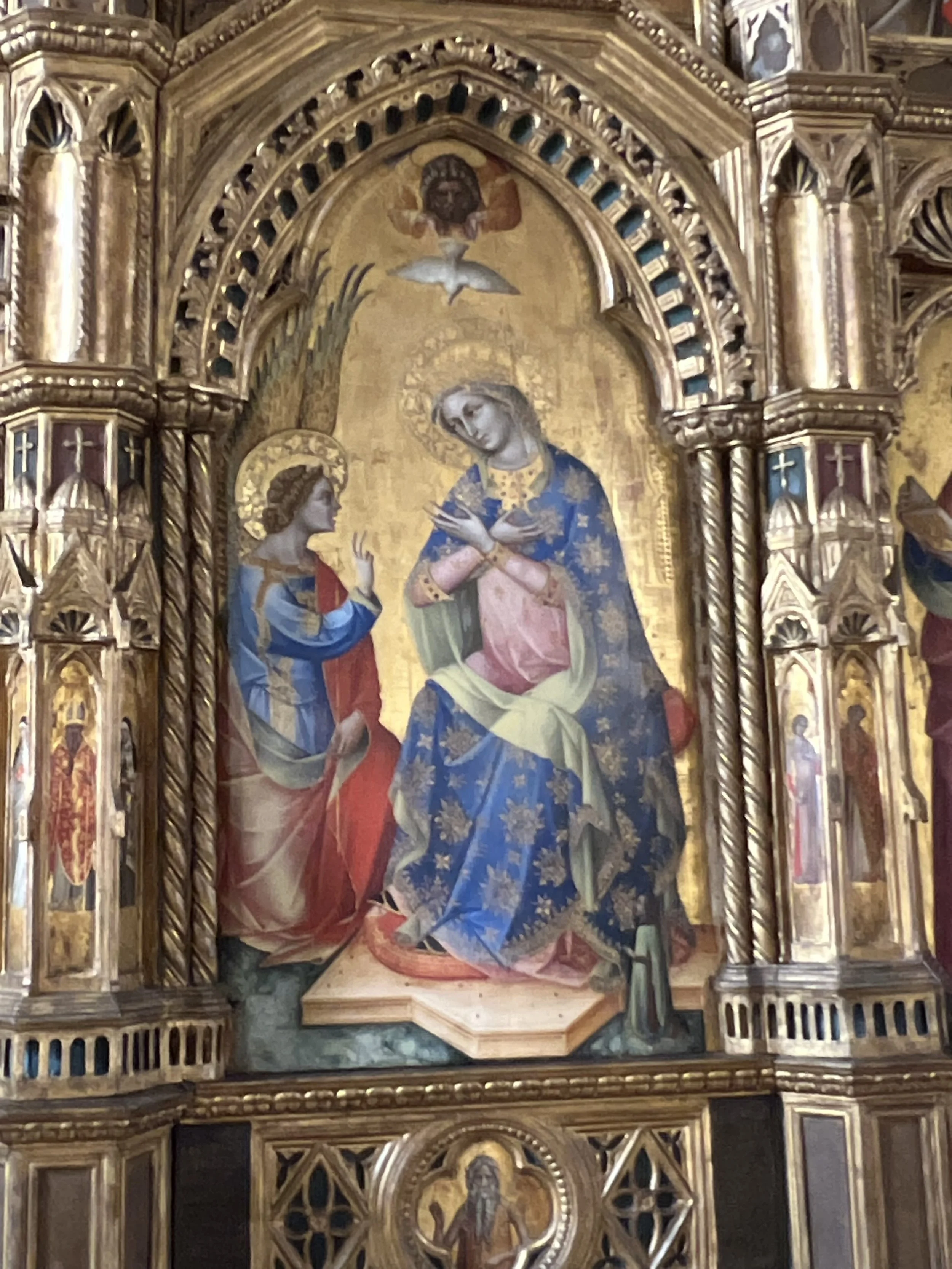
My first contact during my visit was with early religious paintings. I found myself struck by their gold surfaces and their remarkable flatness. They seemed less like paintings intended to create an emotional response and more like sacred objects in themselves - images to be contemplated, revered and perhaps even venerated.
Then, gradually, something changed. There was a clear evolution in the paintings, not just in technique or subject matter, but in something deeper. It was the beginning of a conversation between the image and the viewer.
When the Madonna looked back
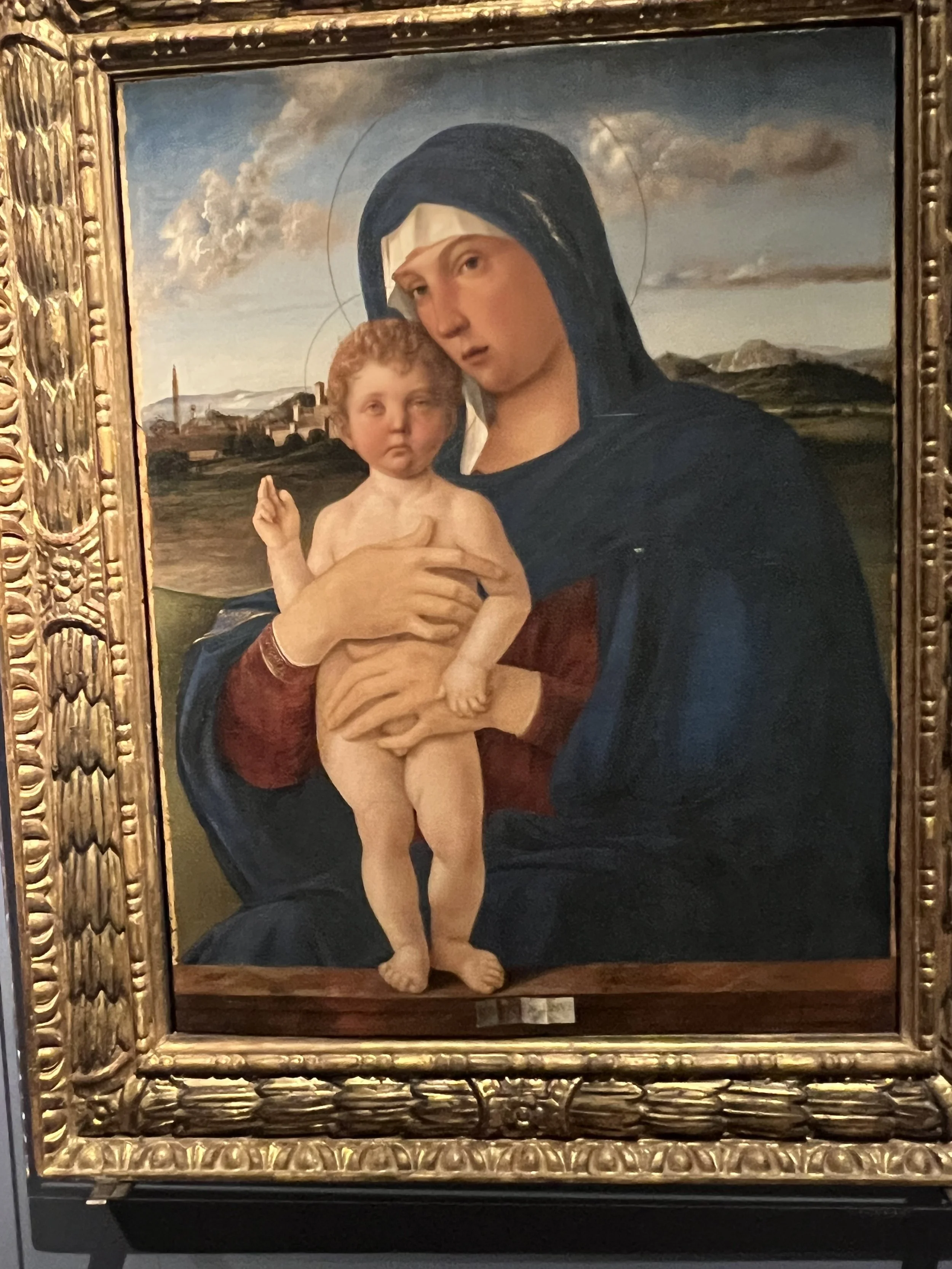
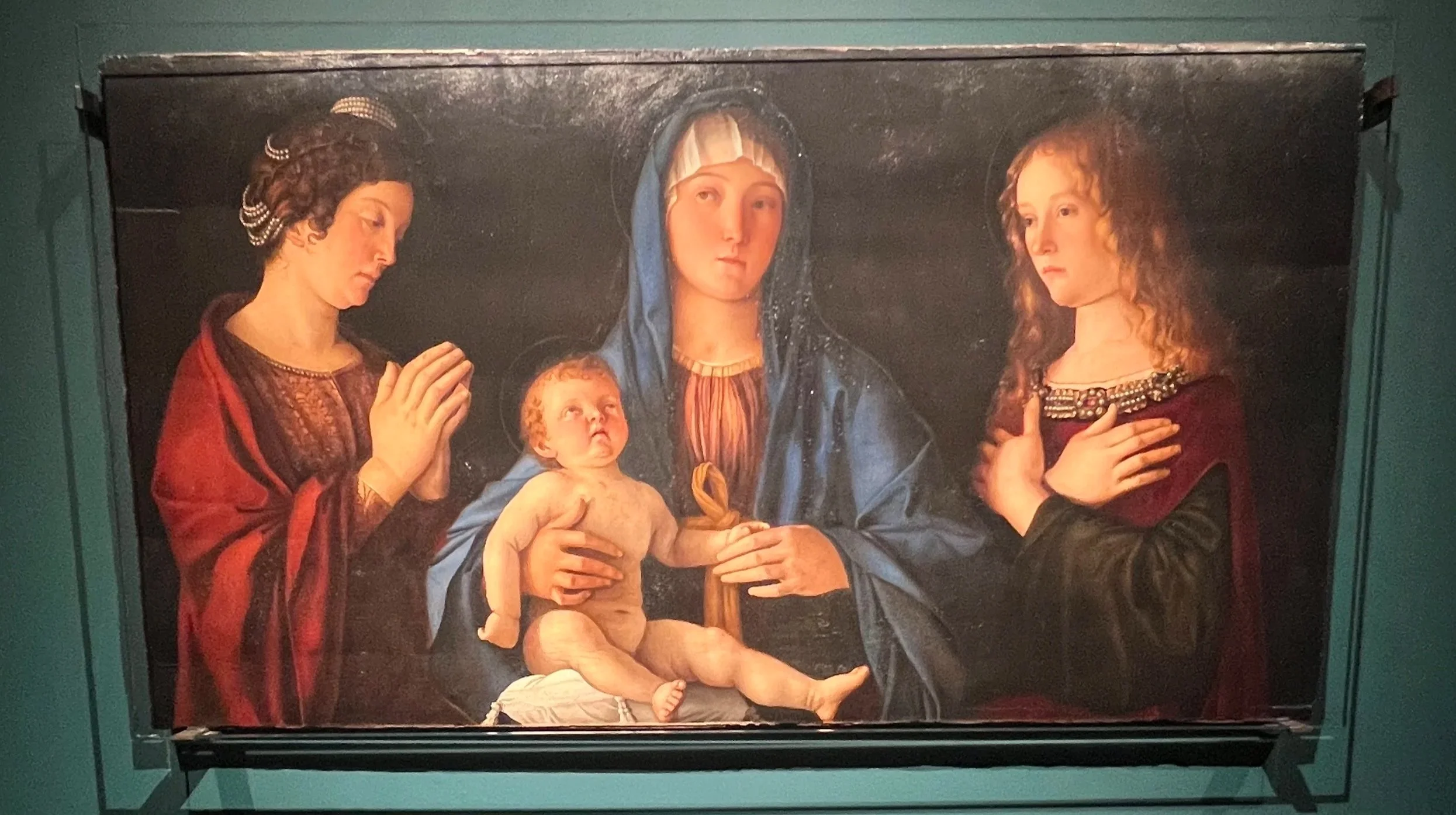
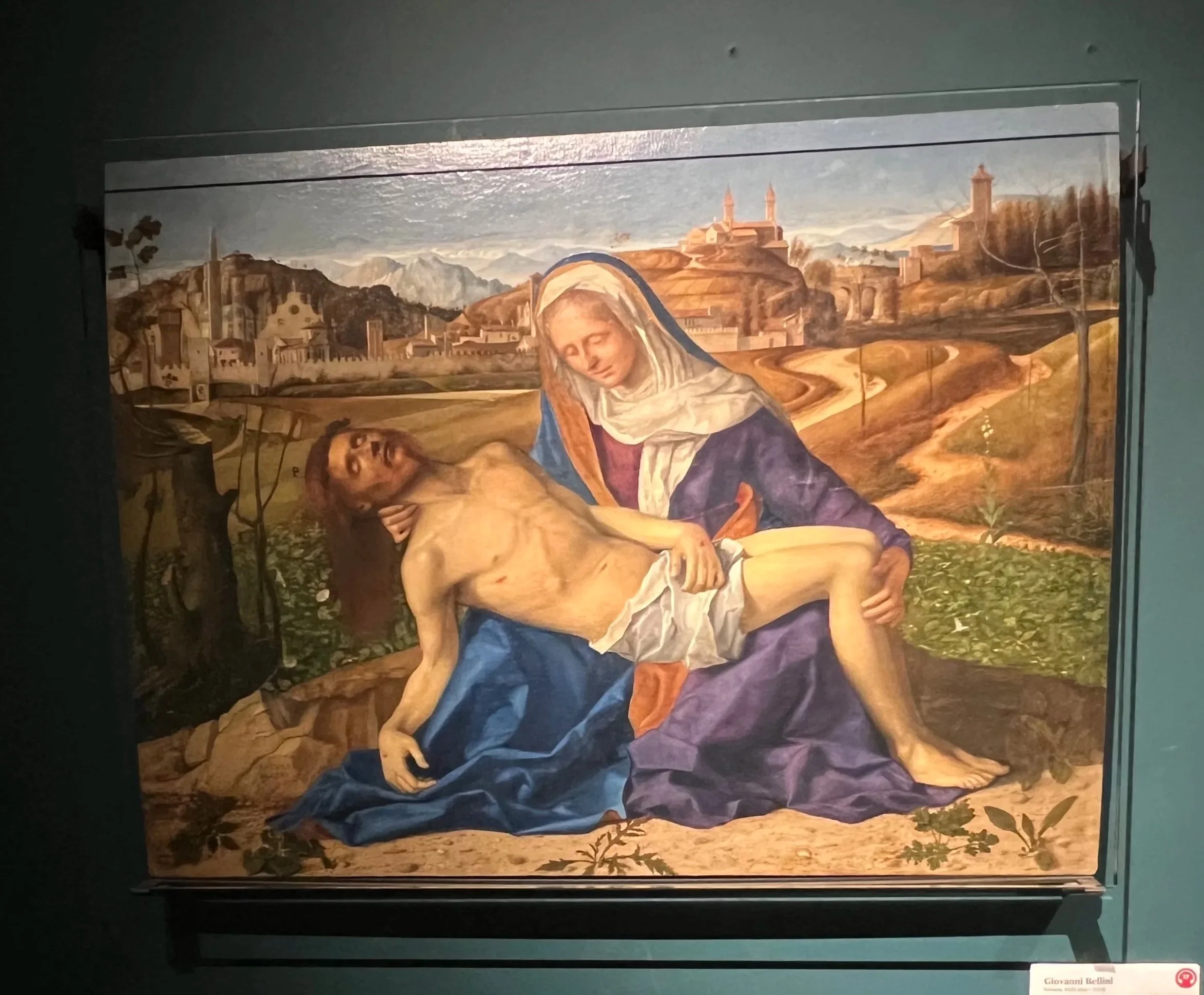
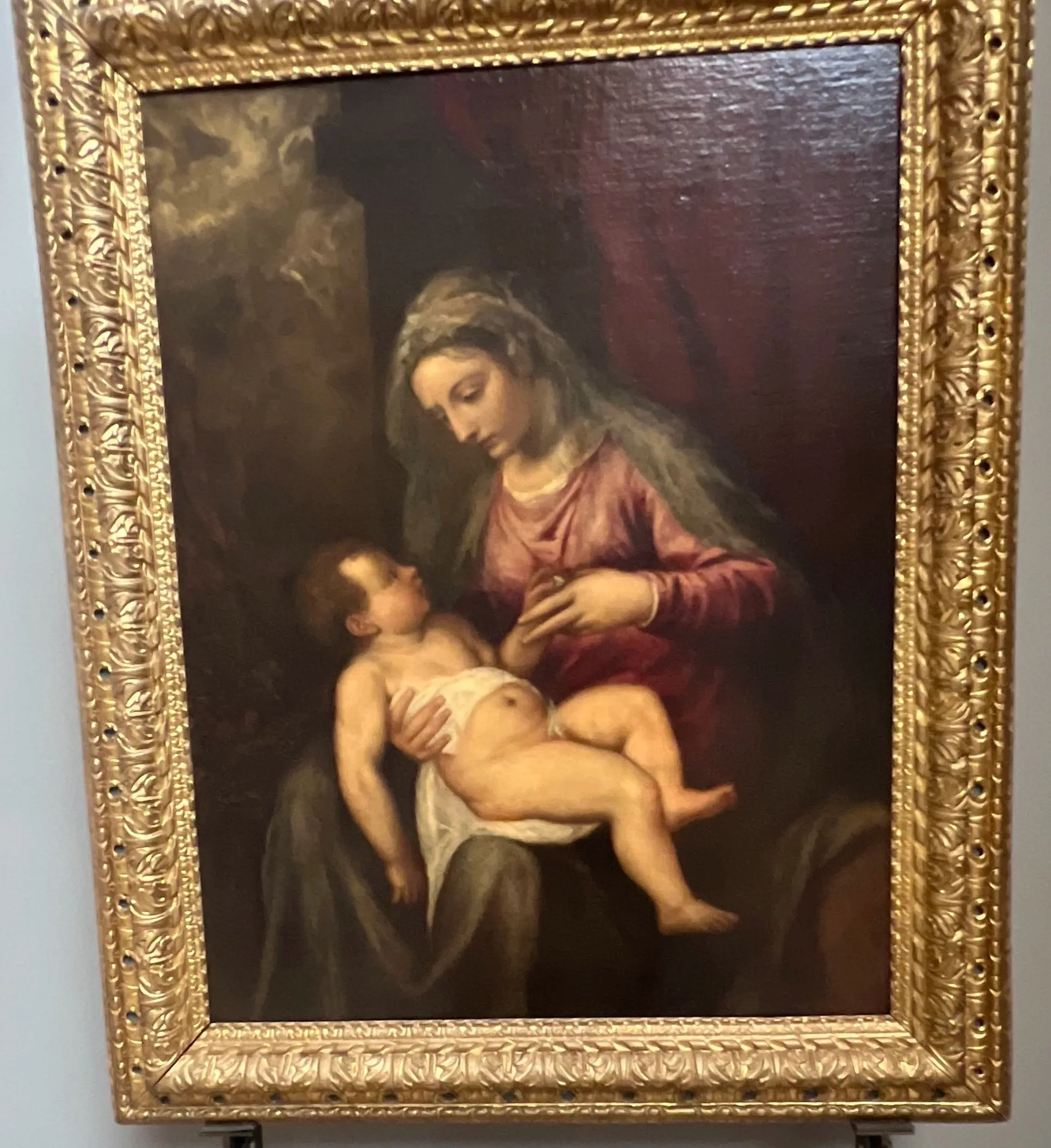
The paintings by Giovanni Bellini (1430–1516) stopped me in my tracks.
His Madonnas were still deeply religious images, but they felt different from the earlier works I had just seen. What struck me were the small variations in the relationship between the Virgin, the infant Jesus and the viewer. Sometimes Mary looks down at her child. Sometimes she gazes at him with an unmistakably human tenderness. And sometimes she looks directly out at us.
Those seemingly simple differences in gaze and gesture have an extraordinary effect.
The Madonna suddenly feels alive.
She is no longer simply the subject of a sacred image. She seems to be communicating - with the child, with us, or perhaps with both. The emotional distance between the viewer and the painted figures becomes smaller. She suddenly felt real and human.
I began to wonder whether this was one of the great changes brought about by the Renaissance. Perhaps it was not simply a matter of artists becoming more technically accomplished at representing the world. Perhaps they were also discovering new ways to create a relationship between the painted image and the person standing in front of it.
The image was beginning to become an encounter.
Giorgione and the power of not knowing
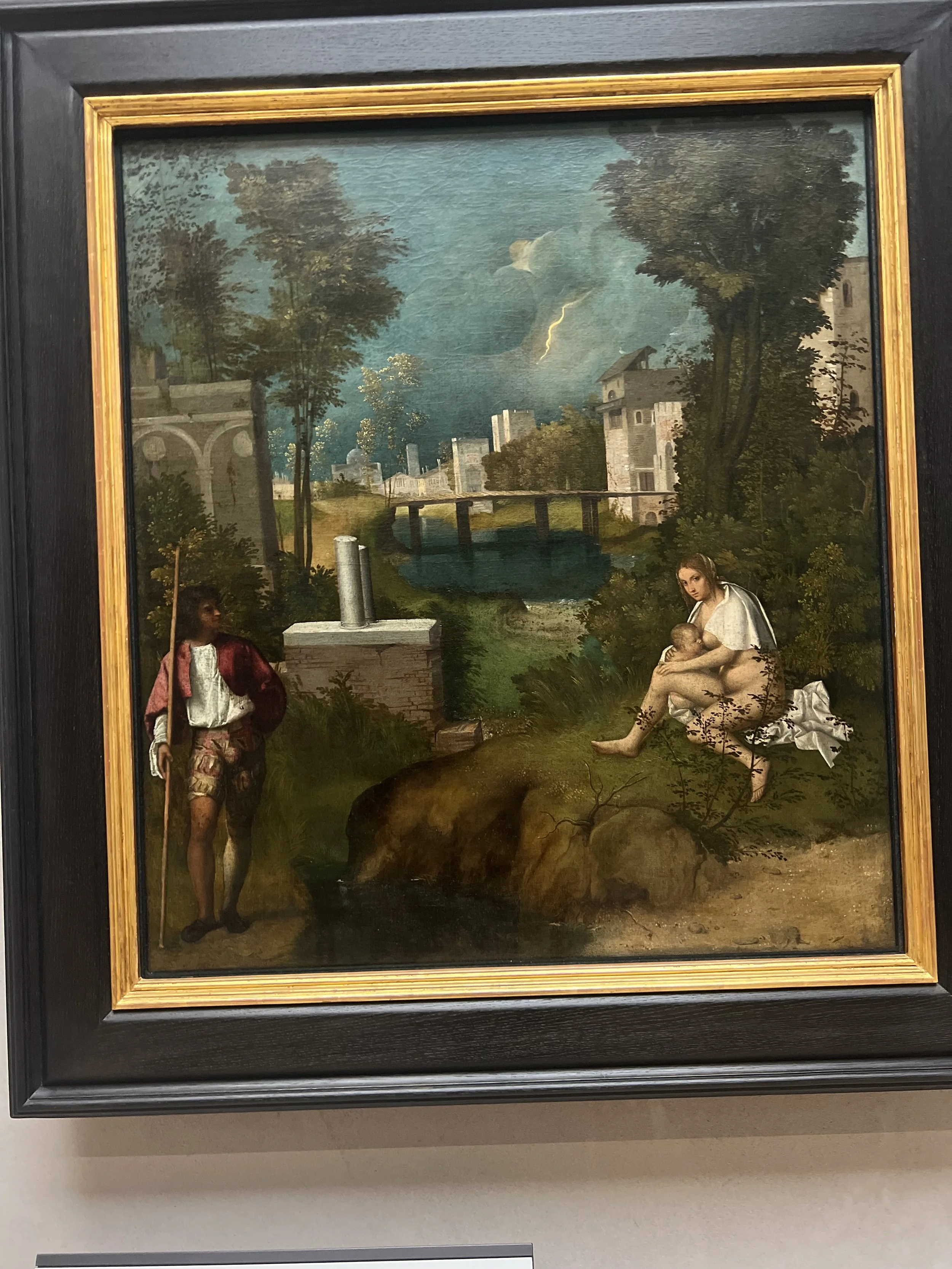
And then I encountered The Tempest by Giorgione (1477–1510).
After the relative clarity of the religious images, this painting seemed to do something completely different. I found myself asking questions that the painting stubbornly refuses to answer. Even today, art historians continue to debate what it actually means.
Who are the figures? What are they doing? What is the significance of the storm gathering in the distance? What role does the bolt of lightning in the sky play in the meaning of the work? Why does the landscape seem almost as important as the people?
While potentially a little unsettling, there is something strangely compelling about not knowing the precise meaning.
Rather than telling me what to think, The Tempest seemed to invite me to construct my own meaning. The mystery became part of the experience.
It was another way of engaging the viewer.
Veronese: entering the painting
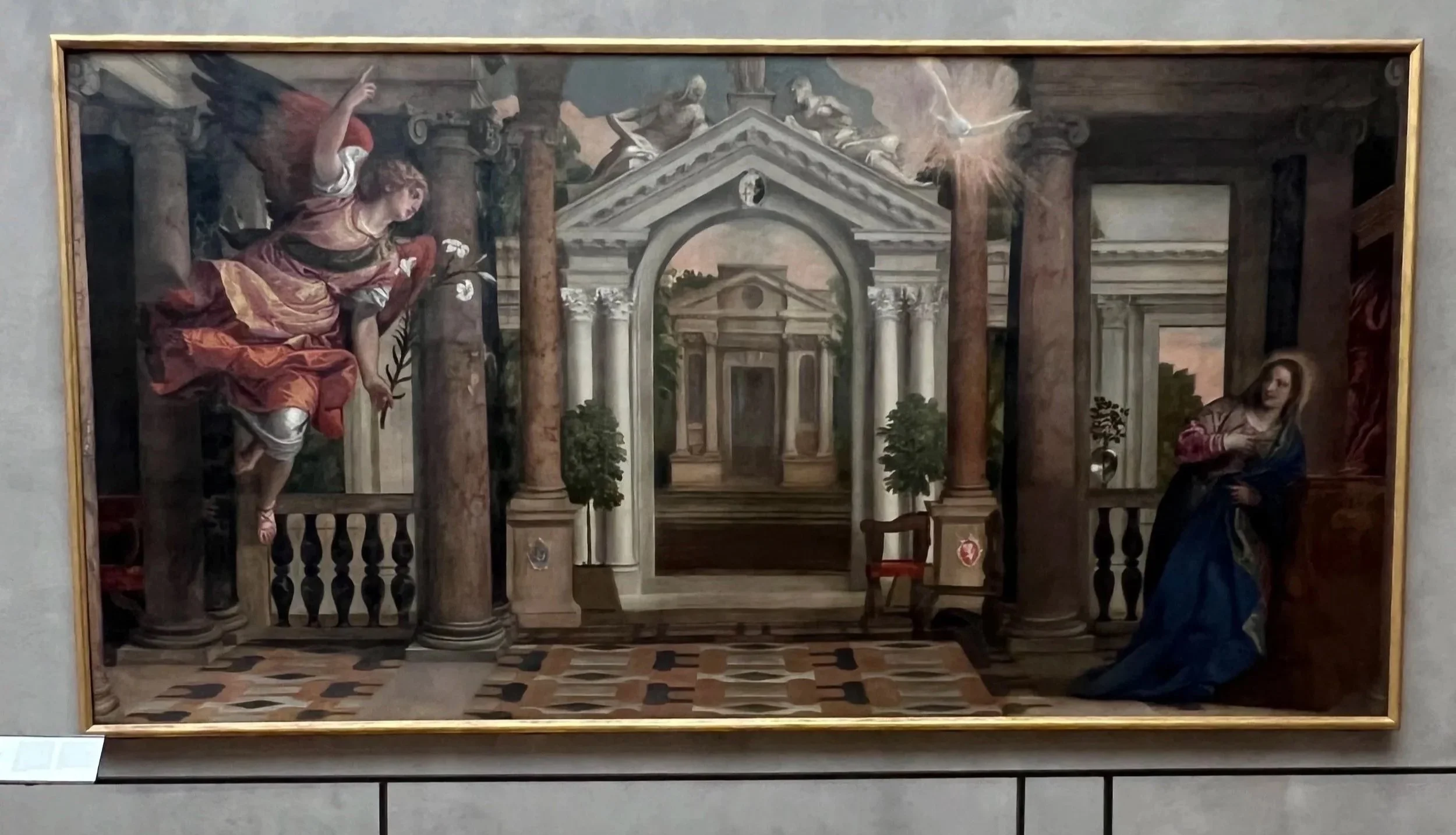
With Paolo Veronese (1528–1588), the experience changed again.
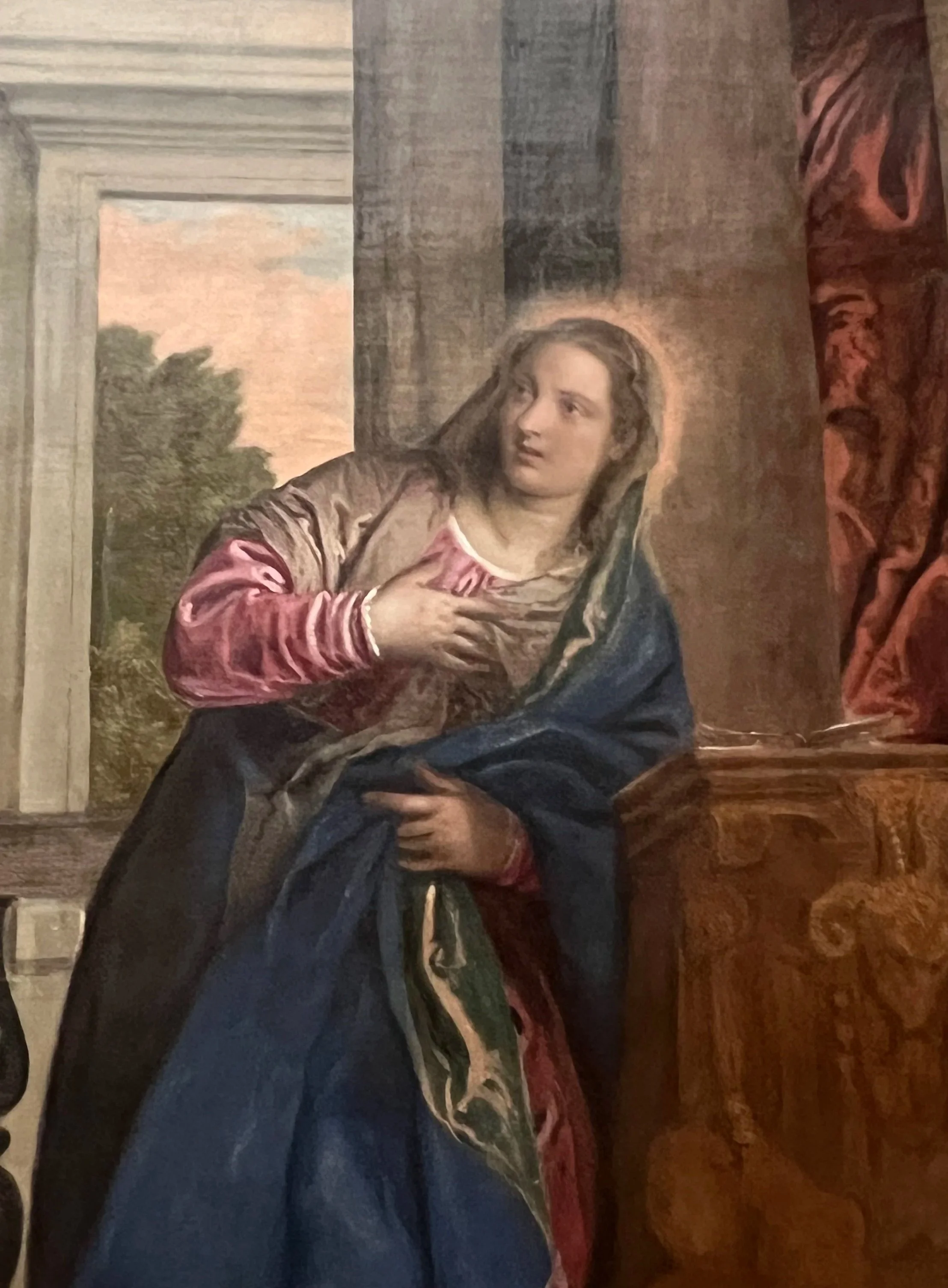
His paintings seemed to open up enormous worlds. Monumental architecture, elaborate costumes, crowds of people and an astonishing level of detail combine to create scenes that feel almost theatrical.
I was struck particularly by the way architecture functions in these works. It isn't simply a backdrop for the figures. It creates the stage on which the drama unfolds.
At the Frari, the architecture around Titian's painting had helped shape my experience of the work.
With Veronese, architecture had become part of the painting itself.
I found myself looking into these paintings rather than simply looking at them.
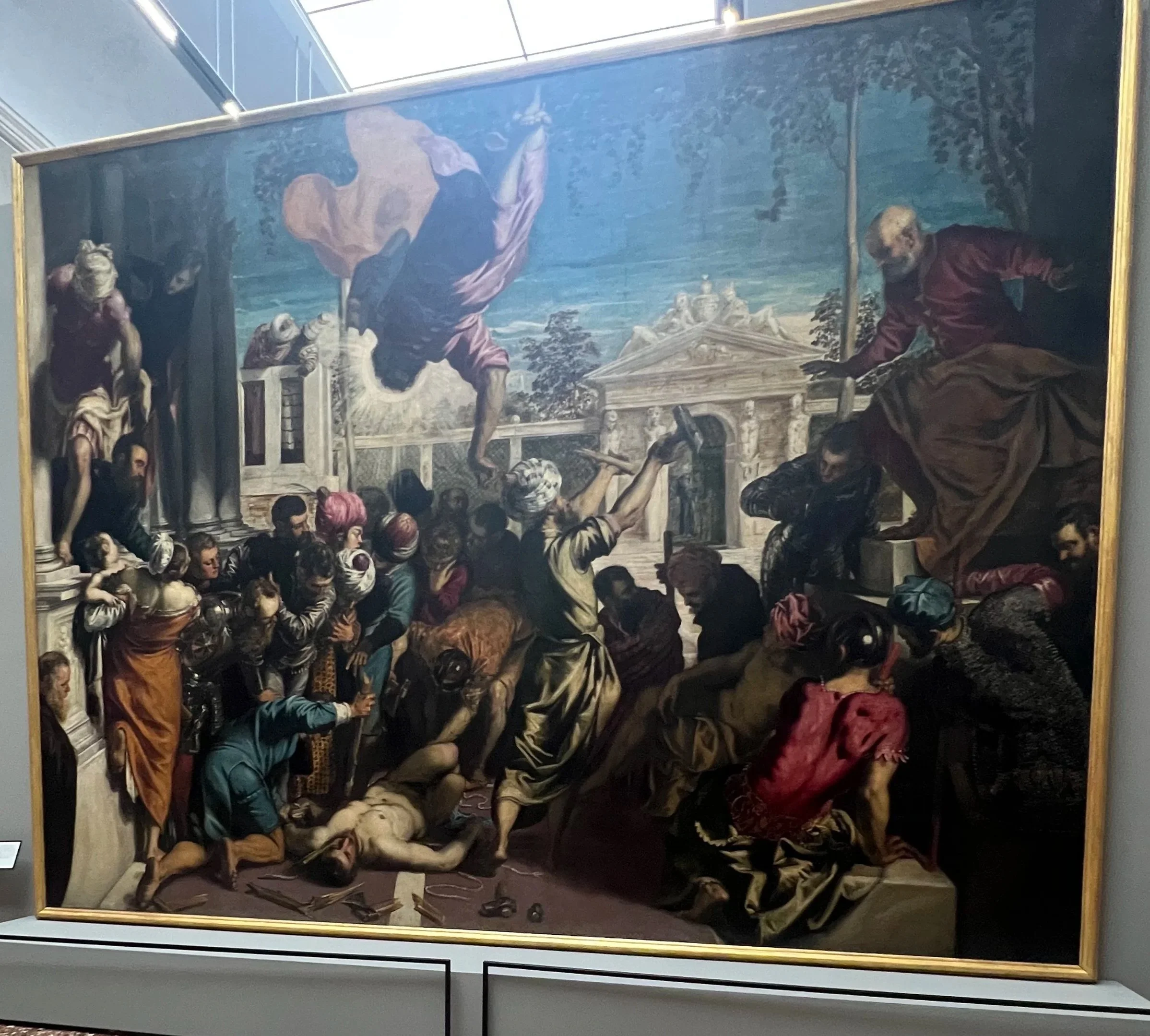
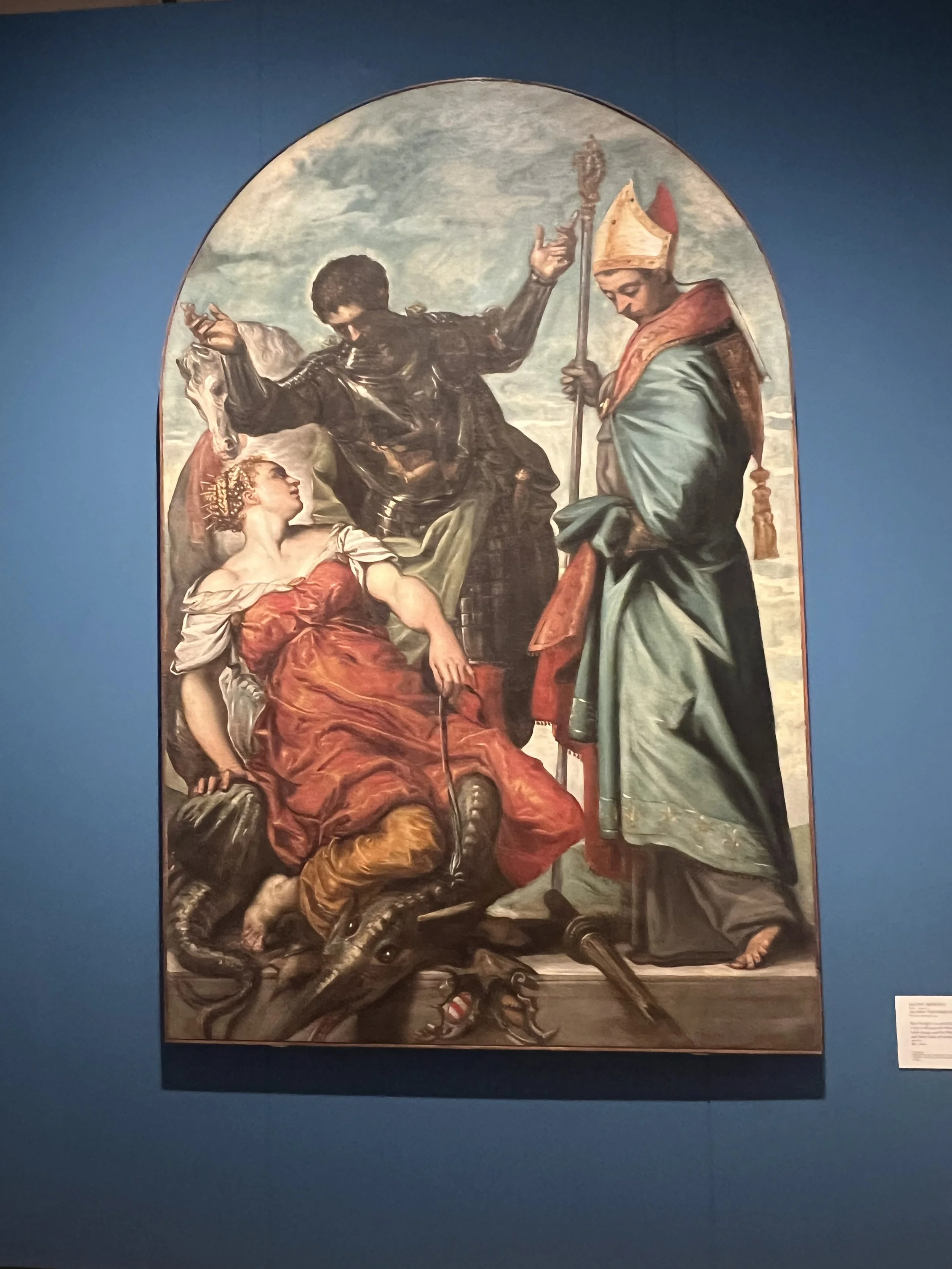
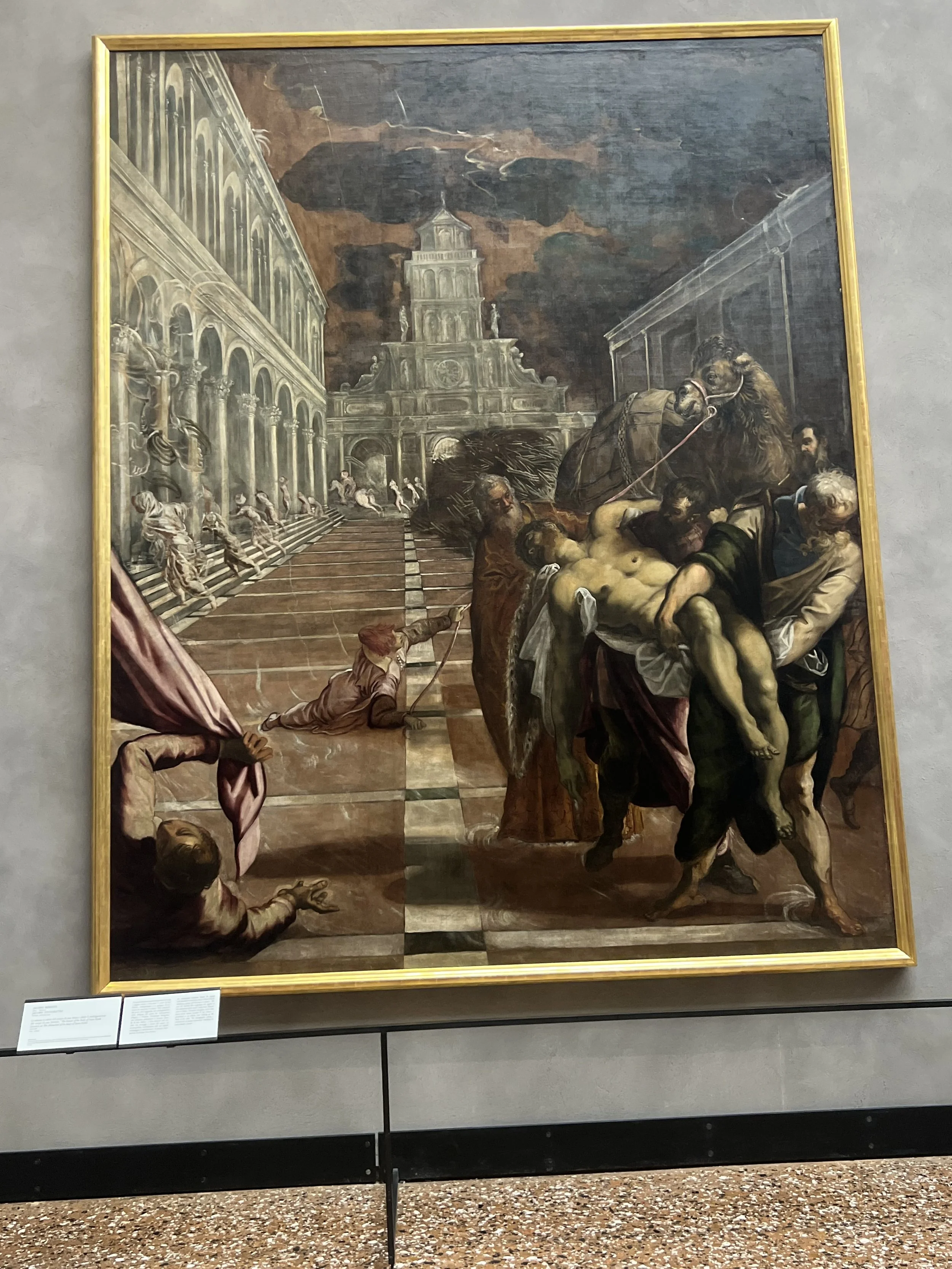
Tintoretto turns painting into theatre
Tintoretto (1518–1594) took the theatrical quality of Venetian painting in another direction.
His paintings seemed to have a different kind of energy. Figures twist and turn. Gestures are exaggerated. Perspective becomes dramatic. Light appears almost to explode into the scene.
Where Bellini drew me into an intimate relationship with his figures, Tintoretto seemed to pull me directly into the middle of the action.
It felt as though the painting was unfolding in front of me.
At the Frari, I had physically experienced the upward movement of Titian's Assumption as I approached the altar. At the Accademia, Tintoretto made me conscious of movement within the painting itself.
And then, Titian
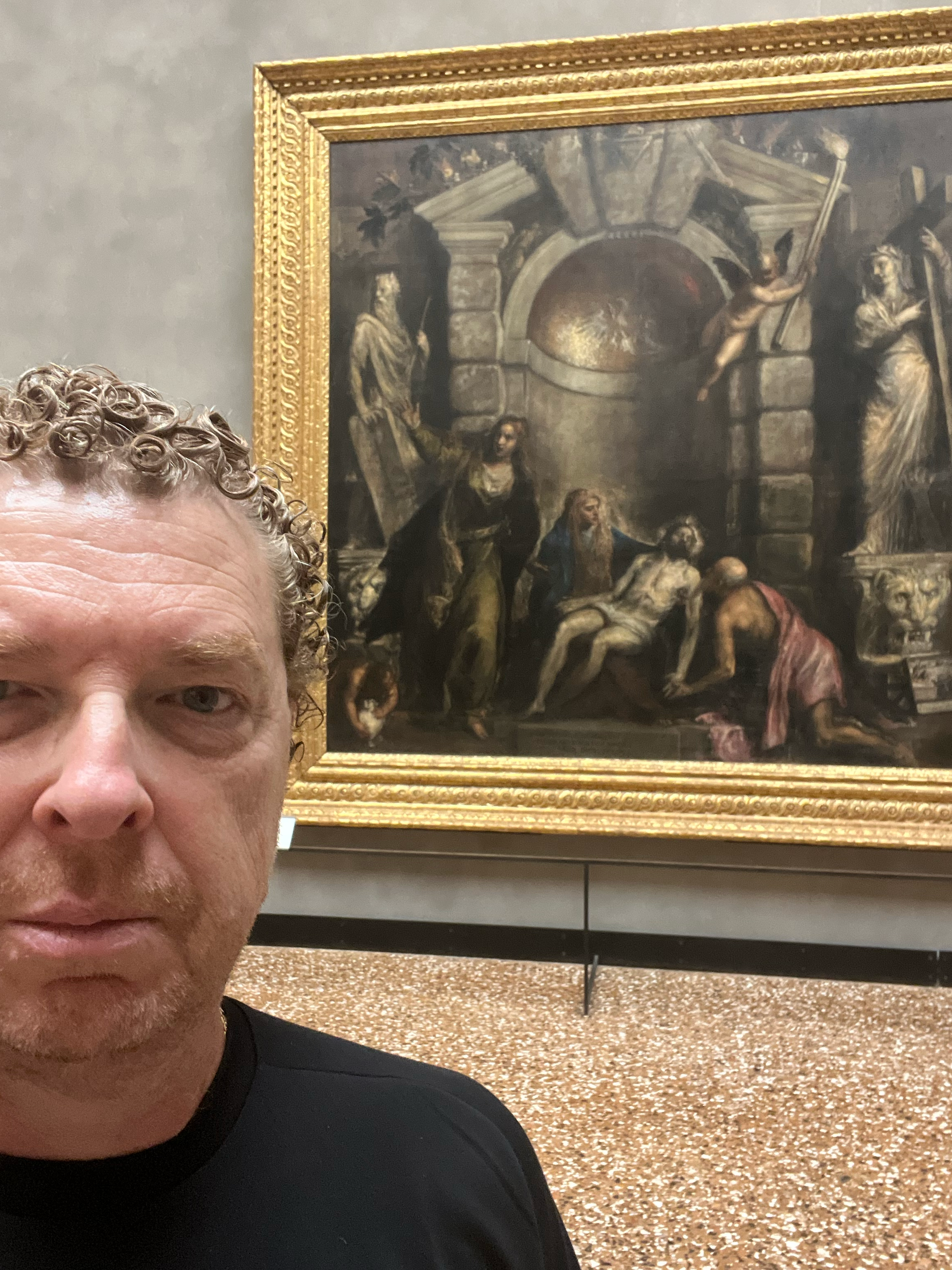
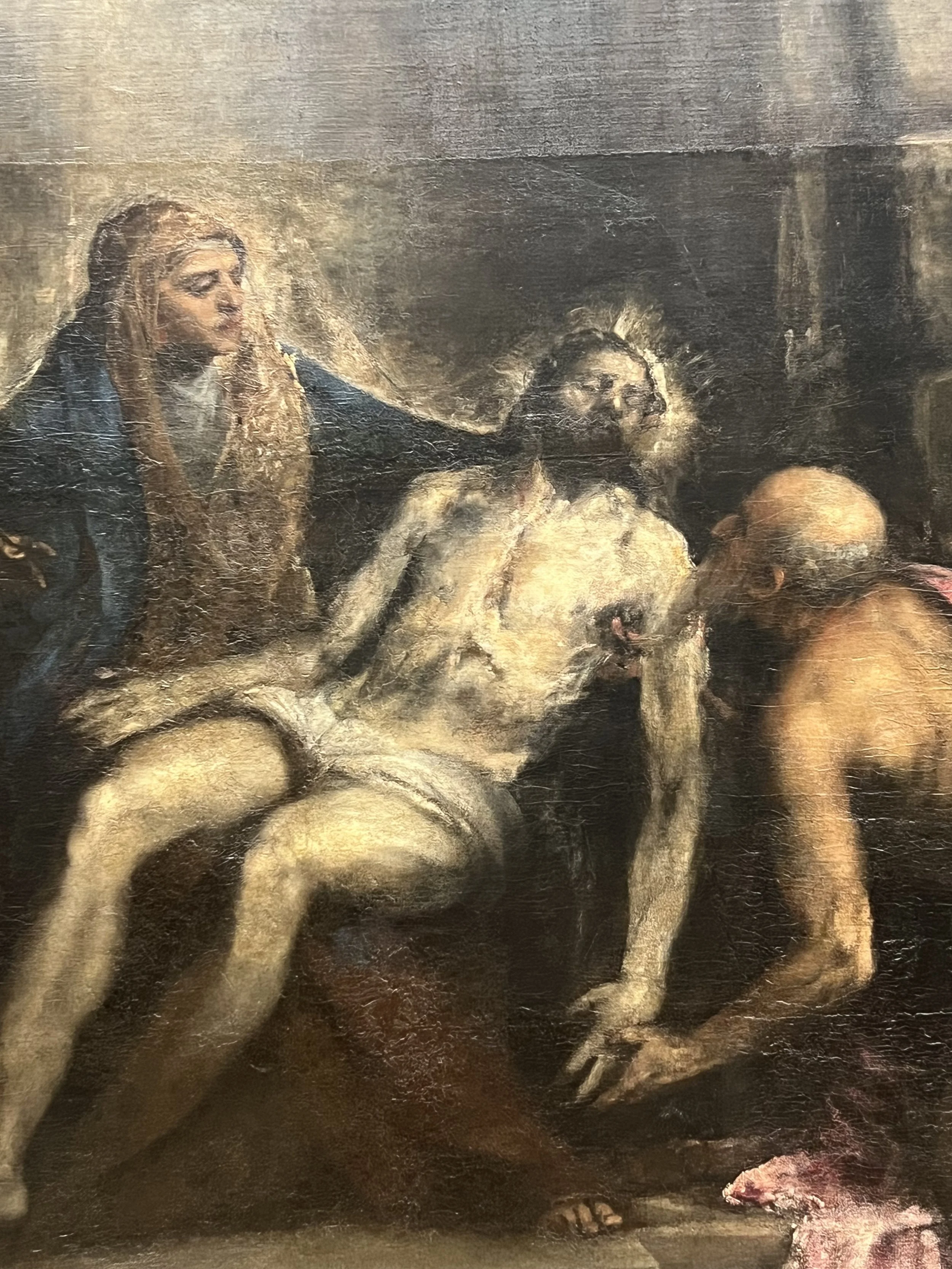
After seeing the extraordinary confidence and technical mastery of the Venetian painters, I found myself particularly moved by Titian's Pietà.
Knowing that he was an old man when he worked on it, and that it remained unfinished at his death, changed the way I looked at it.
The unfinished areas did not diminish the work for me. In some ways, they made it more personal.
Here was the same artist whose Assumption had overwhelmed me at the Frari, now confronting age, mortality and perhaps faith itself decades later in his career. The rougher, less resolved passages seemed almost to reveal the hand of the artist behind the masterpiece. At times, the figures appear to dissolve into the paint itself.
I found myself wondering whether this unfinished quality took on a different meaning precisely because Titian was approaching the end of his life. Perhaps I was projecting my own thoughts onto the painting, but I couldn't escape the feeling that I was seeing the work - and the artist - differently because I knew what lay behind it.
It was difficult not to see something of the man in the painting.
From icons to encounters
Walking through the Accademia, I began to see Venetian painting as more than a succession of increasingly sophisticated artists and techniques.
The gold-ground images seemed to ask me to venerate.
Bellini invited me to connect.
Giorgione invited me to wonder.
Veronese invited me into his world.
Tintoretto seemed to put me inside the drama.
And Titian's Pietà confronted me with something more personal still - the artist himself, at the end of his life, leaving behind a work that remained unfinished.
Perhaps what changed most over the course of the Venetian Renaissance was not simply how artists painted - their technique and craft - but the relationship they created between the image and the person looking at it.
“The moment when an image stops being something we look at and becomes something we encounter.”
At the Frari, I discovered that a Renaissance painting cannot be separated from the place in which it was meant to be experienced. At the Accademia, I began to appreciate something different: the extraordinary range of ways Venetian artists learned to reach across that space and engage the viewer.
I had entered the Accademia expecting to see great paintings. I left thinking about something else entirely: the moment when an image stops being something we look at and becomes something we encounter.
This is what I enjoy so much about my journey into the artistic world of the Renaissance - you never know what you are going to discover. Keeping an open mind about what lies ahead, without preconceived notions, is what makes this learning experience so rewarding.
The next step in the journey was becoming clear: to experience these different artistic approaches in the spaces for which they were intended. That meant leaving the museum behind and seeking out the churches and scuolas of Venice where these works were meant to be seen, experienced and, in many cases, worshipped.