From Painting to Place: Discovering Renaissance Art in the Churches of Venice
By the time I left the Accademia, I had begun to think differently about Venetian painting.
My experience at the Frari had taught me that a Renaissance masterpiece cannot always be separated from the place for which it was created. At the Accademia, I had then discovered how Venetian artists developed increasingly sophisticated ways of engaging the viewer: Bellini through intimacy, Giorgione through mystery, Veronese through grandeur, Tintoretto through drama and Titian, late in life, through something far more personal.
I now wanted to see what happened when I returned to the churches of Venice and encountered the work of these artists in their intended environments.
I quickly discovered that there was no single answer. As with so much of Venice, I was expecting to be surprised.
When art matches the space
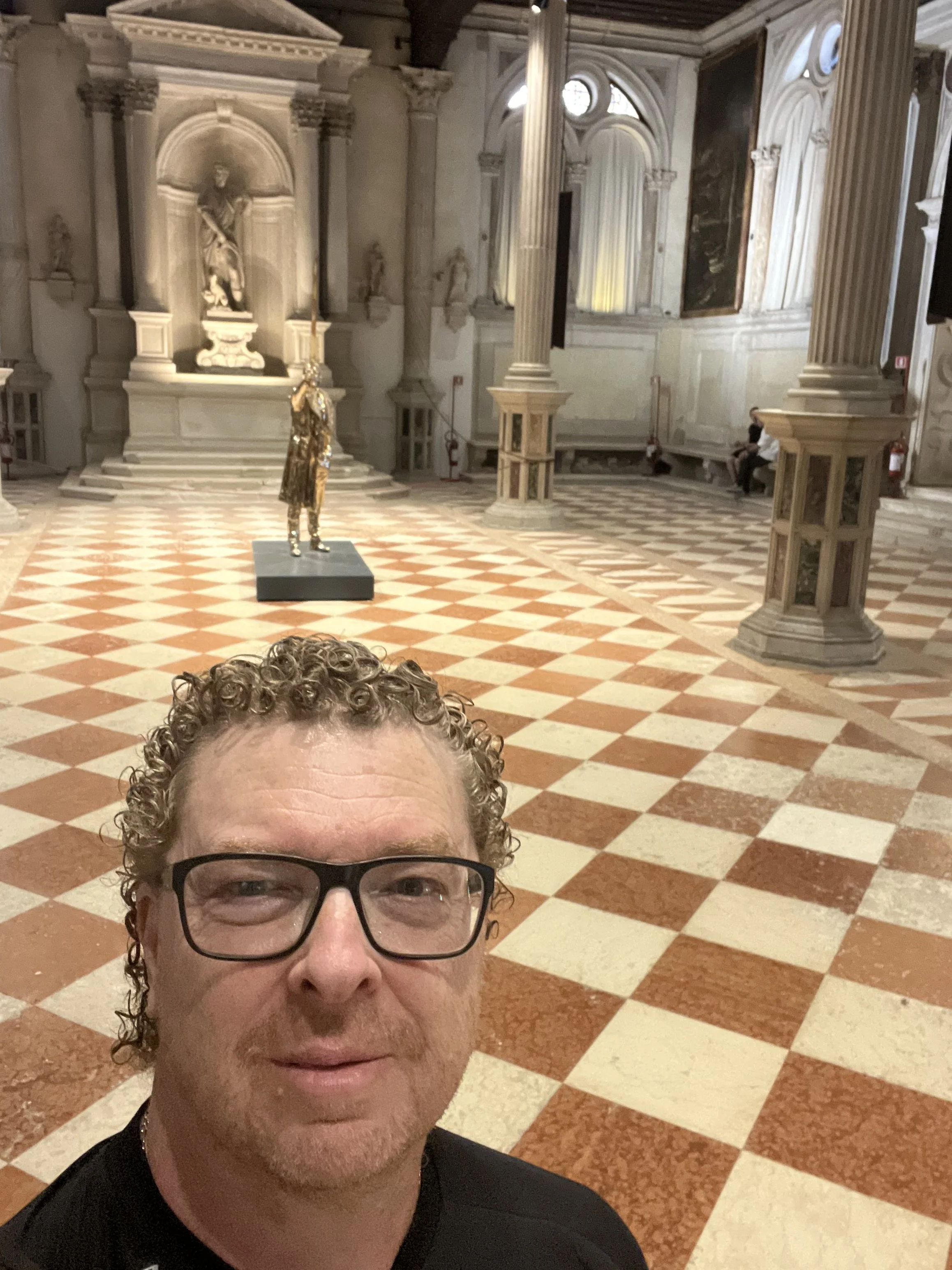
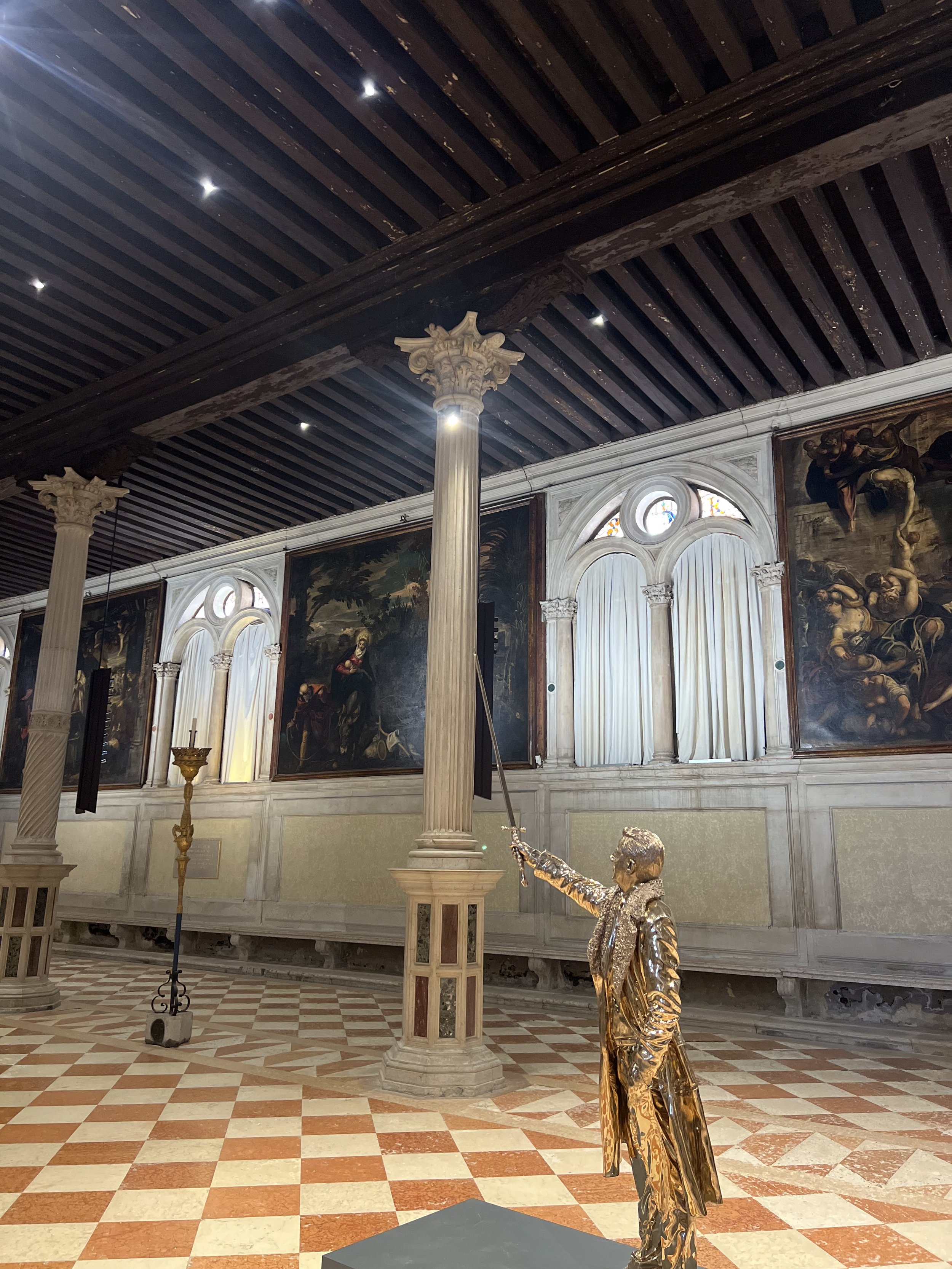
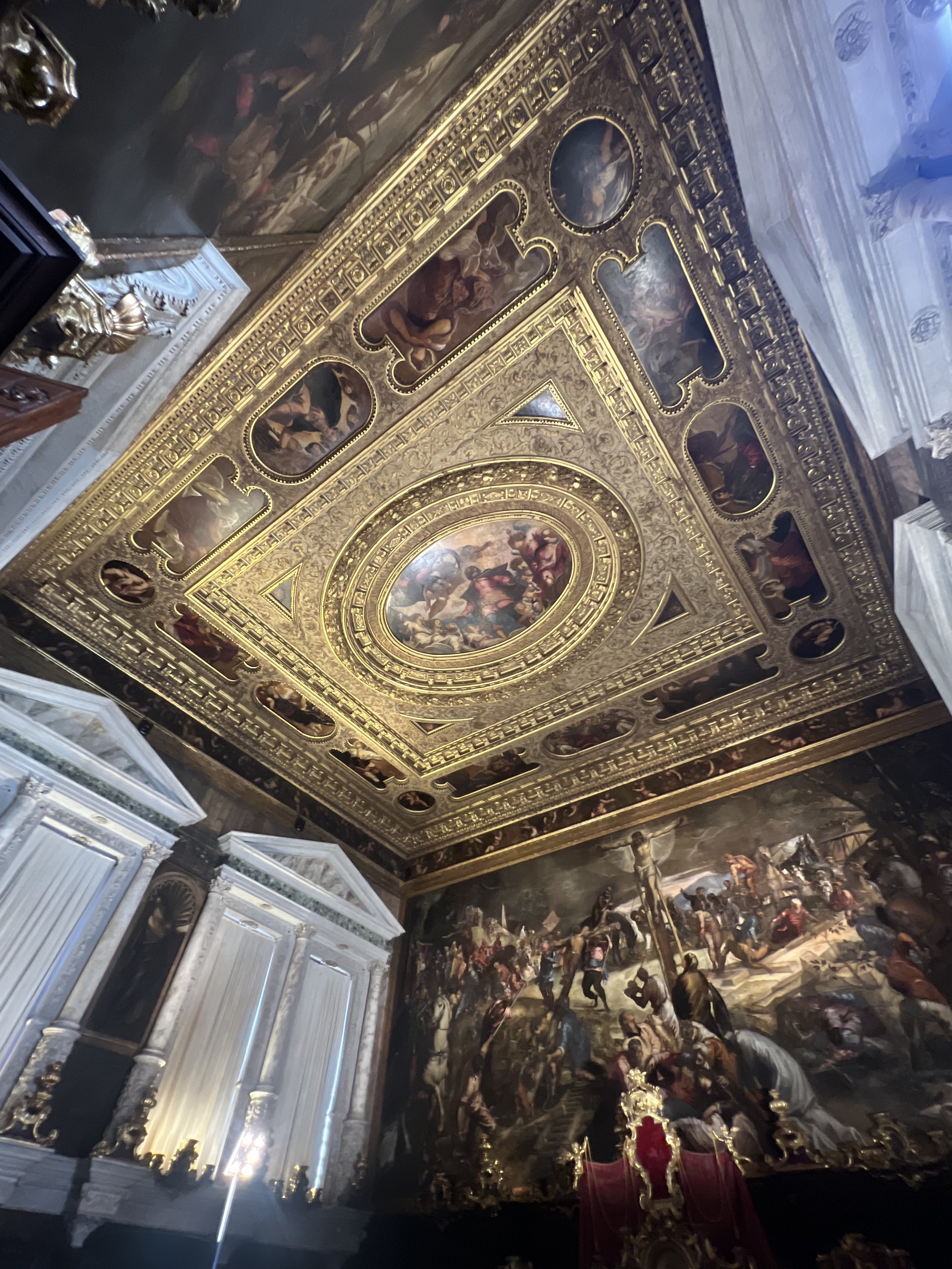
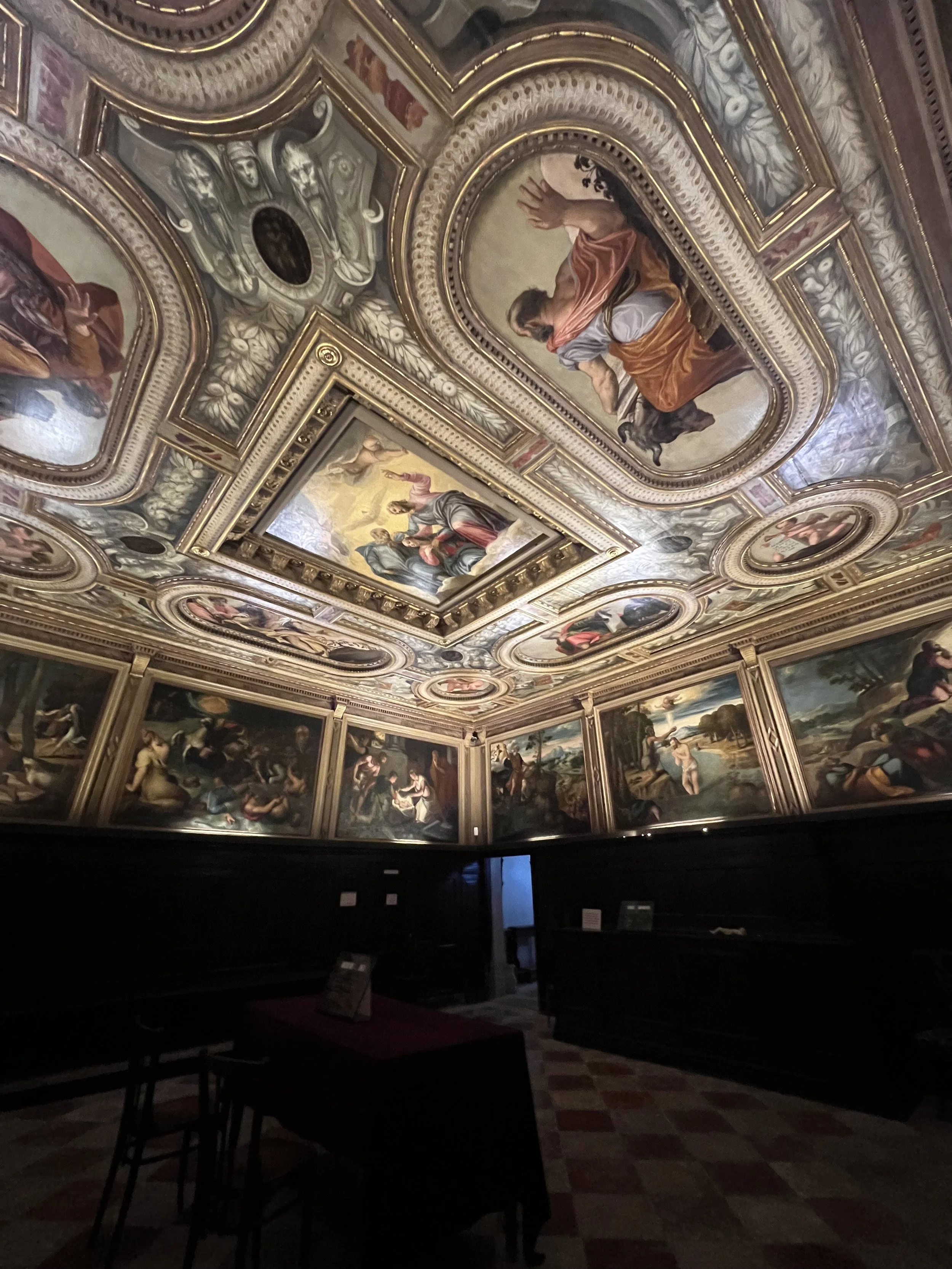
My visit to the Scuola Grande di San Marco and its adjoining church was a powerful reminder of the relationship between art and architecture.
A scuola was a lay religious and charitable confraternity, founded by groups of citizens - often merchants, artisans or other members of the community - to come together for worship, mutual assistance and charitable works. Their activities included supporting the poor and sick, helping members in times of need, organizing religious ceremonies and providing support for funerals and the families of deceased members.
Their meeting halls became important centres of Venetian civic and religious life, and wealthy confraternities commissioned leading artists such as Tintoretto and Veronese to decorate them, making the scuole some of the most remarkable settings for Renaissance art in Venice.
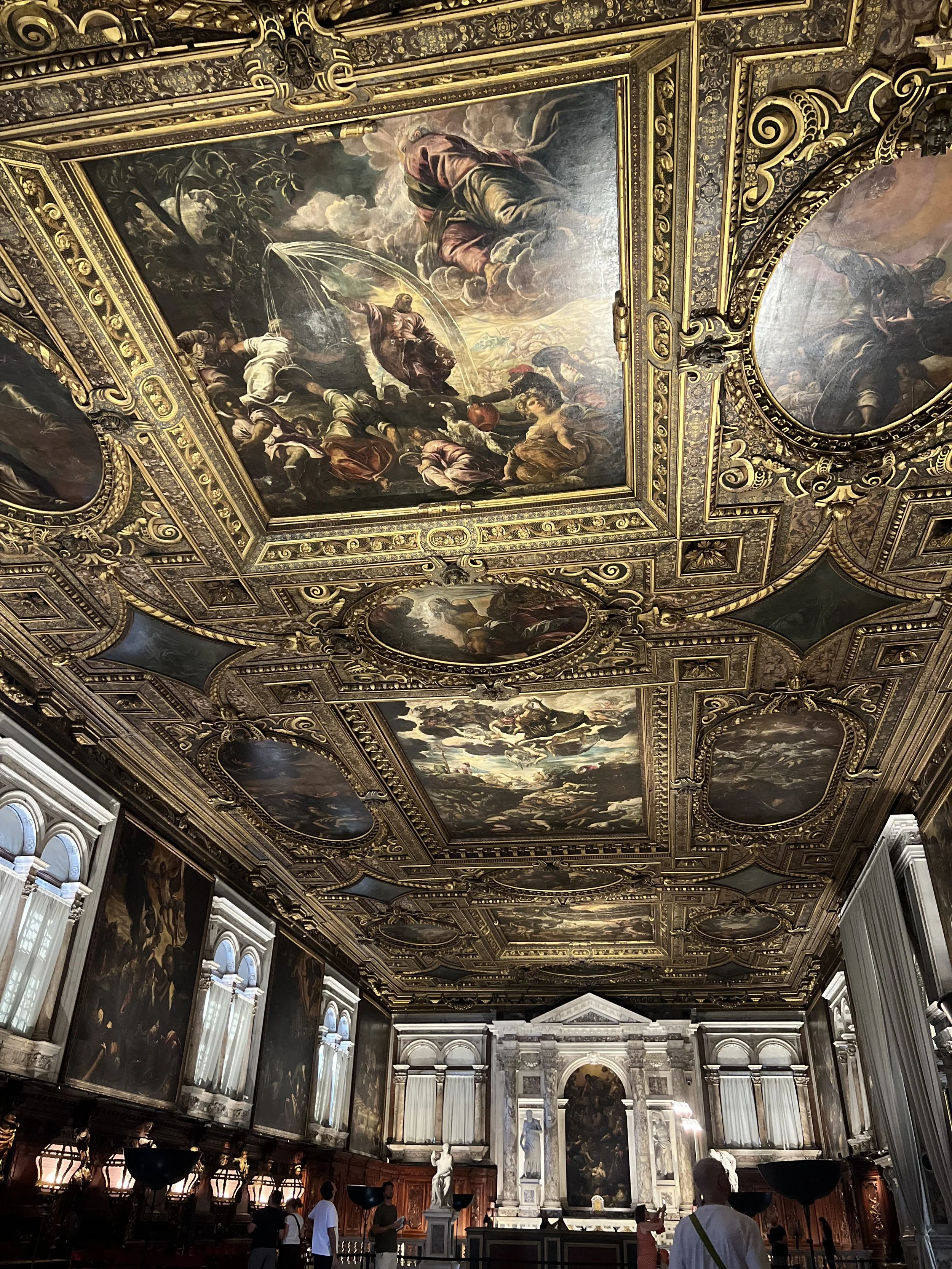
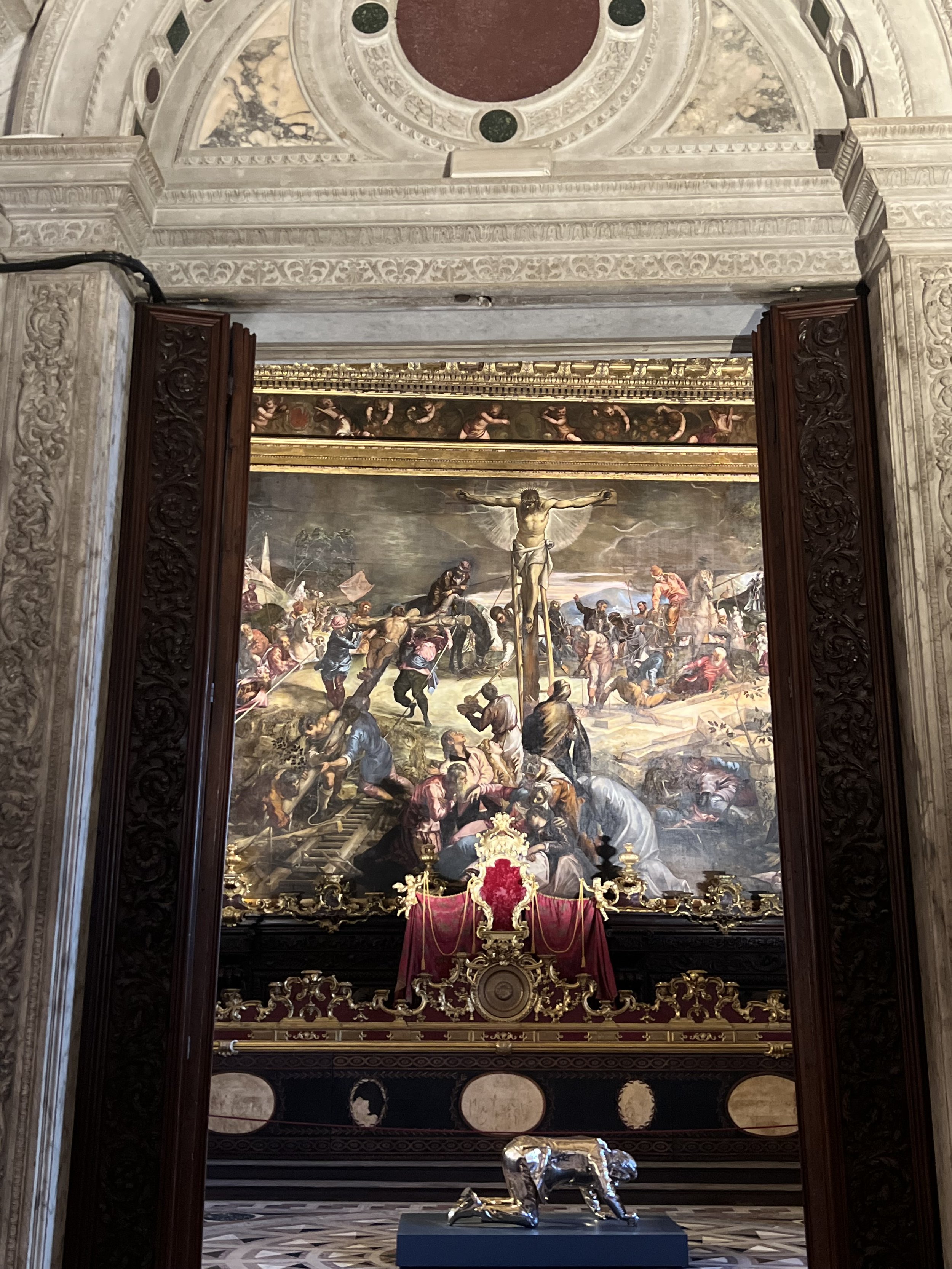
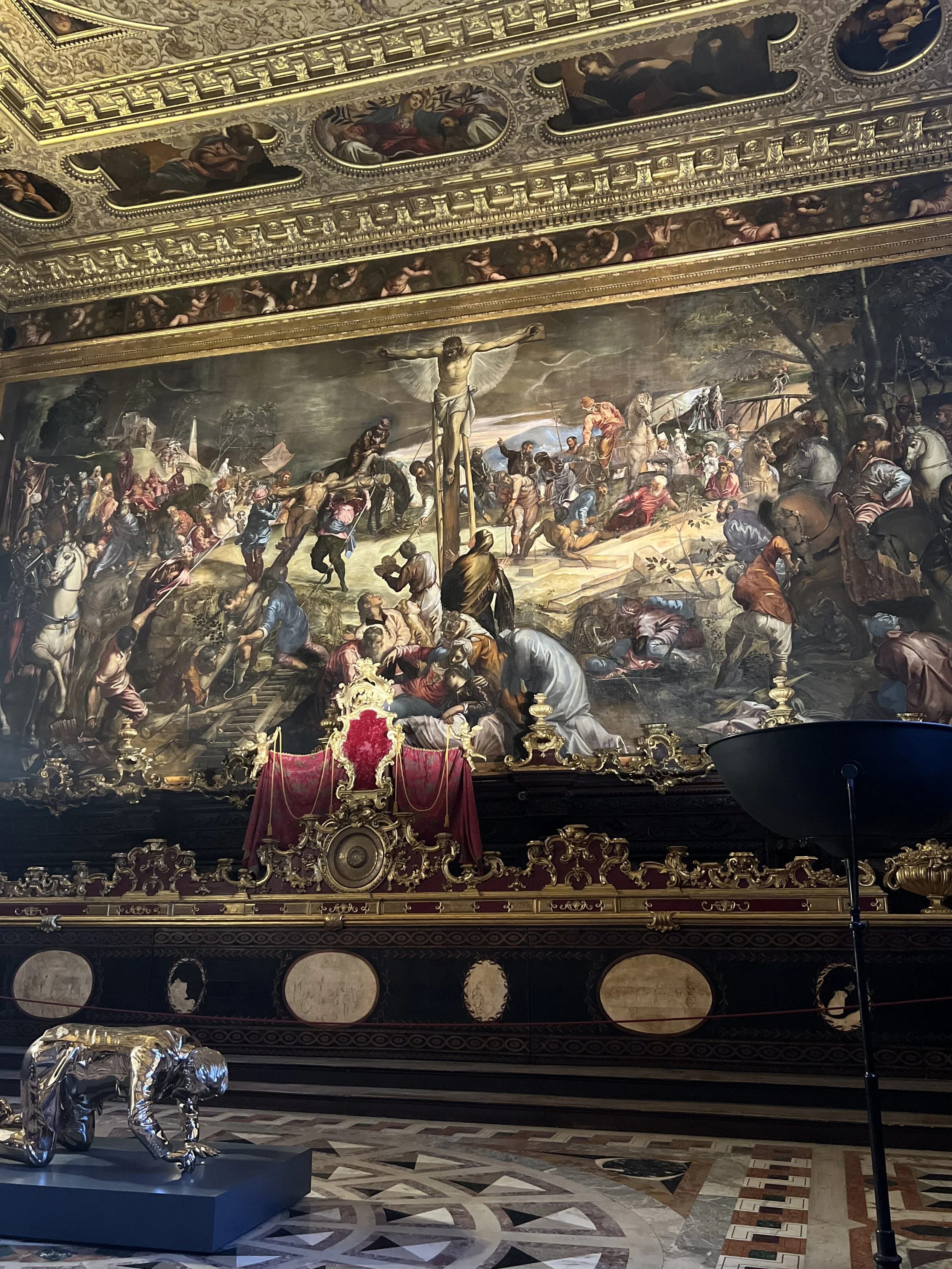
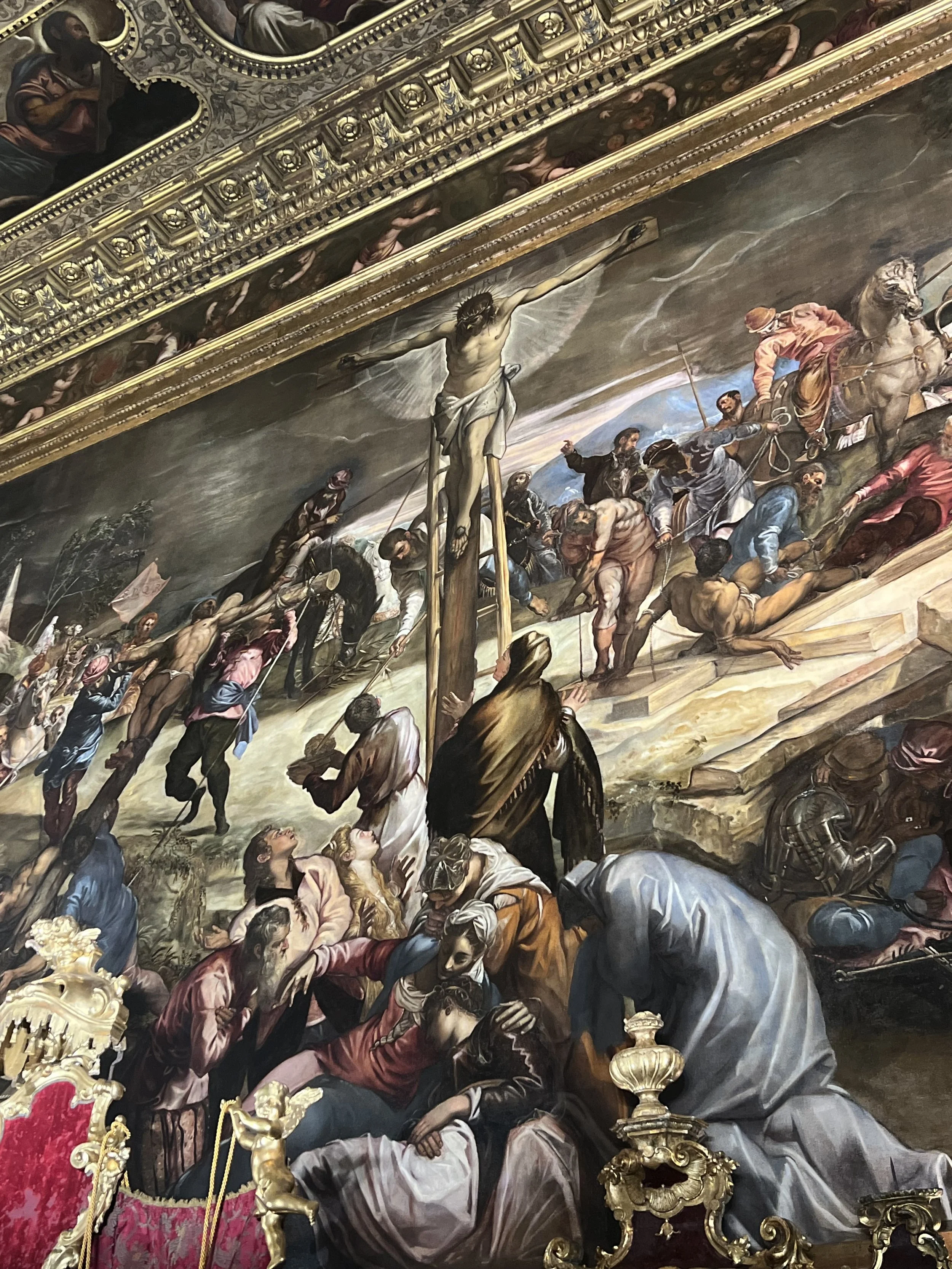
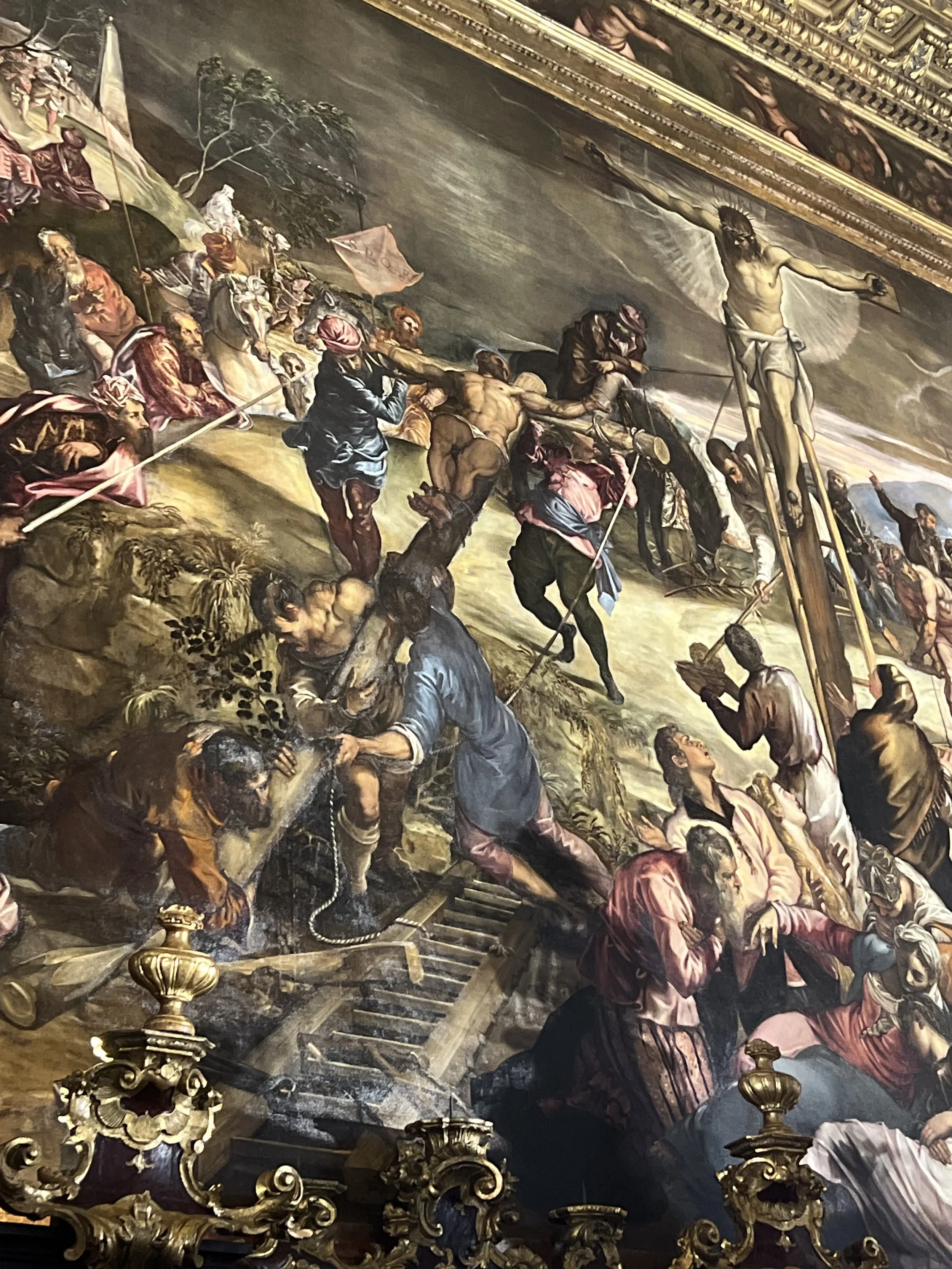
Inside the spectacular walls of the Scuola Grande di San Marco one is confronted with the magnitude of Tintoretto’s contribution. But for me it was his large Crucifixion in the Sala dell'Albergo that particularly moved me. The scale and drama of the painting seem entirely appropriate for the grandeur of the room. It doesn't feel like an artwork placed within the architecture. It feels as though the painting belongs to the space and the space belongs to the painting. The sheer size and complexity of the scene made me want to sit down and contemplate the image. Although it represented a familiar and well-known narrative of Christianity, the realism of the painting made you feel as if you were witnessing the event in person.
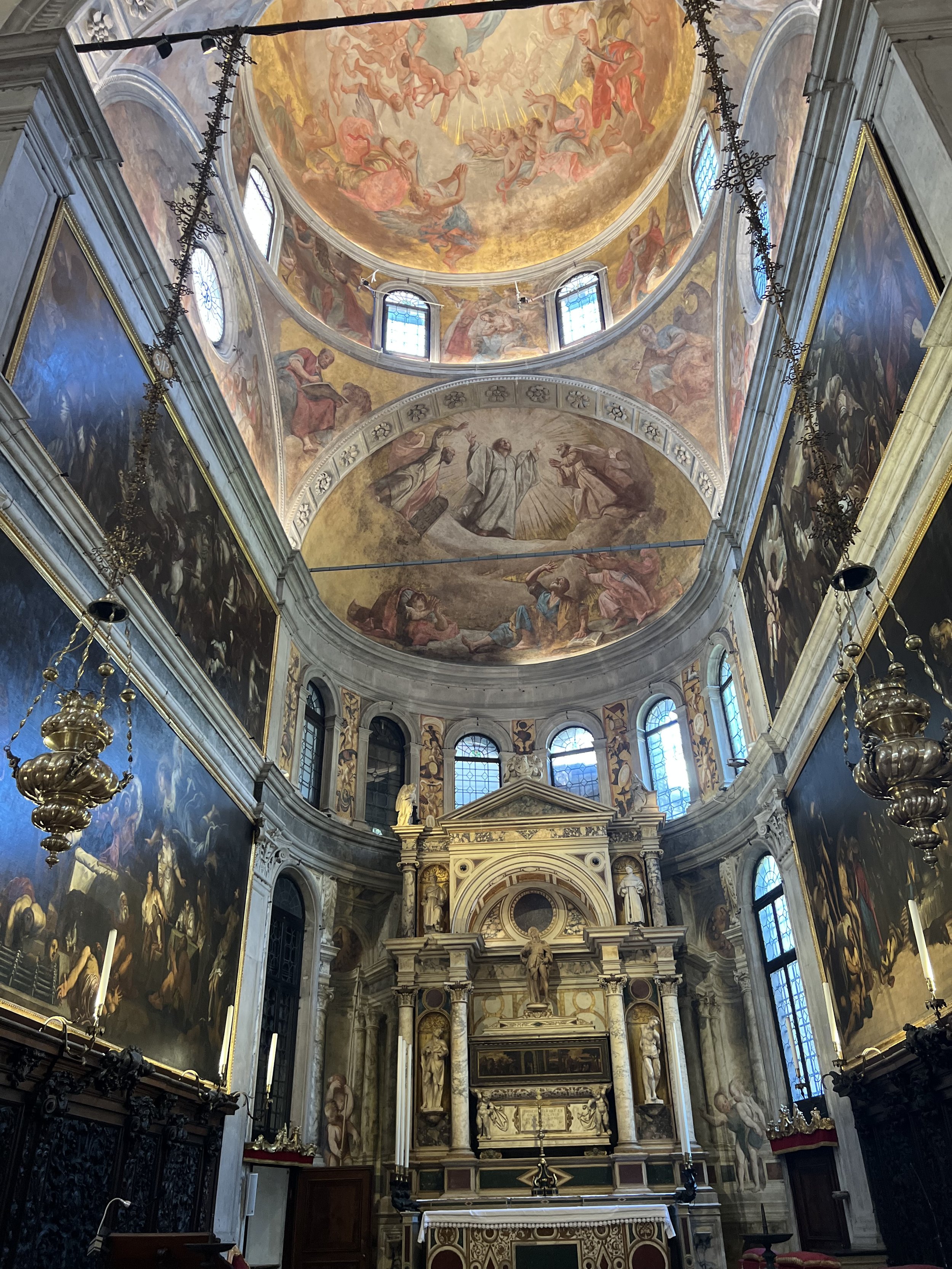
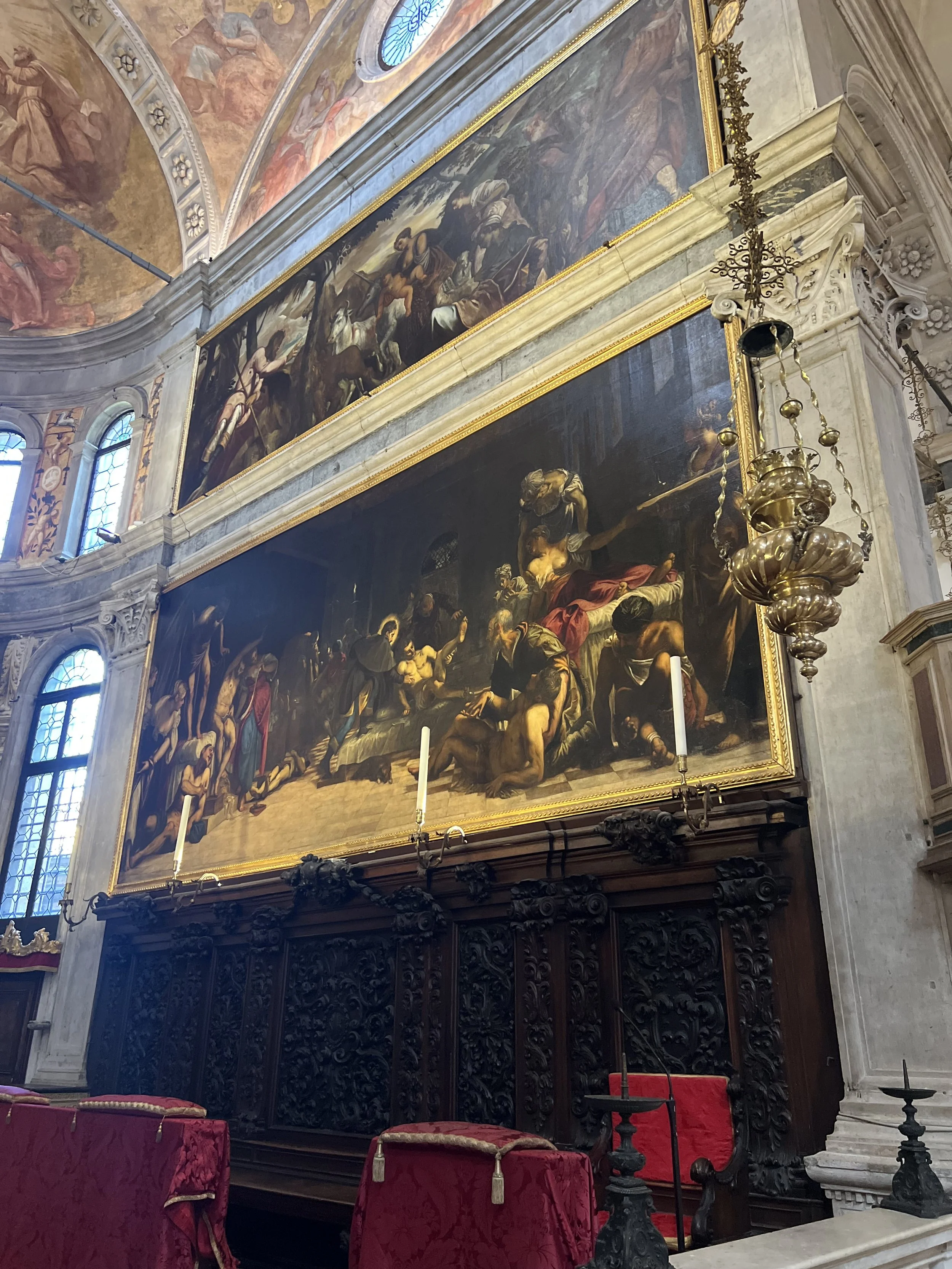
In the church itself, the paintings in the dome and the sheer height and decoration of the interior created another of those moments of awe I had first experienced at the Frari.
Once again, I felt that familiar sense of vulnerability. Perhaps I was beginning to understand why.
Different spaces, different experiences
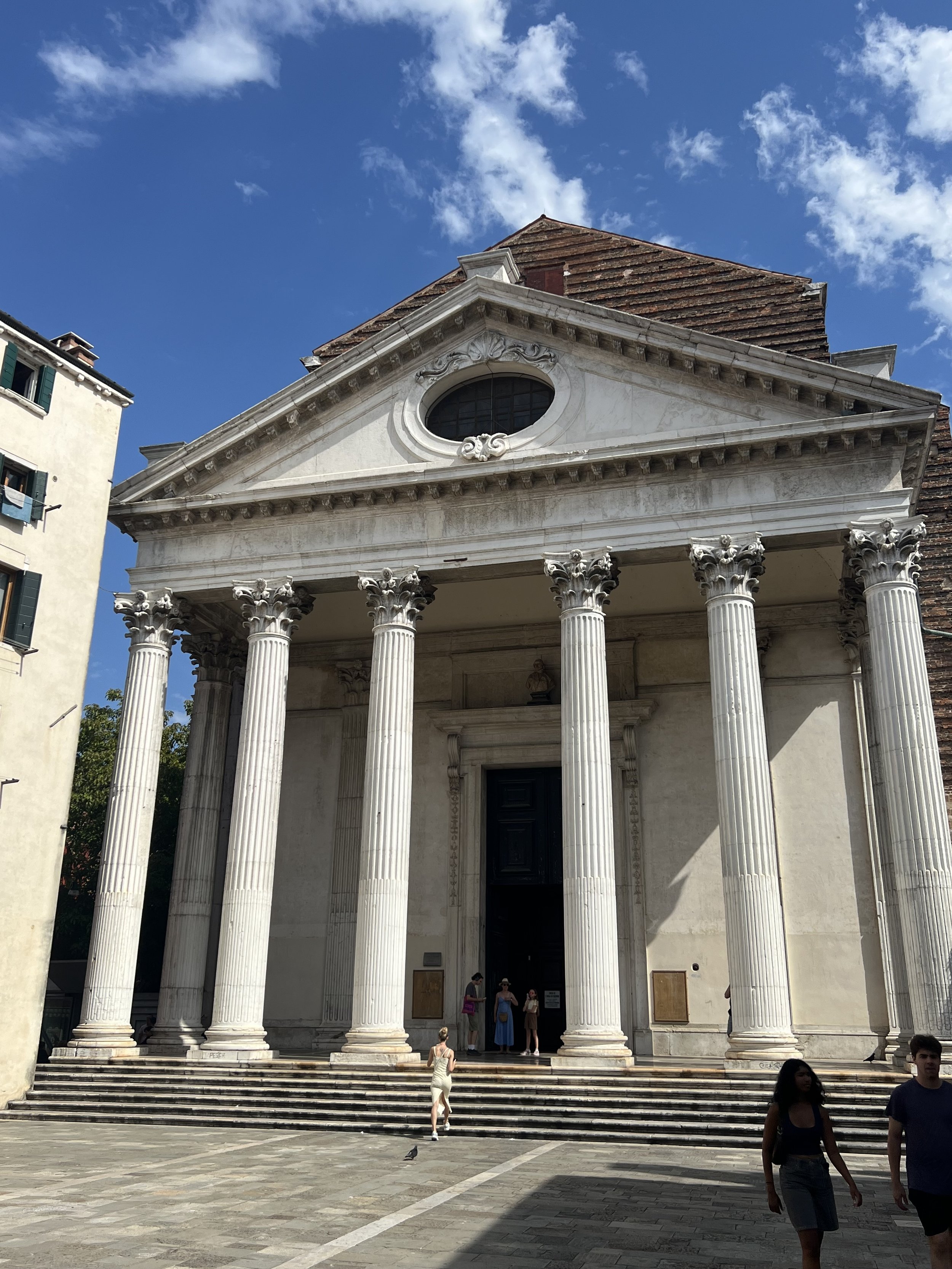
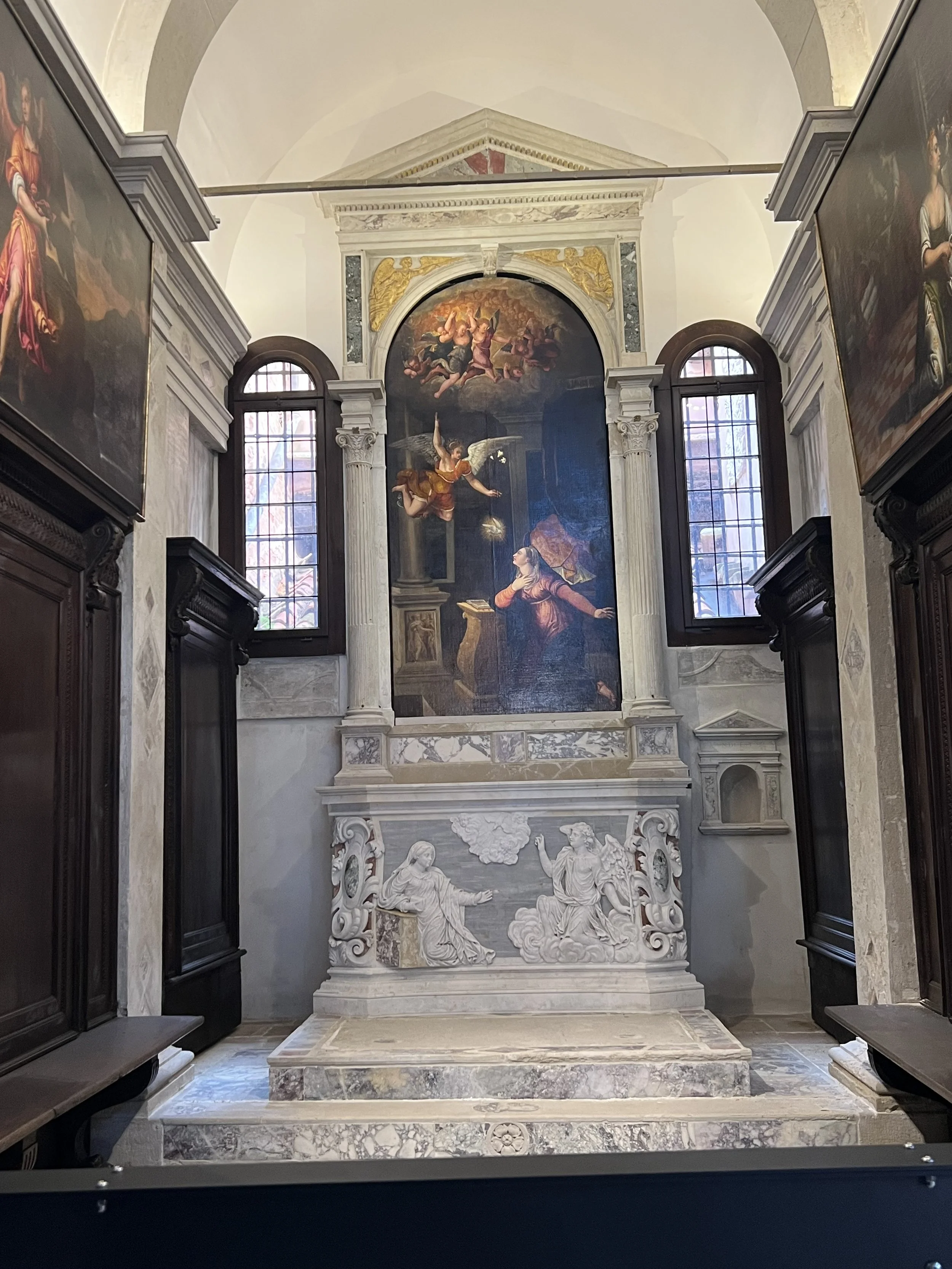
At the Chiesa di San Nicolò da Tolentino, the experience was quieter and more intimate. It reminded me that there was no single formula for how a Venetian church presented its art.
This became an increasingly important part of my journey. The churches were not merely containers for paintings. Each created a different relationship between the viewer and the works within it.
That relationship became particularly obvious at San Sebastiano.
Veronese finds his stage
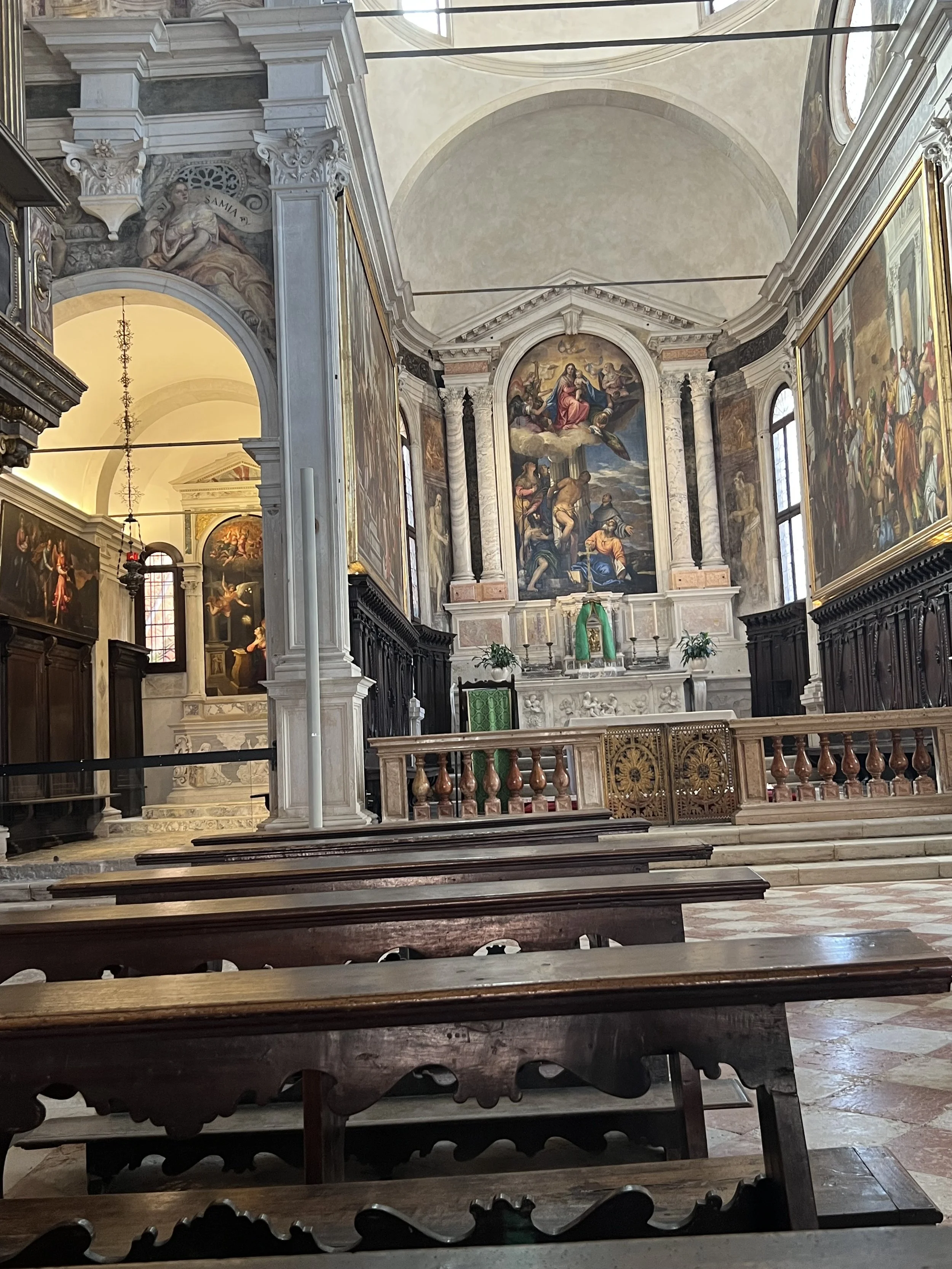
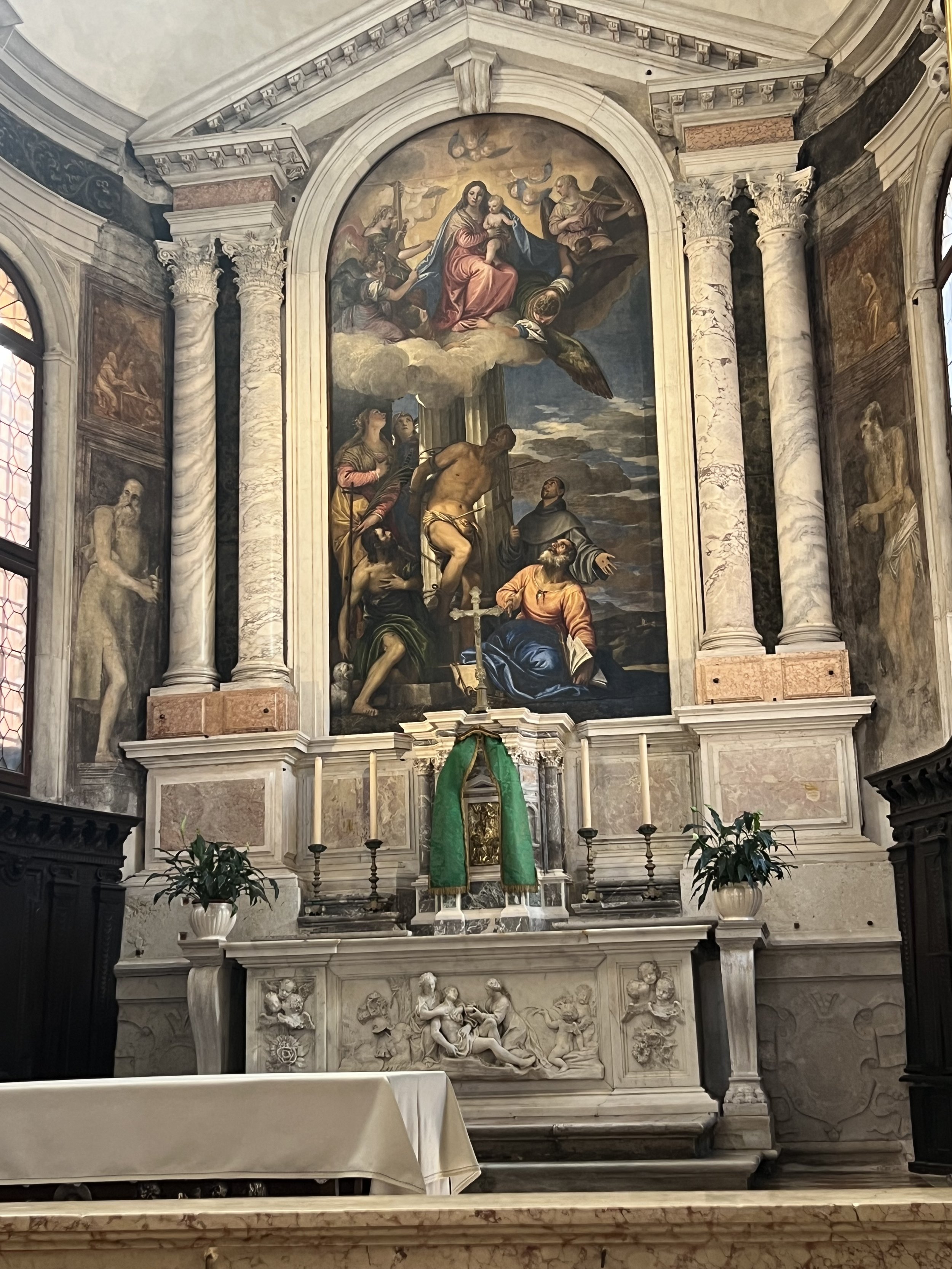
The church of San Sebastiano is dominated by the work of Paolo Veronese (1528-1588).
Having encountered Veronese at the Accademia, I was struck by how differently his work could be understood when seen within an environment for which it was created. His monumental compositions, architectural settings and rich colours seem to belong here.
At the Accademia, I had described Veronese as an artist who made me feel as though I was entering a world.
At San Sebastiano, I actually felt as though I had entered his world.
The smaller paintings in the sacristy were particularly compelling. The more intimate setting changed the experience again, reminding me that scale and proximity can be as important as the painting itself.
The artist and the space seemed to be working together.
The pleasure of an unexpected discovery
Some of the most memorable experiences of a trip are not necessarily the ones that are planned.
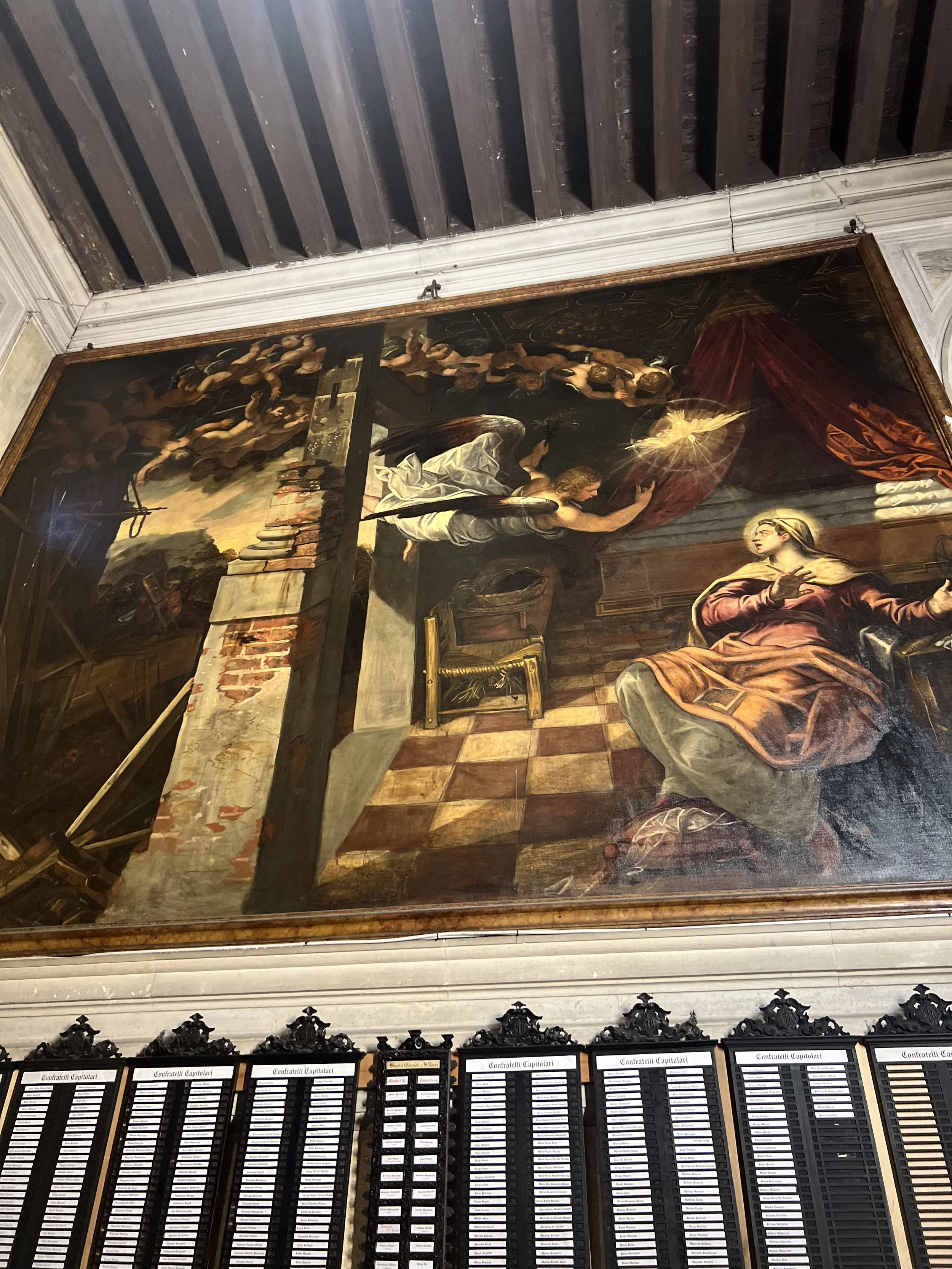
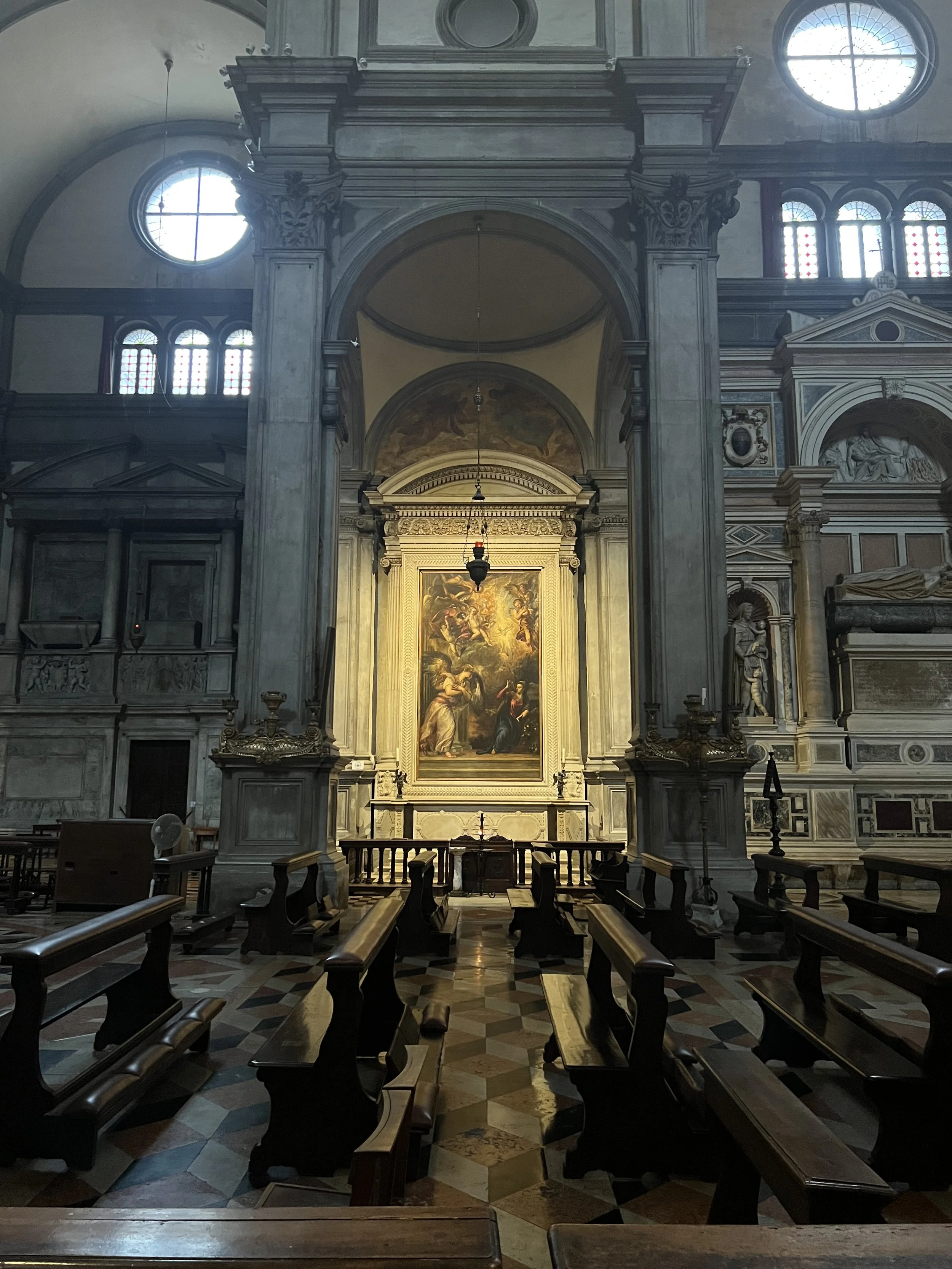
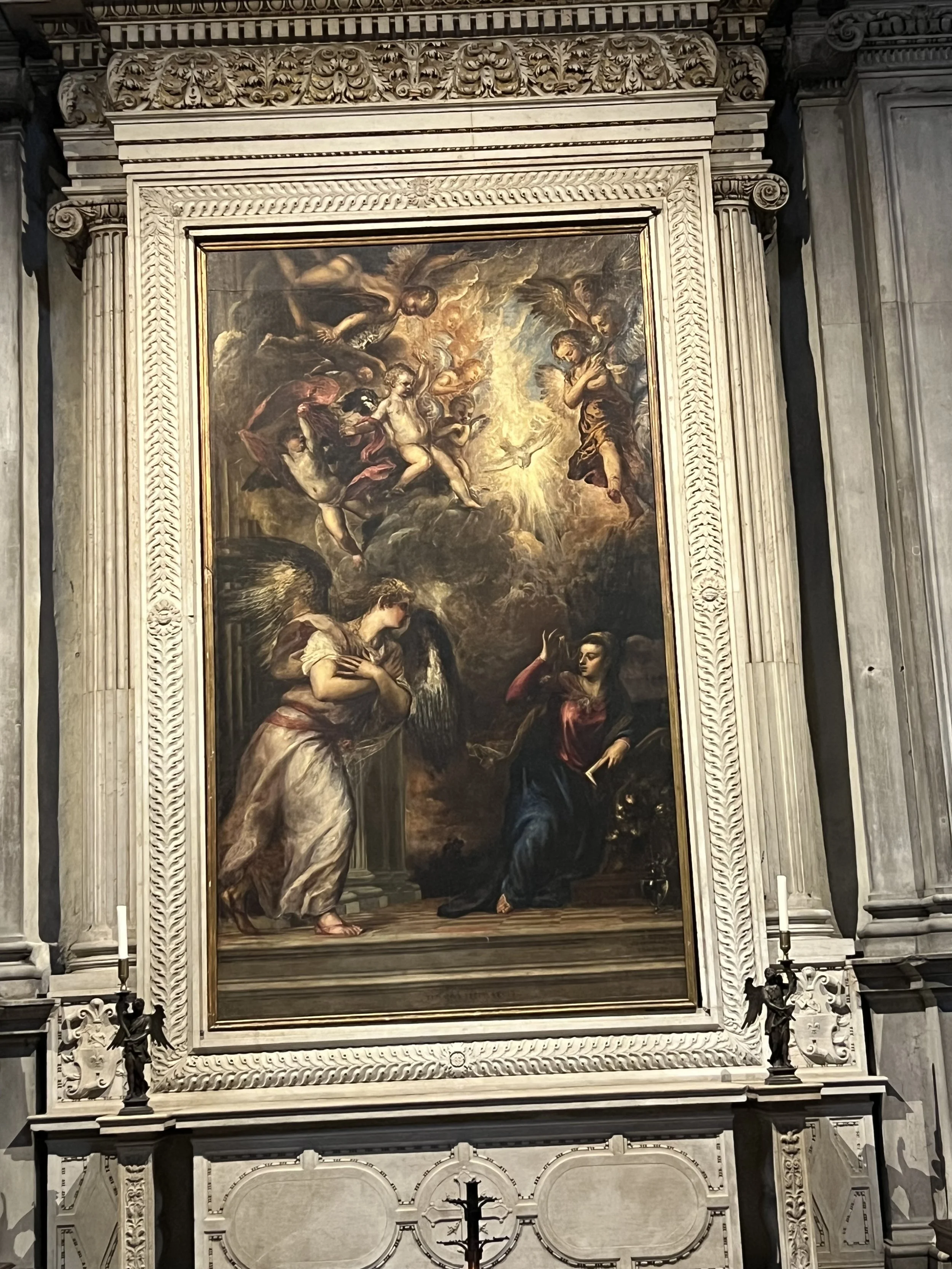
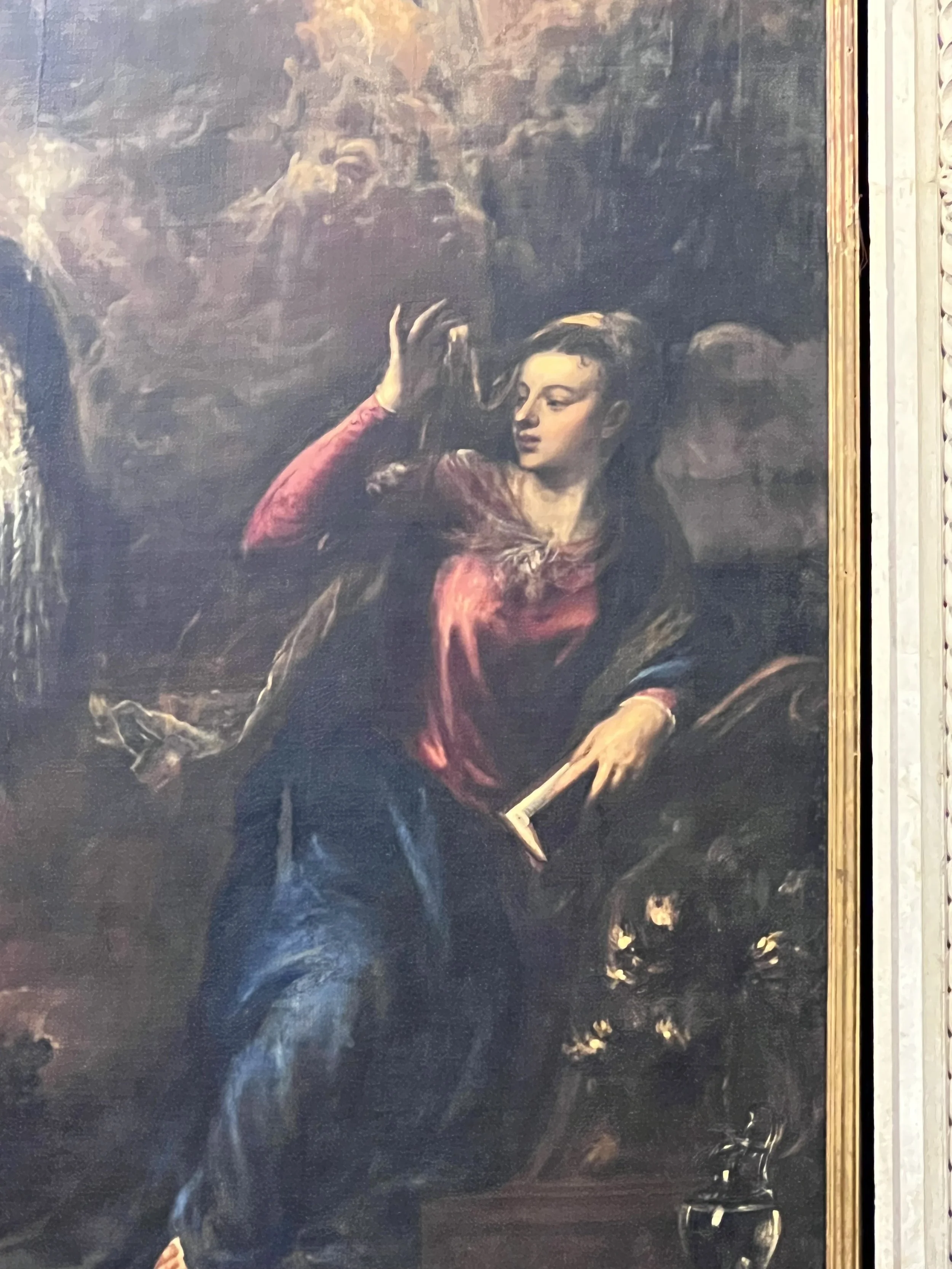
Wandering into the church of San Salvador, I was not expecting to encounter a major work by Titian. Suddenly, there it was: his Annunciation.
There is something particularly exciting about discovering a Renaissance masterpiece this way.
I had come to Venice with a list of paintings and churches I wanted to see. Yet some of the most rewarding moments came when the city surprised me.
It reinforced something I have come to enjoy about this journey into Renaissance art: you never quite know what you are going to find behind the next door.
Two Ways of Seeing
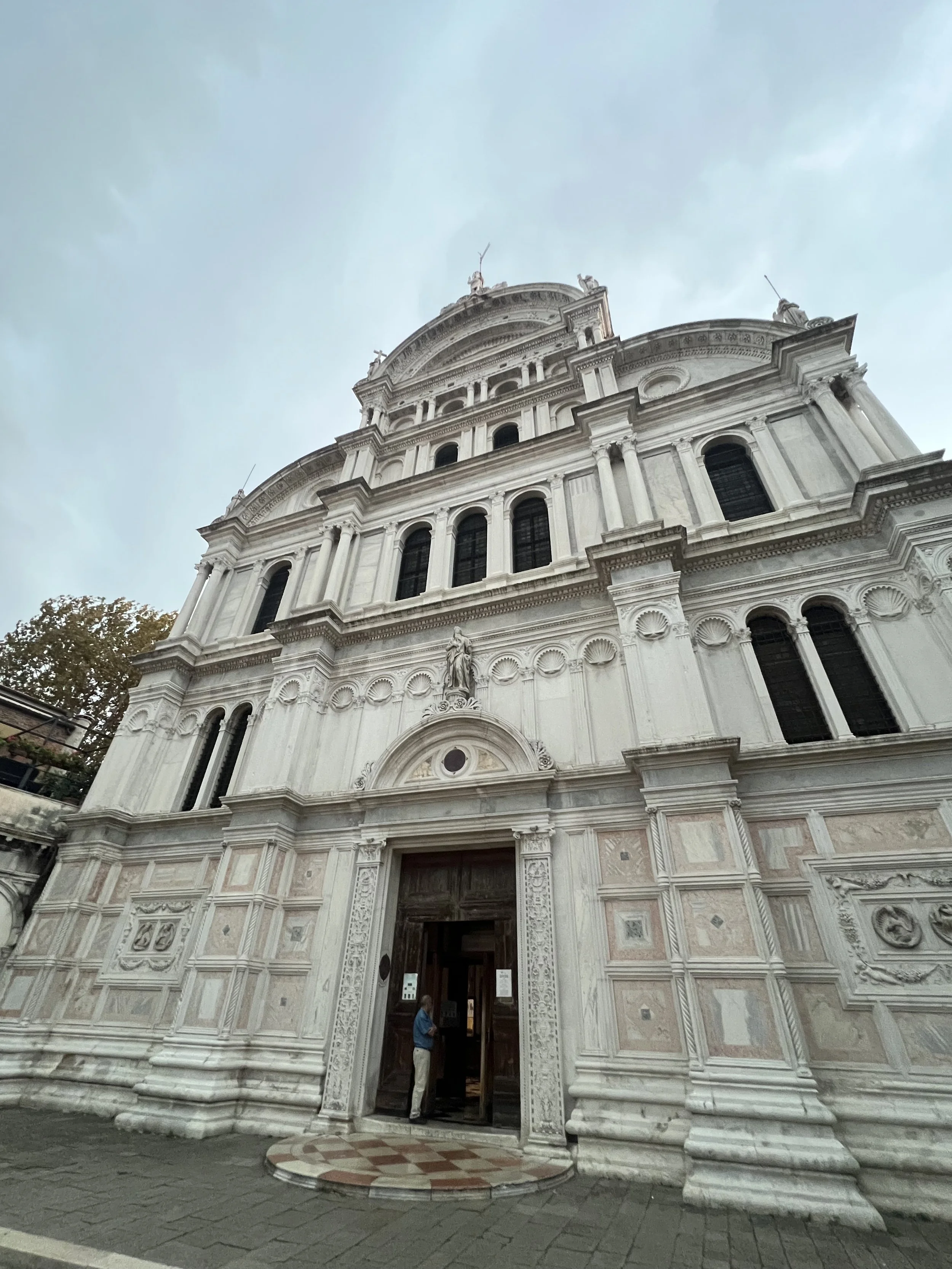
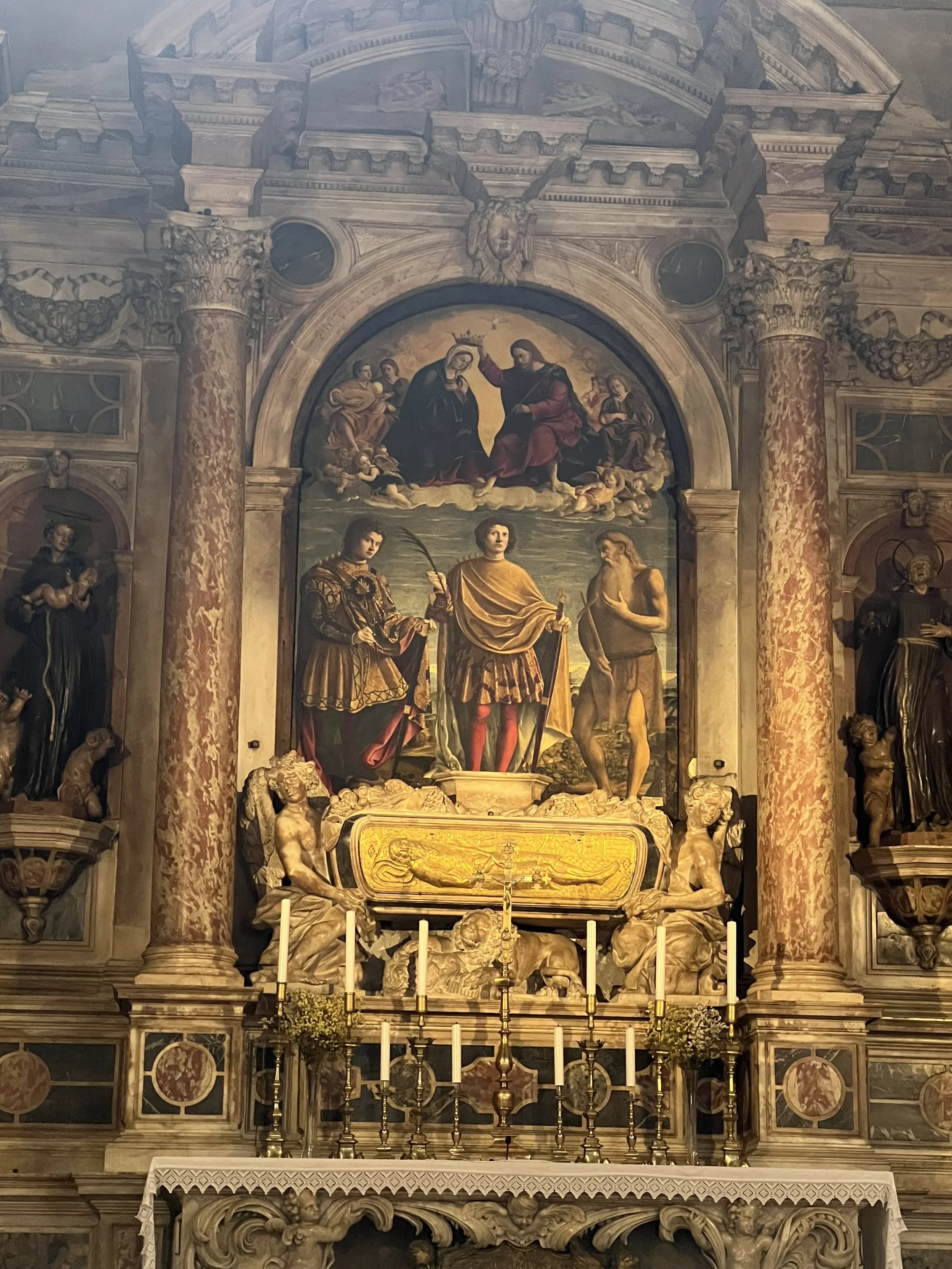
San Zaccaria produced yet another different reaction.
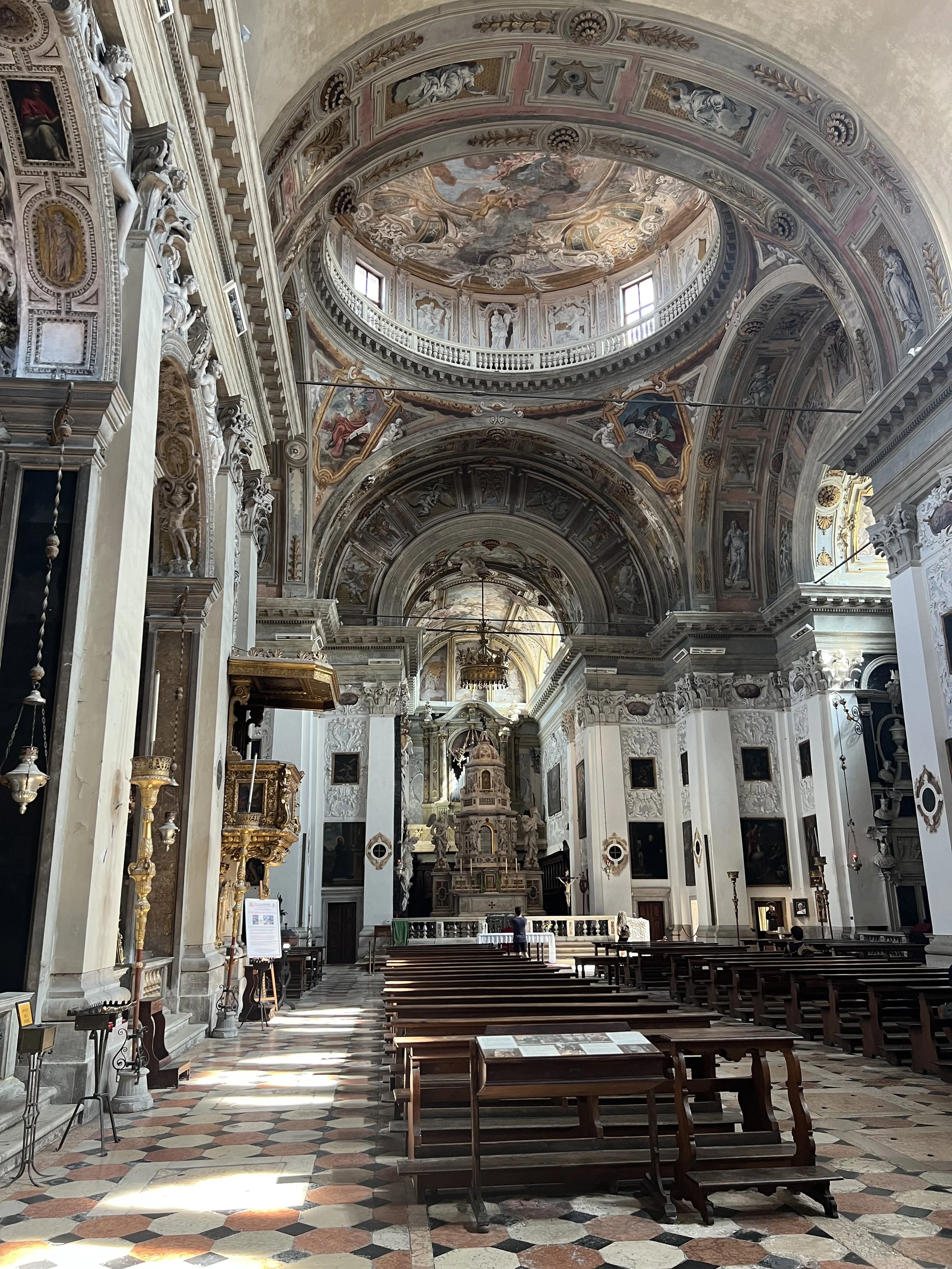
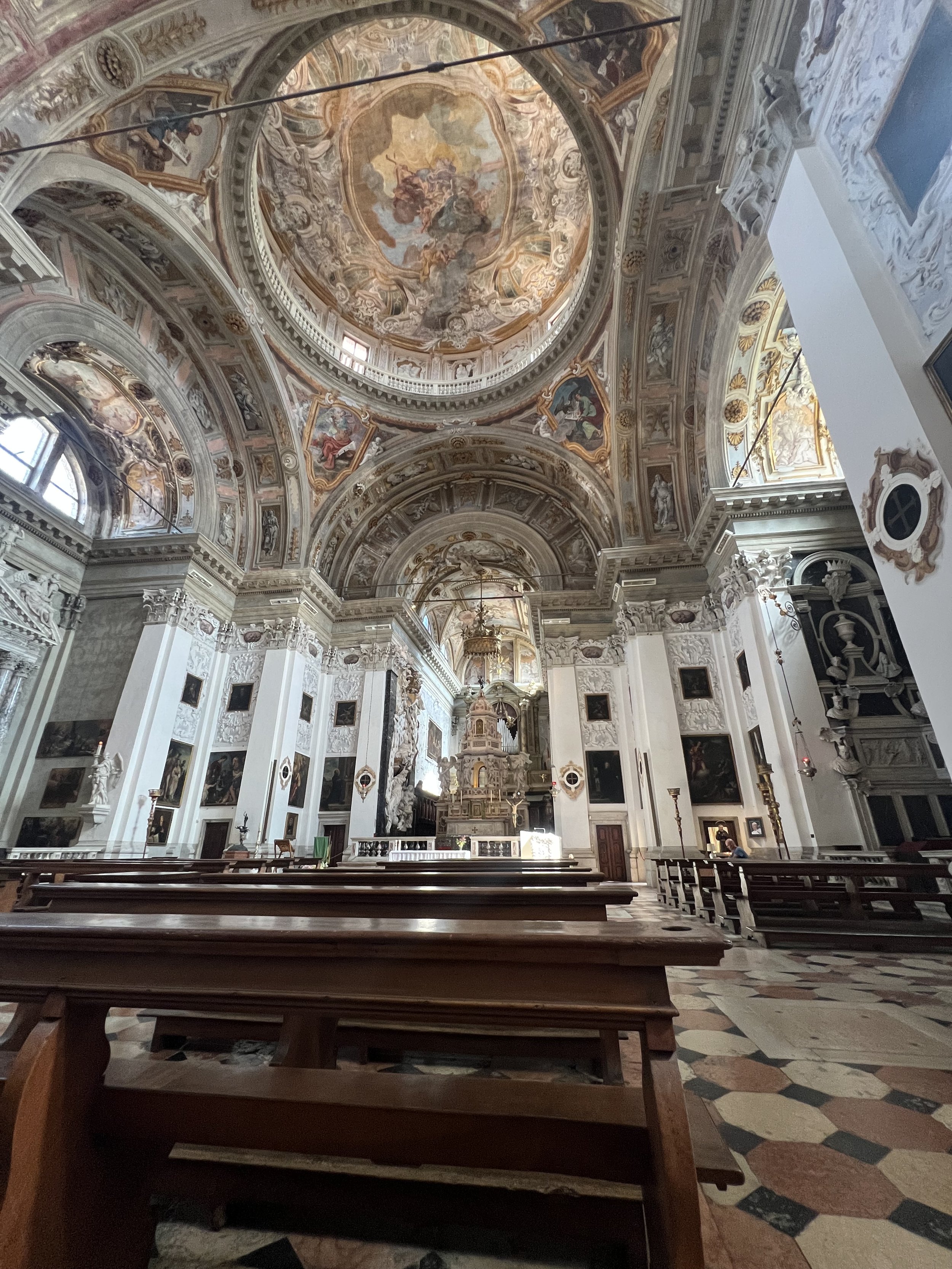
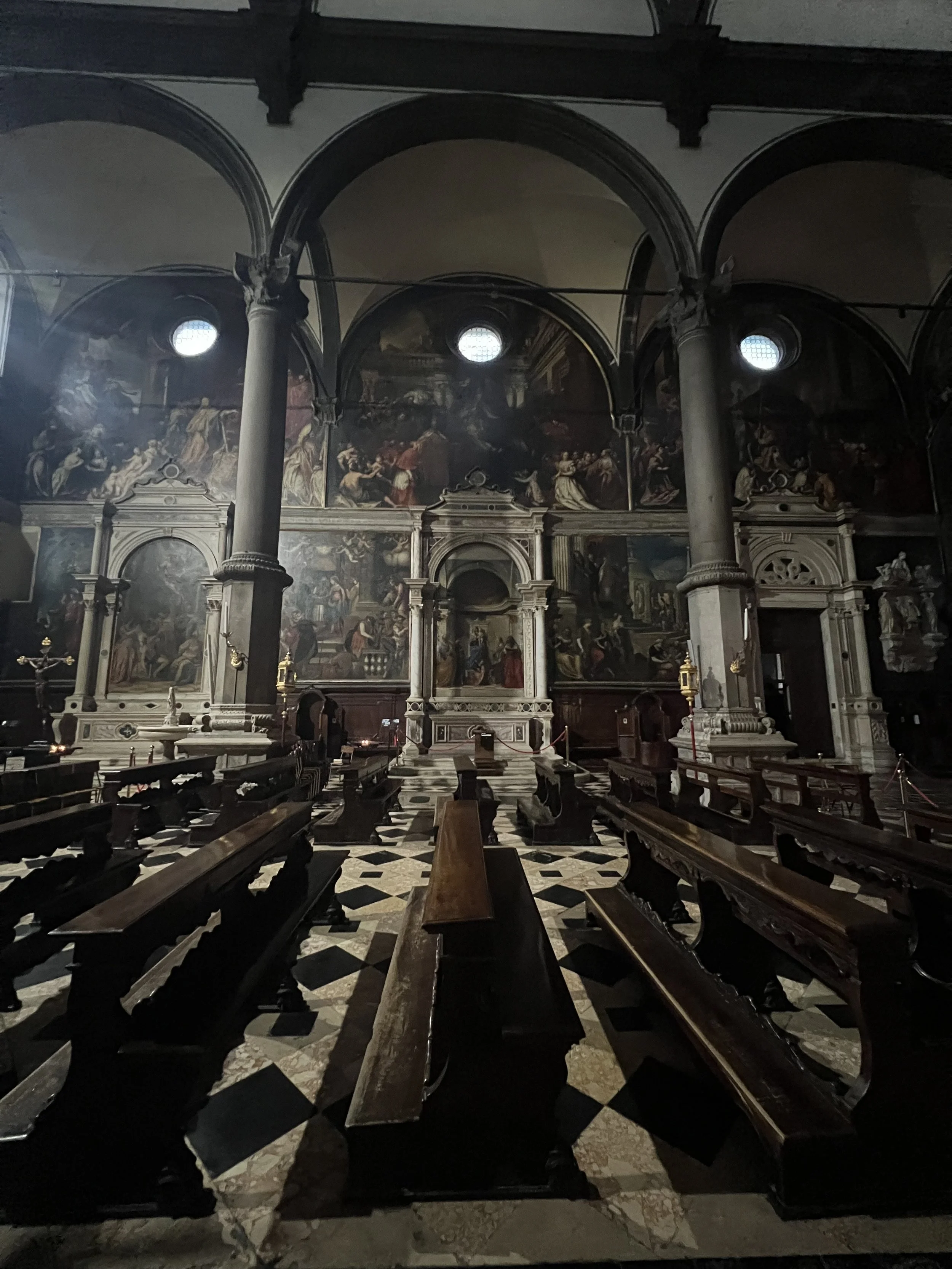
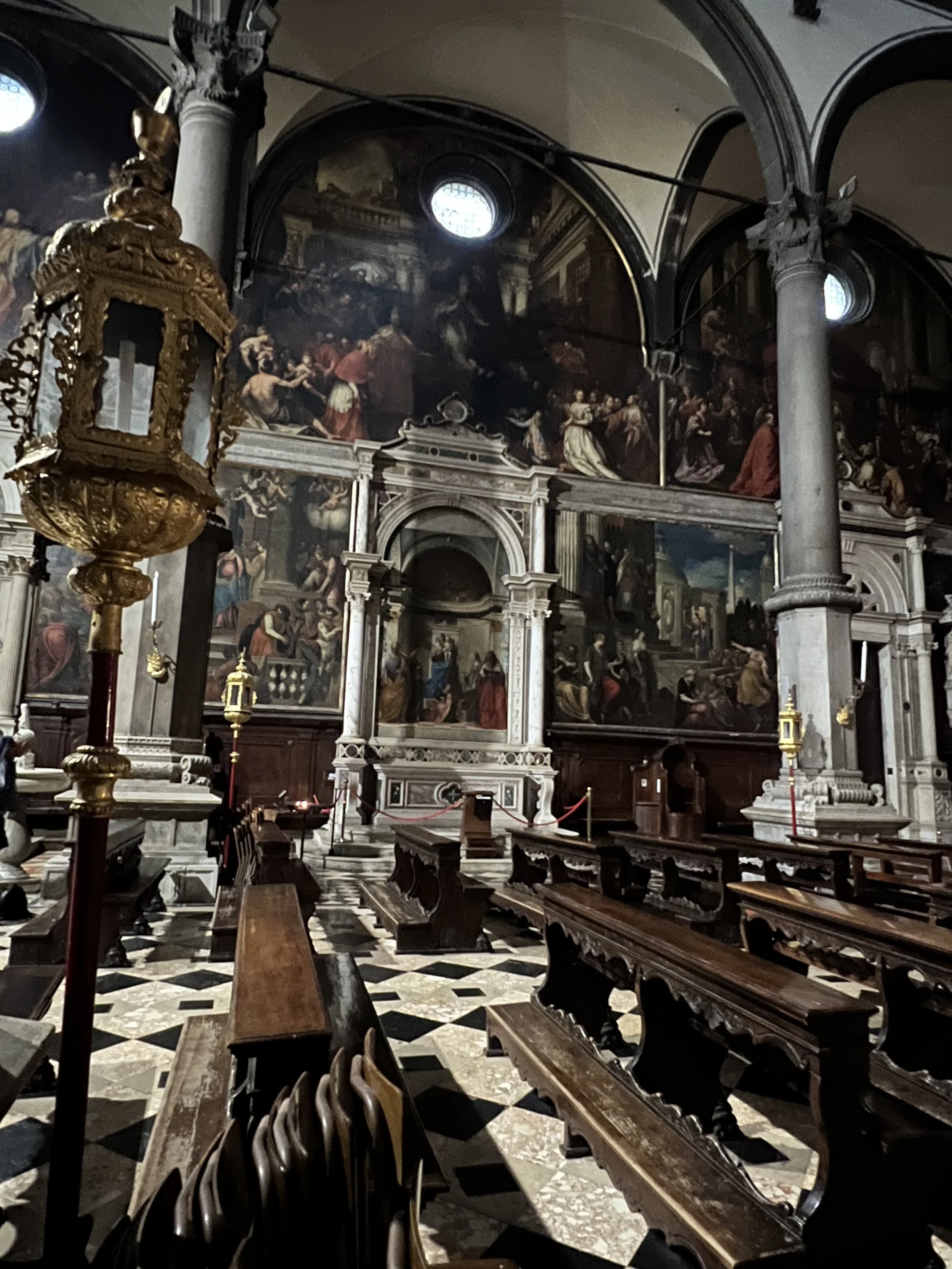
Here, the sheer accumulation of paintings, architecture, decoration and light seemed to overwhelm my senses. Almost every available surface appeared to demand attention.
It brought me back to the feeling I had experienced at the Frari - the sense of being small, quiet and unexpectedly vulnerable in the presence of the religious images surrounding me.
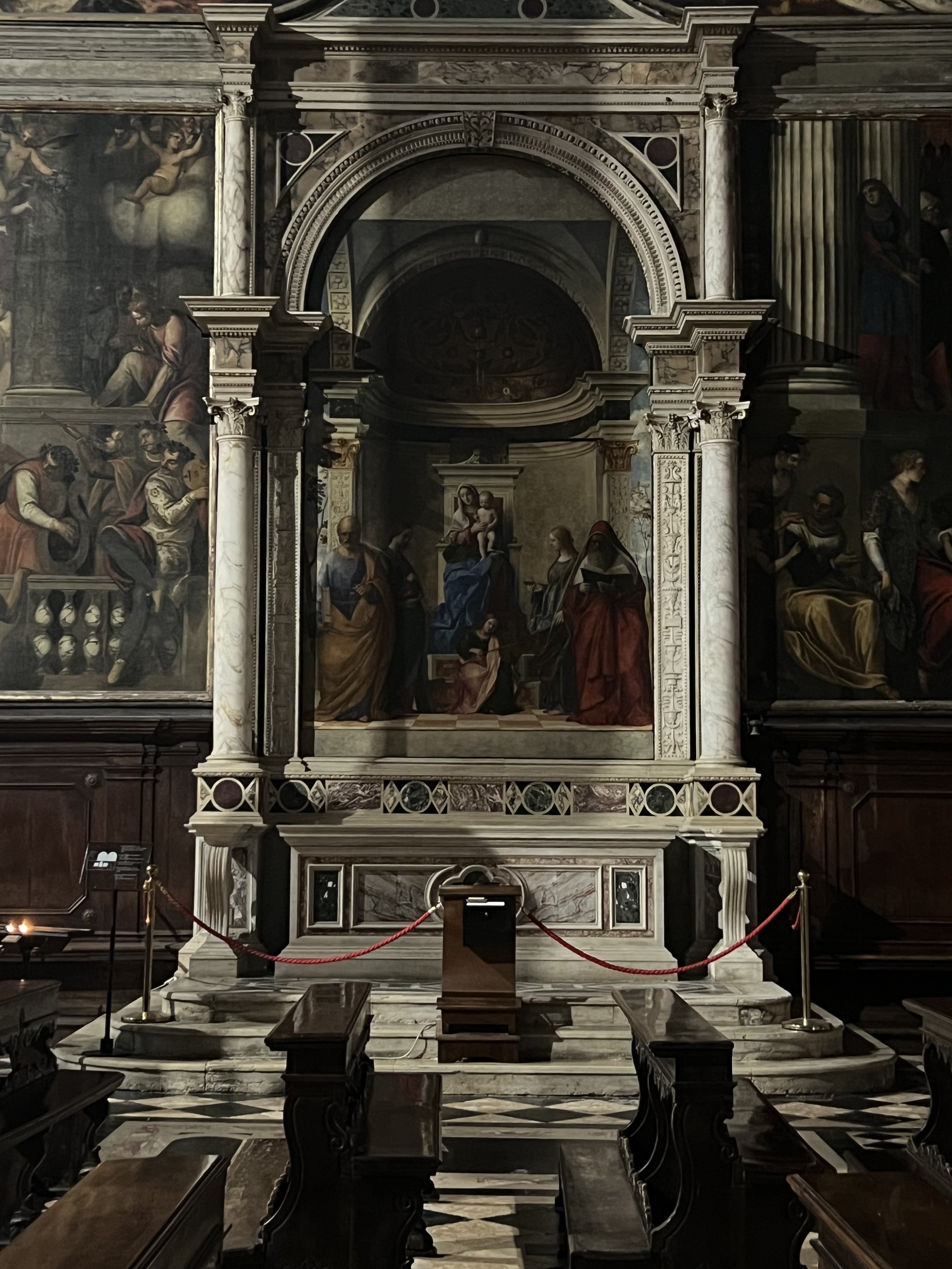
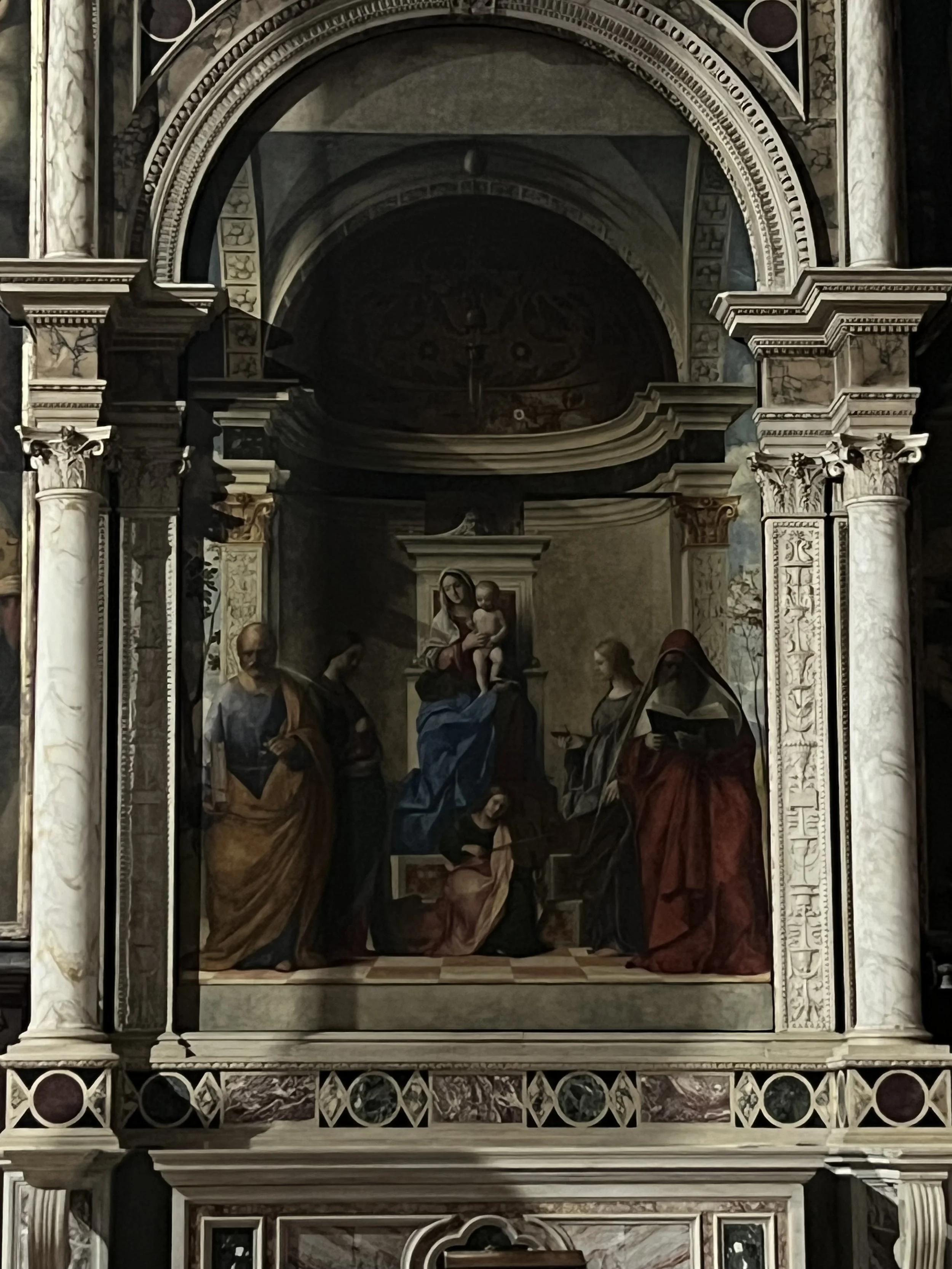
The San Zaccaria Altarpiece by Giovanni Bellini (1430-1516) is one of the highlights of the church, and seeing it in this setting brought back some of the observations I had made at the Accademia. I felt that Bellini was creating a conversation with the viewer, one that elicited an emotional response and a connection with the image.
The experience at San Zaccaria made me think about something else.
Perhaps a church does not need to tell us where to look. Perhaps sometimes its purpose is to surround us with so much visual information that we become completely immersed in the experience. The image that does eventually draw your attention then has a greater personal meaning. An intimate connection with a particular piece of art that emerges from the overloaded senses becomes something special and meaningful.
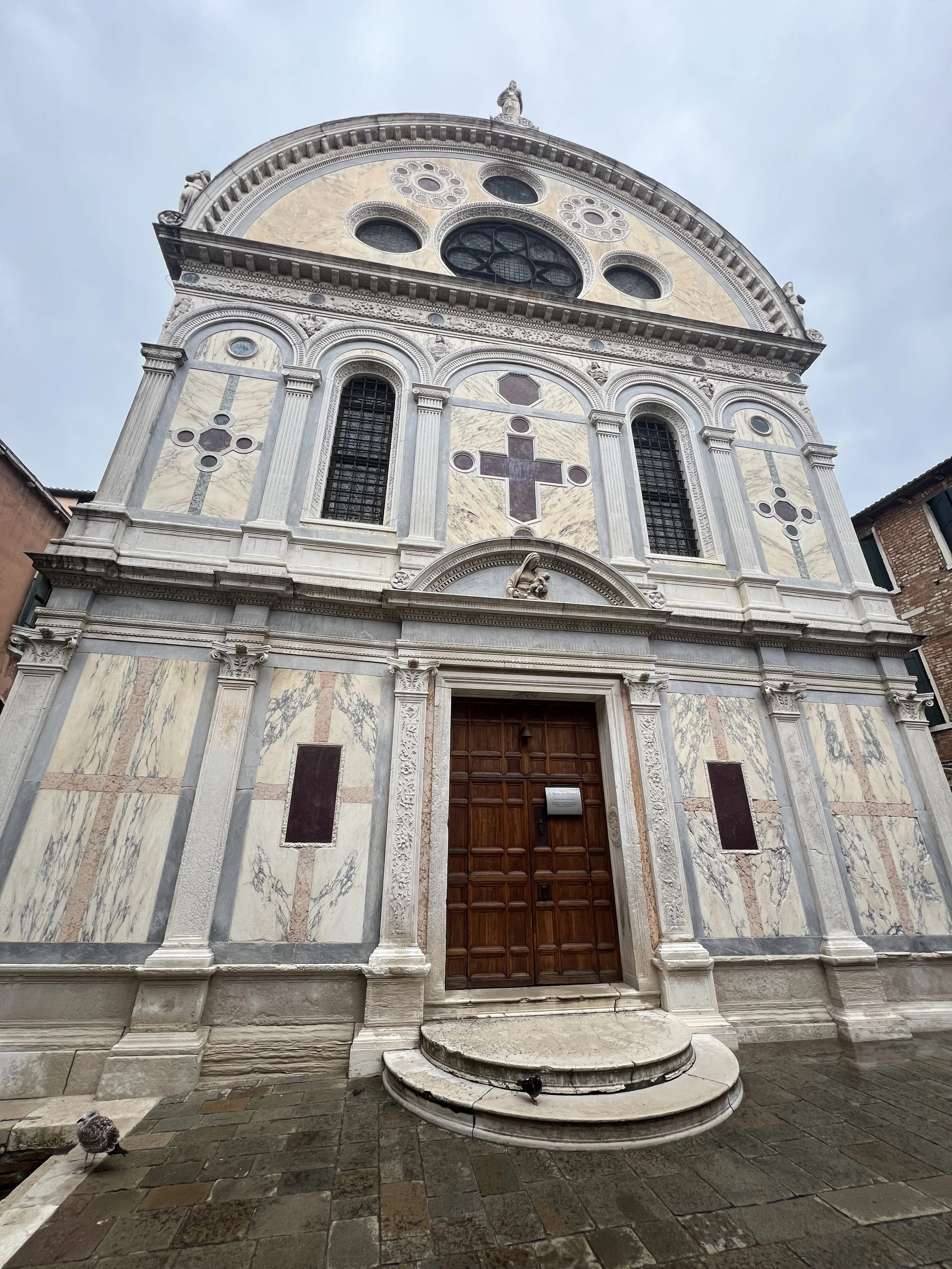
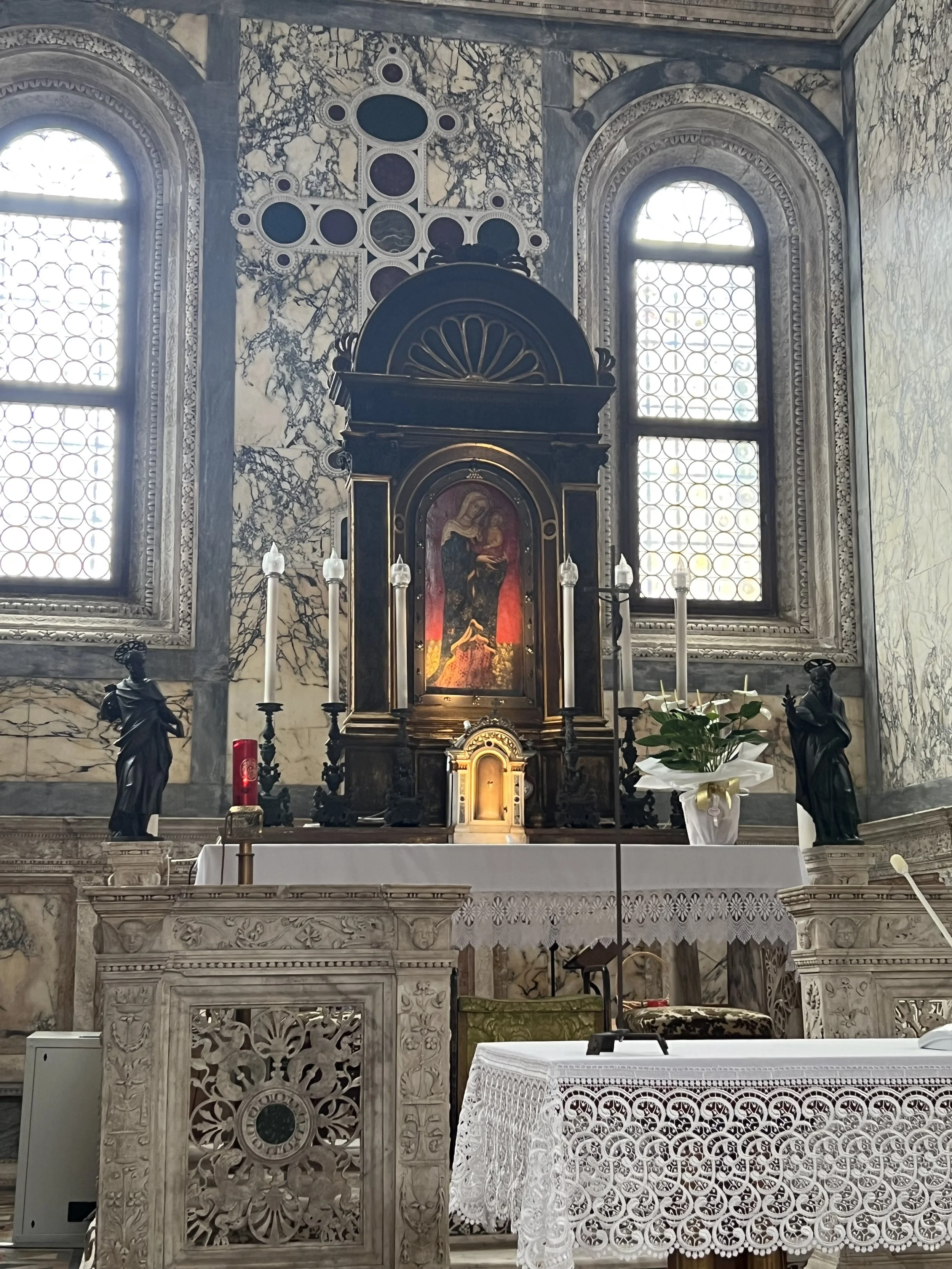
Santa Maria dei Miracoli could hardly have been more different.
Where San Zaccaria seemed to ask me to look everywhere, Miracoli seemed to ask me to look in one particular direction.
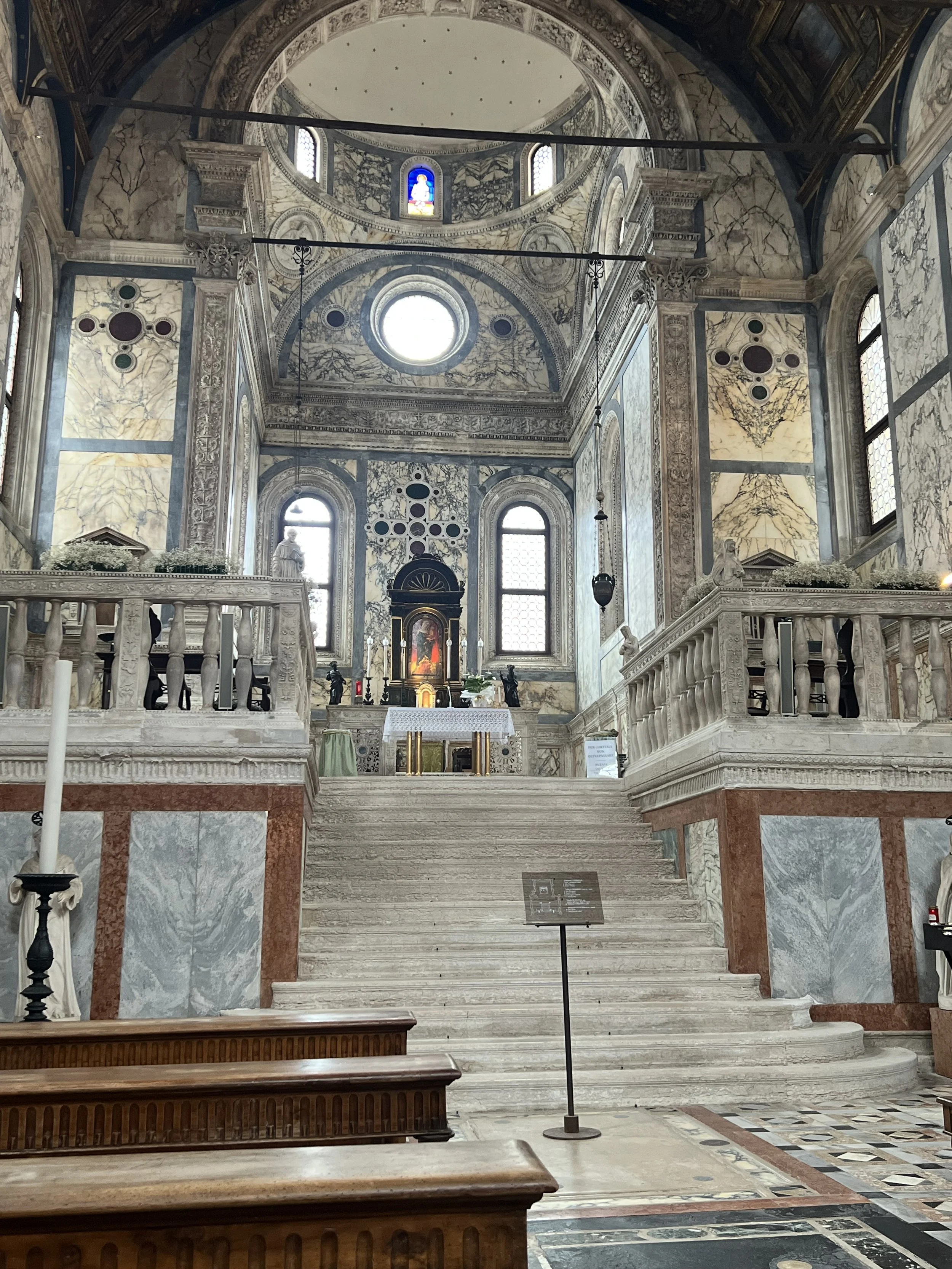
The church is an extraordinary Renaissance creation of marble, colour, pattern and architectural detail. Yet as impressive as all of this is, the devotional image at the altar - a Madonna and Child generally attributed to Nicolò di Pietro, a Venetian painter active in the late 14th and early 15th centuries - remains the unmistakable focus of the space.
This Madonna and Child was regarded as a miraculous image, and the church was built in the late 15th century specifically to house and honour it. It almost feels as though the church was conceived around the image. The effect was almost the reverse of San Zaccaria: instead of competing for my attention, everything seemed to lead me toward one devotional focus.
Standing there, I found myself thinking about the contrast.
At San Zaccaria, the environment overwhelms you with images. At Santa Maria dei Miracoli, the environment leads you to the image.
Both approaches were powerful. But they created very different experiences for the viewer.
“At San Zaccaria, the environment overwhelms you with images. At Santa Maria dei Miracoli, the environment leads you to the image.”
Another surprise: San Zulian
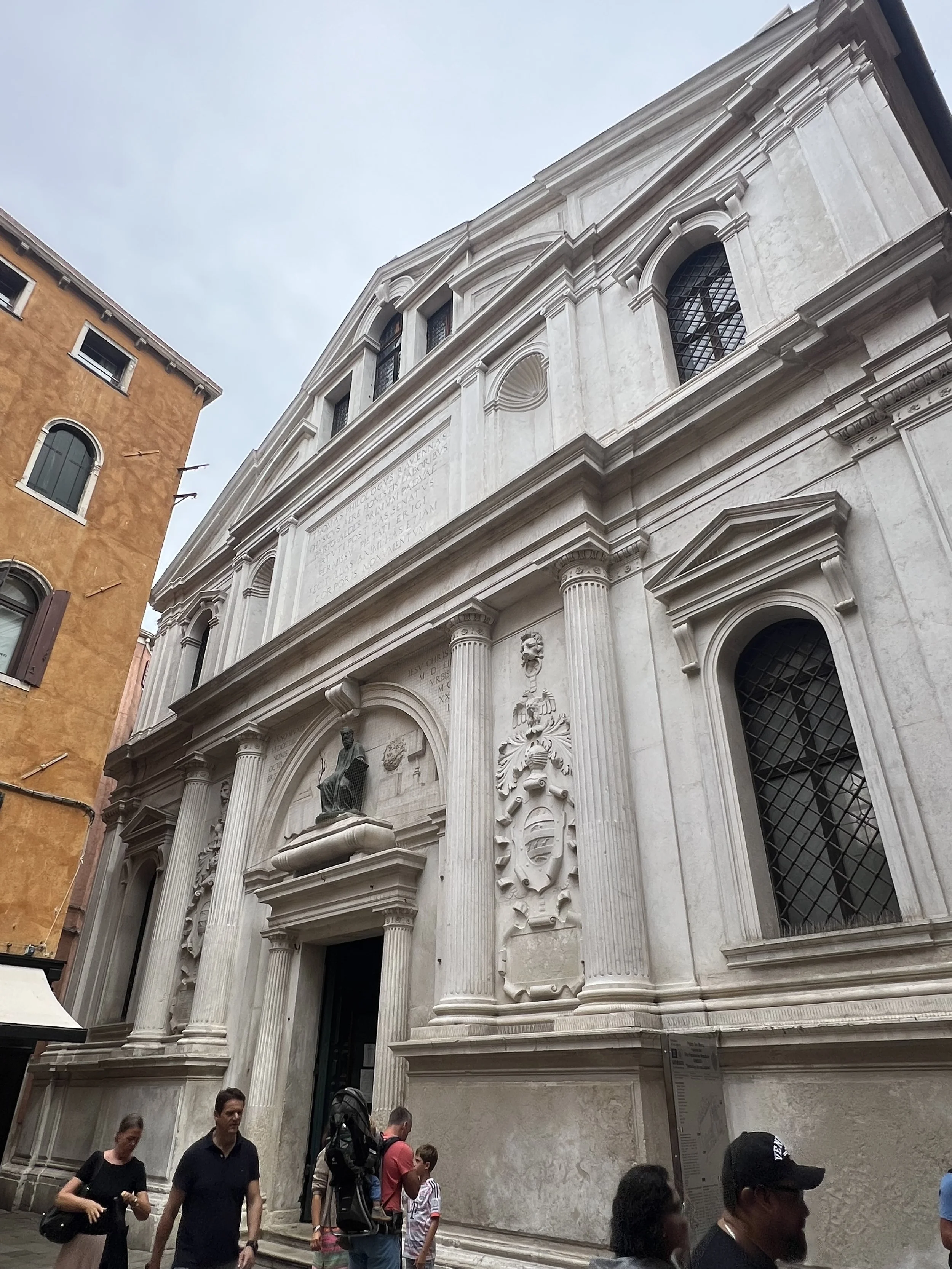
Chiesa di San Zulian was another reminder that some of Venice's artistic treasures are hiding in relatively modest spaces.
The small church, almost concealed among the surrounding streets, contains remarkable works of art framed by elaborate architectural settings.
After the grandeur of San Sebastiano, it was fascinating to encounter the same type of interaction between painting and environment but in a much smaller and less imposing environment.
Again, the setting changed the experience.
And finally, San Marco
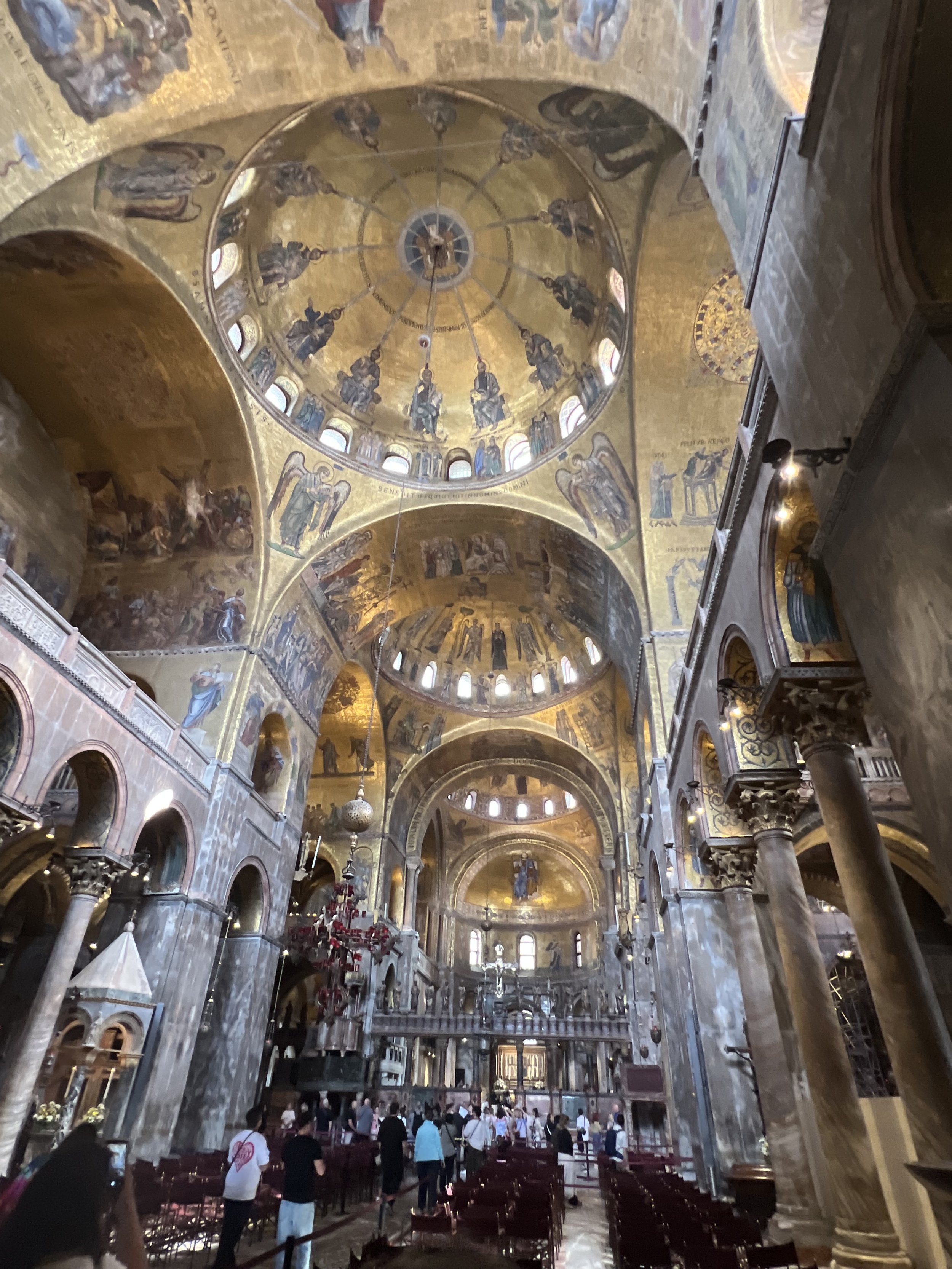
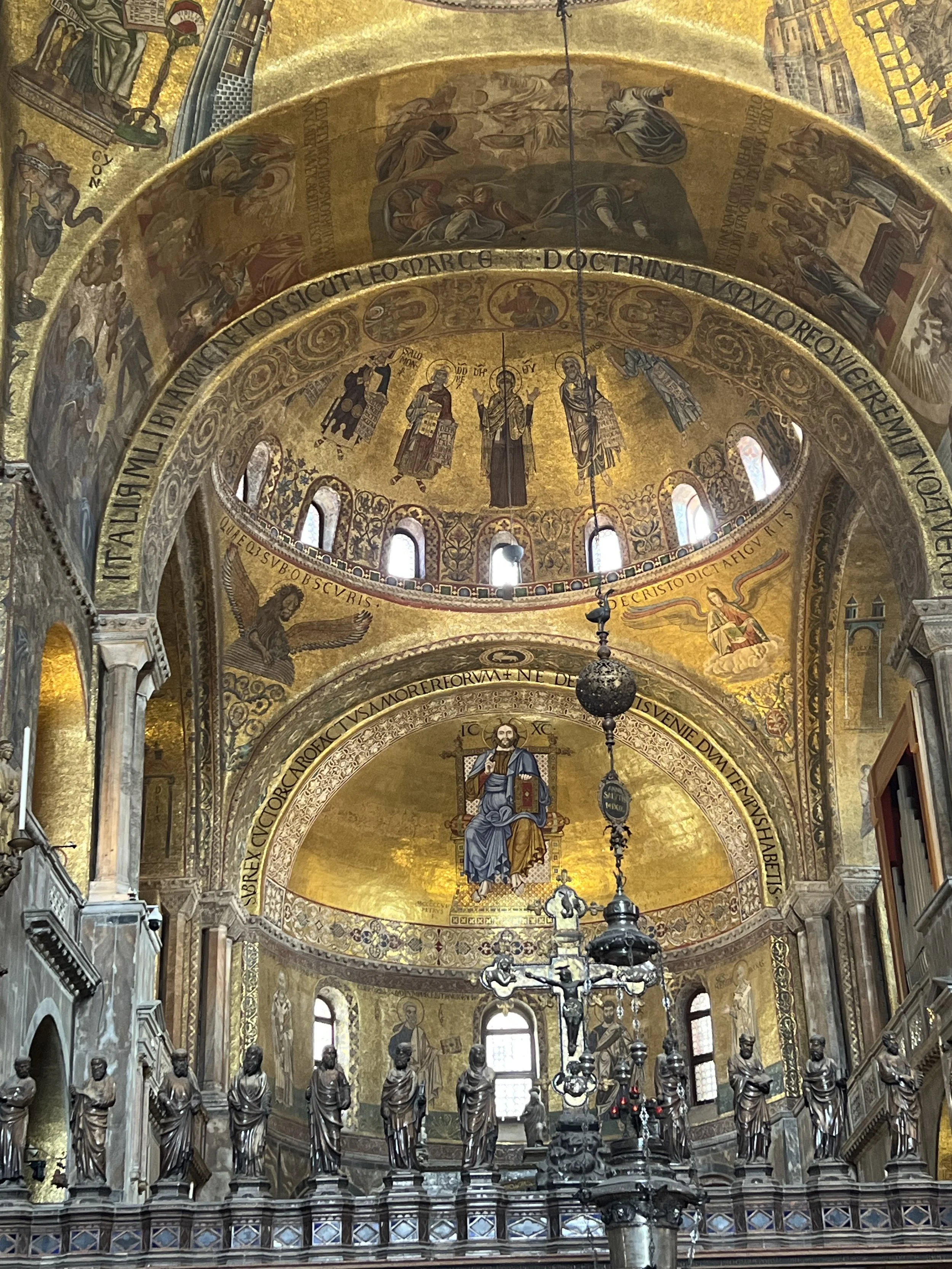
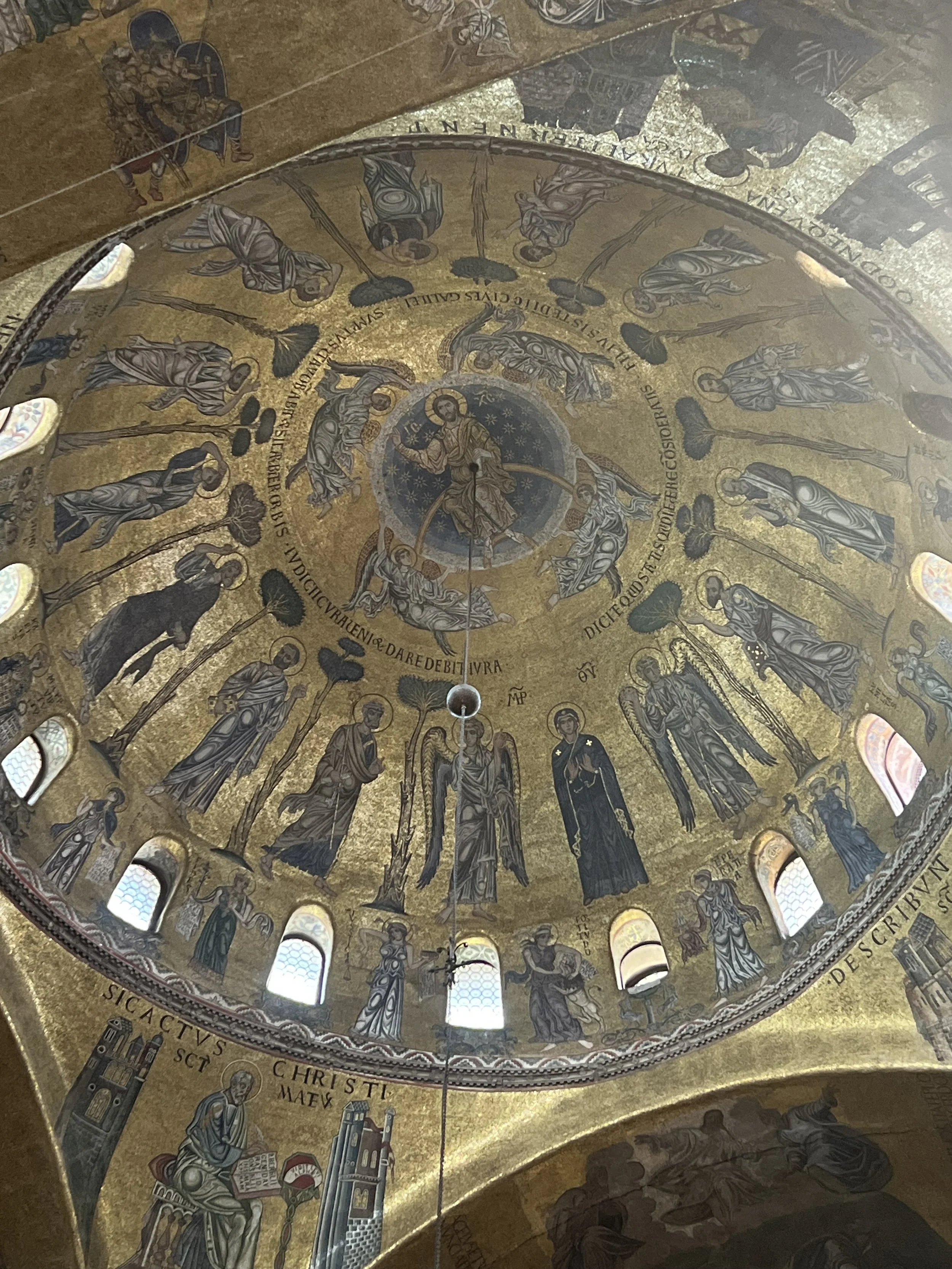
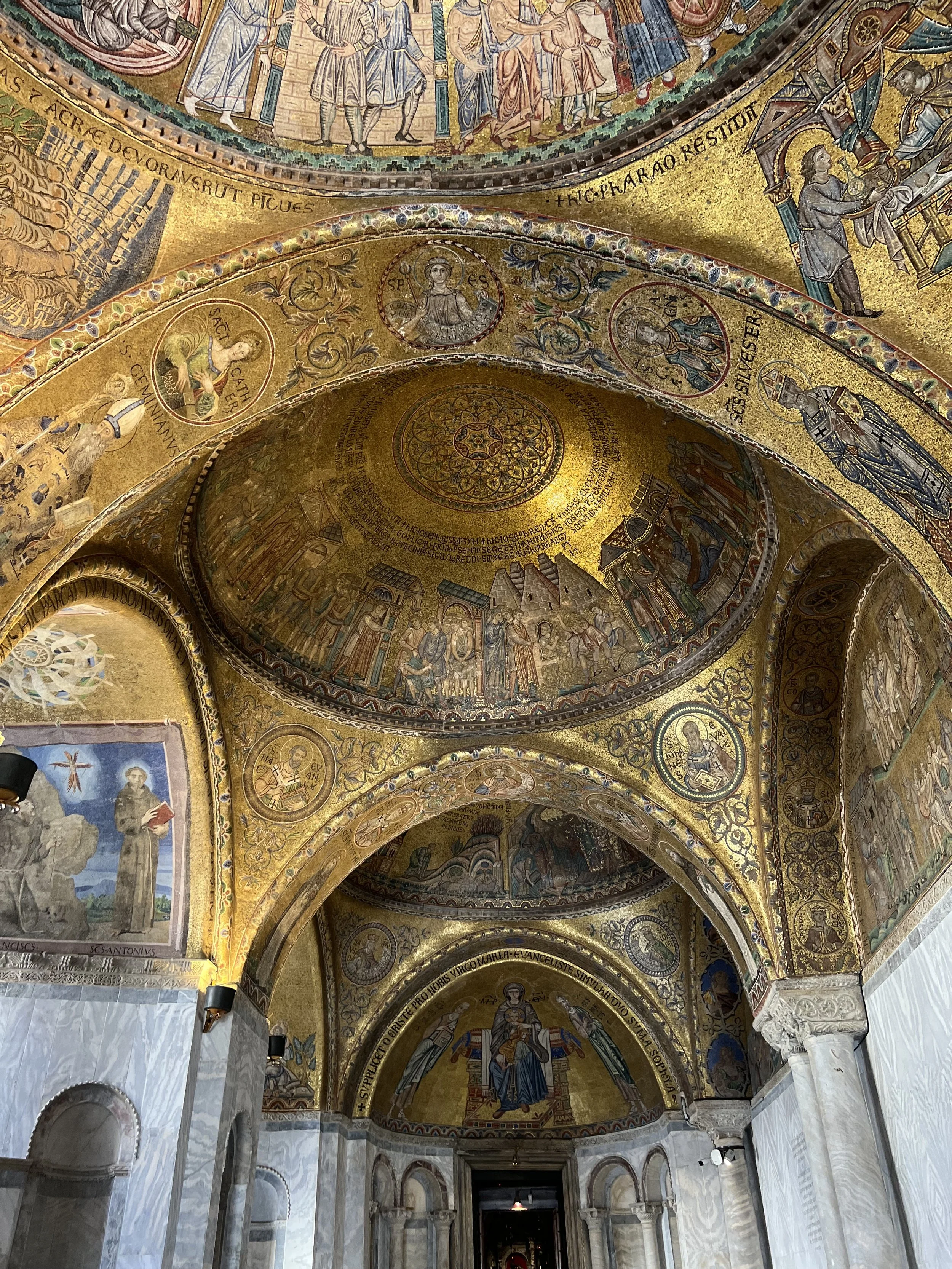
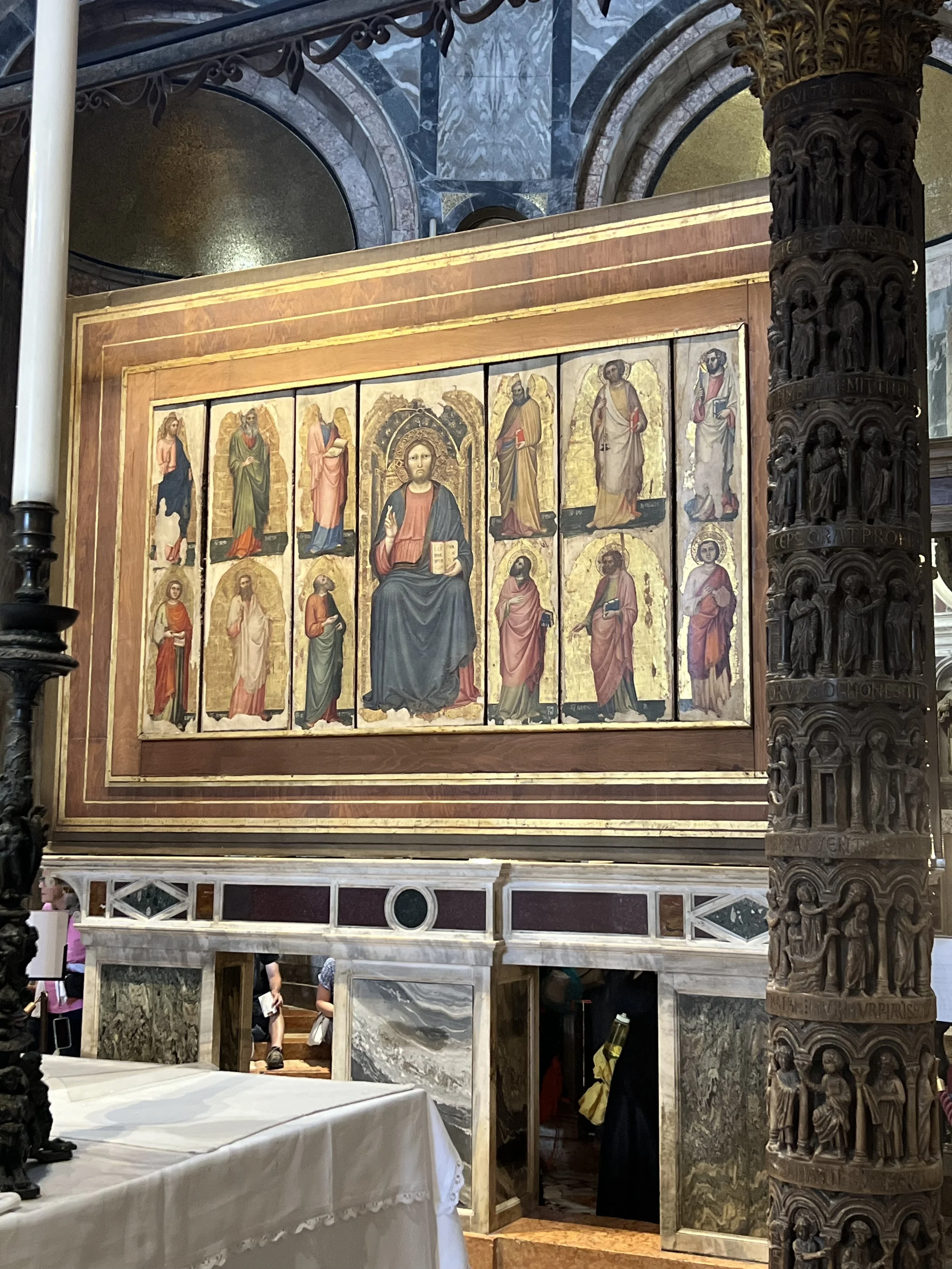
My sequence of church visits culminated at San Marco Basilica.
Here, I encountered something quite different from the Renaissance paintings that had occupied so much of my attention during this trip.
The Byzantine influence is everywhere - in the gold mosaics, the decoration, the architectural forms and the overall visual language of the basilica. The effect is almost overwhelming.
Yet it also brought me back to my reaction to the early religious paintings I had seen at the Accademia.
There, I had felt that some of the earliest images seemed to exist almost as objects of veneration rather than simply as paintings.
At San Marco, that distinction seemed to disappear altogether.
The entire basilica feels like an object of veneration.
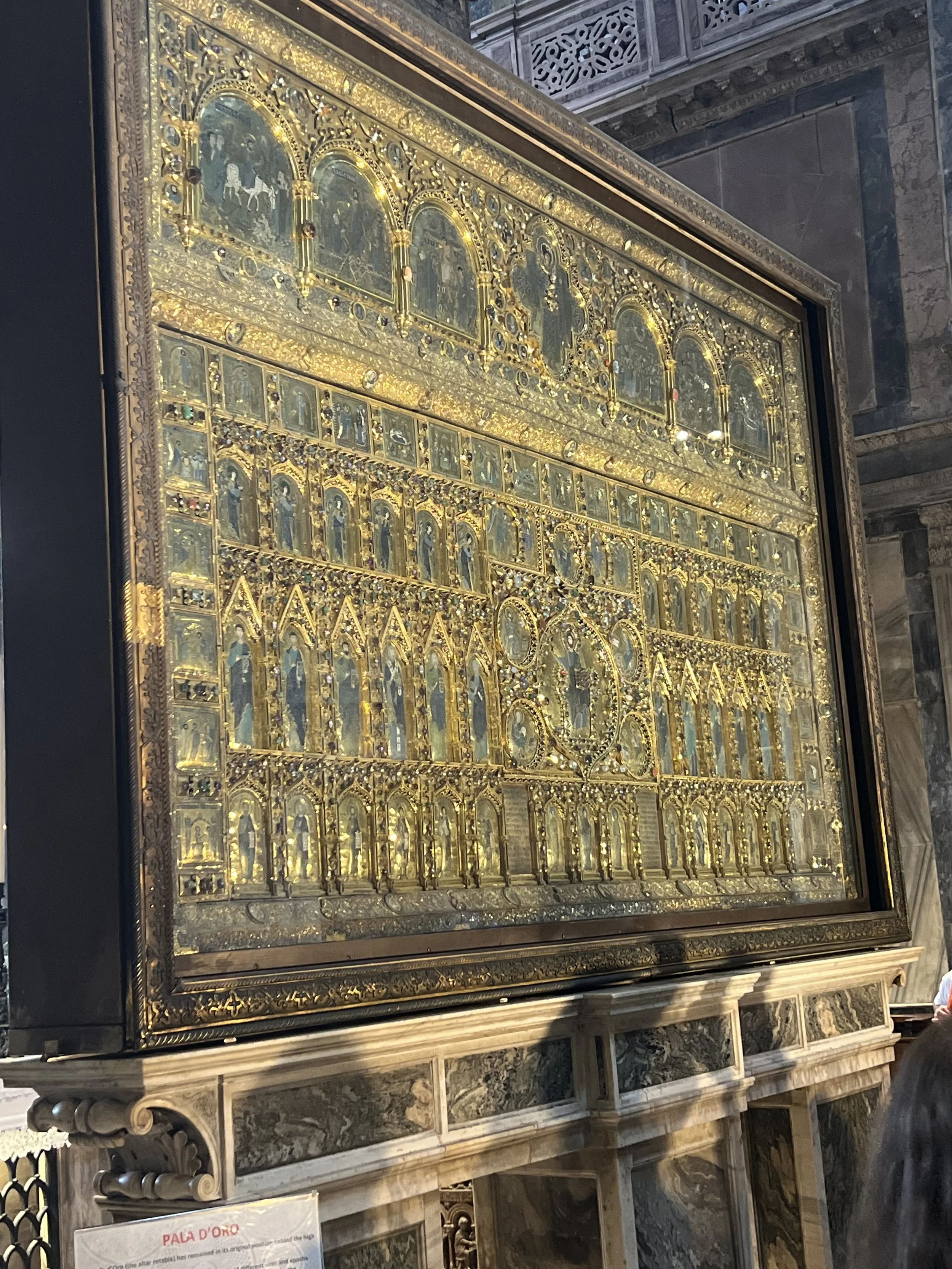
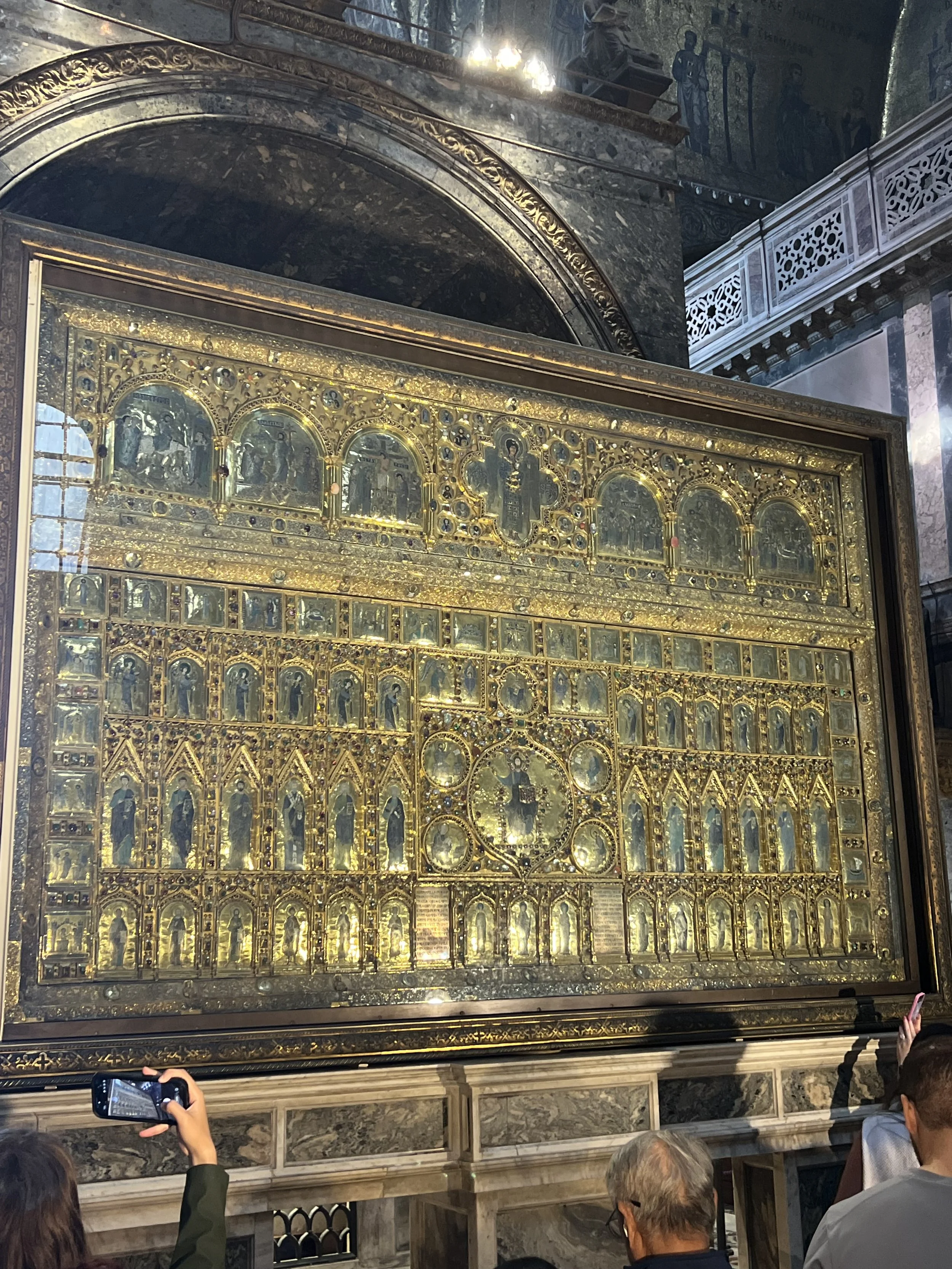
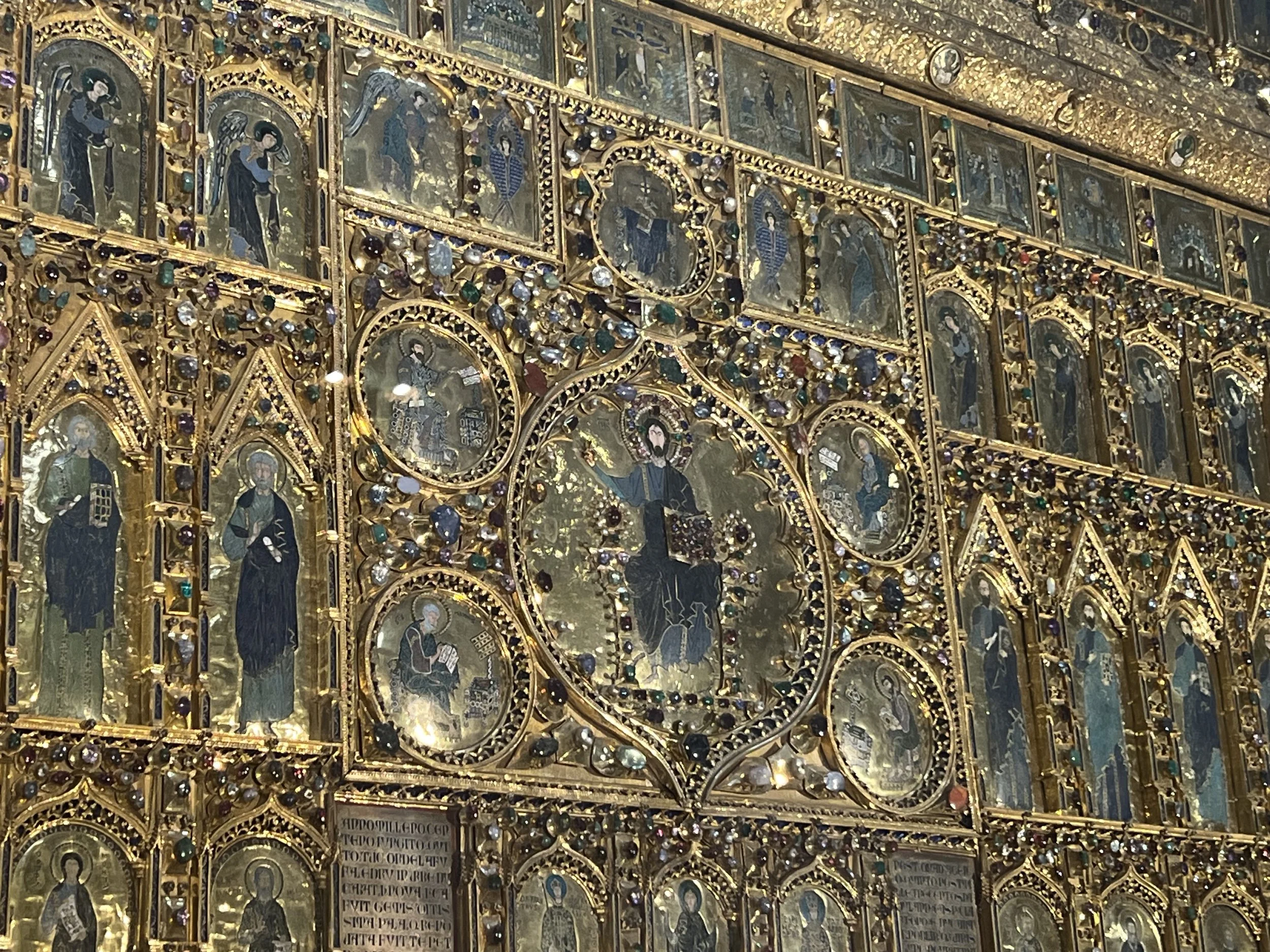
And then there is the Pala d'Oro, the extraordinary golden altarpiece behind the high altar, decorated with gold, enamel, precious stones and intricate imagery. It is difficult to think of it simply as an altarpiece. Its material richness and jewel-like quality reinforce the sense that I am standing before an object meant to inspire reverence.
After everything I had seen during my time in Venice, San Marco felt in some ways like a return to the beginning - the artistic starting point of my journey here.
From painting to place
Looking back at these visits and the intimate encounters with the Renaissance art of Venice, I realized that I had been asking the same question in different ways.
At the Frari, I discovered that architecture, light, sound and ritual could become part of the experience of a painting.
At the Accademia, I began to see how Venetian artists developed different ways of engaging the viewer through intimacy, mystery, grandeur and drama.
And in the churches of Venice, I was able to put those two ideas together.
I saw spaces that were overwhelming. Spaces that focused. Spaces that framed the art. Spaces in which the art seemed to become part of the architecture itself.
I also began to understand that there is no single way to experience Renaissance art.
Sometimes it draws us upward.
Sometimes it invites us to look back.
Sometimes it leaves us wondering.
Sometimes it overwhelms us.
And sometimes it simply waits for us to walk through a door we had no particular reason to open.
That may be what I have enjoyed most about this journey through Venetian art. The more I look, the more questions I seem to have. And increasingly, I am finding that the questions are as rewarding as the answers.
Perhaps that is the real value of experiencing Renaissance art in its place.
The paintings may have been created hundreds of years ago. But the encounters still happen now.
I can’t wait to go back.